Don’t Miss Your Daily Briefing for the Maritime Industry
Join the leading maritime news network
— trusted by our 107,451 members
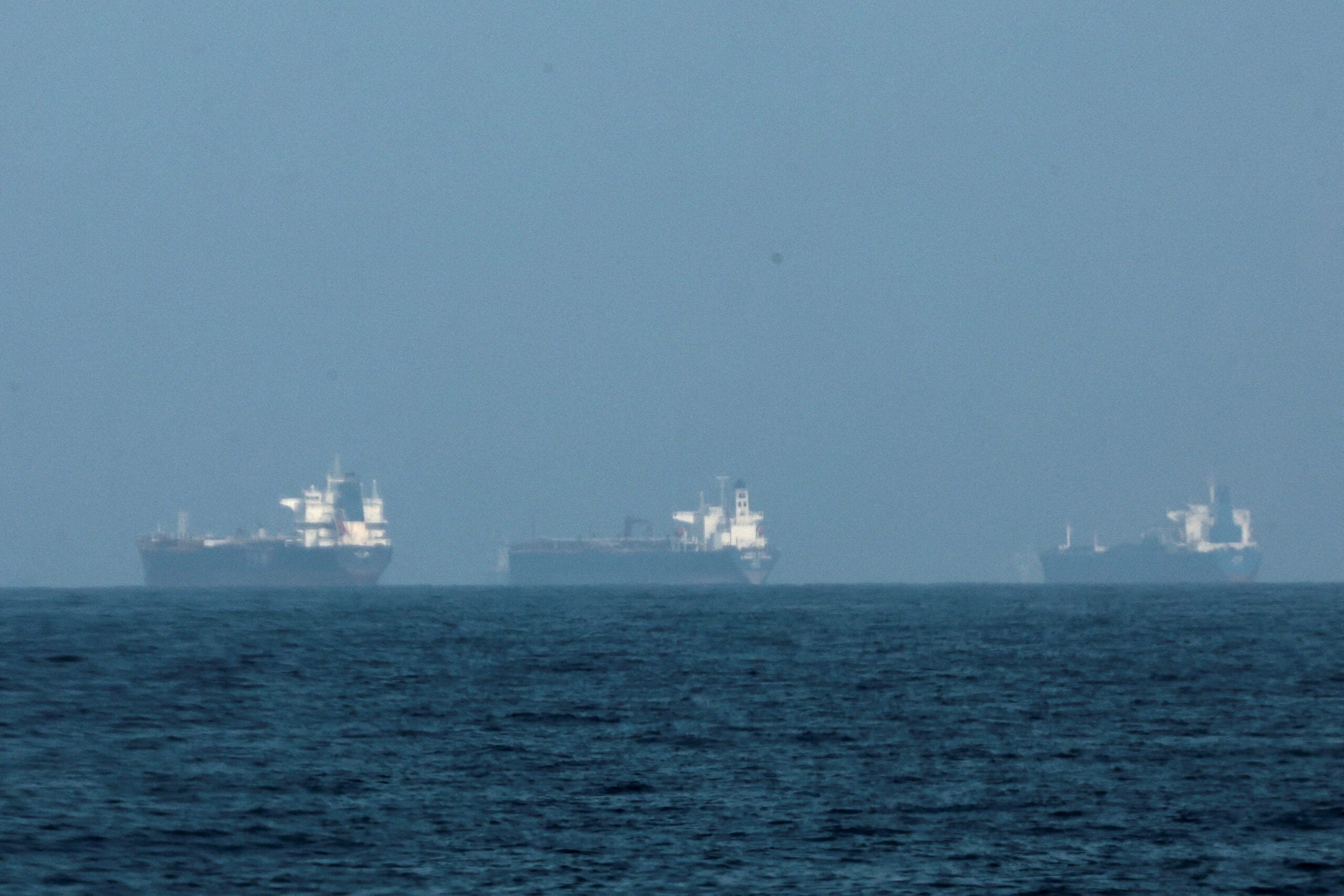
Tankers are seen off the coast of the Fujairah, as Iran vows to close the Strait of Hormuz, amid the U.S.-Israel conflict with Iran, in Fujairah, United Arab Emirates, March 3, 2026. REUTERS/Amr Alfiky
IRGC Commander: Iran Turns Back Containership in Hormuz as ‘Permission to Transit’ Policy Emerges
A containership sailing from the United Arab Emirates toward Pakistan was forced to reverse course at the entrance to the Strait of Hormuz, offering one of the clearest signs yet that Iran is actively asserting control over commercial shipping in the critical waterway.
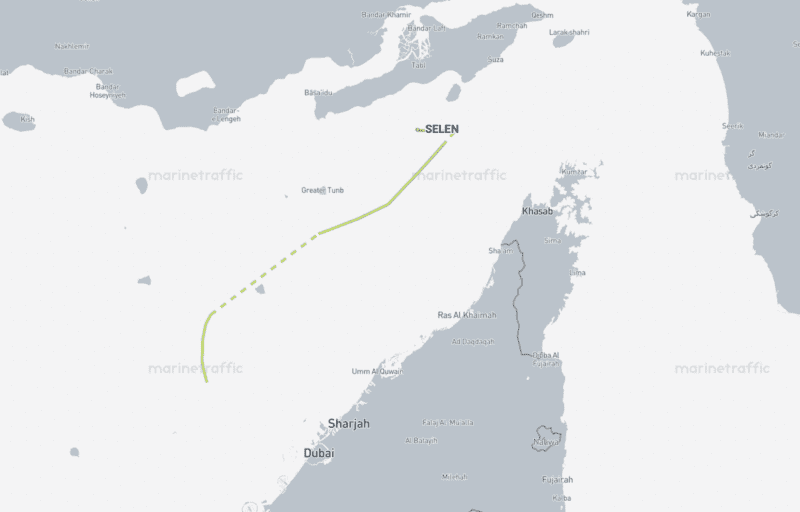
AIS tracking data reviewed by gCaptain shows the vessel SELEN departed Sharjah Anchorage late Monday, March 23, at 21:41 local time (UTC+4), bound for Karachi. The ship proceeded northeast along a typical outbound route before making a sharp course reversal near the Hormuz approach.
Instead of continuing into the Gulf of Oman, the vessel turned back toward the Gulf.
Iran’s Islamic Revolutionary Guard Corps (IRGC) Navy later claimed responsibility for the incident.
Rear Admiral Alireza Tangsiri, commander of the IRGC Navy, said in a post on X that the vessel was turned back for failing to comply with “legal protocols” and lacking permission to transit the strait. He added that all vessels must now coordinate passage with Iran’s maritime authorities.
AIS track shows the container ship SELEN reversing course near the Strait of Hormuz after departing Sharjah Anchorage, consistent with Iran’s claim the vessel was turned back for lacking transit permission. (Source: MarineTraffic)
The vessel, SELEN (IMO: 9208459), is a small, 2000-built feeder container ship flagged in St. Kitts and Nevis, with a deadweight of about 6,850 tons, according to Equasis data. Records show it is managed by Dubai-based Exceed Oceanic Trading LLC, with ownership linked to Exceed 2 Oceanic Co Inc.
The incident comes as new reporting indicates Iran has begun imposing ad hoc transit fees of as much as $2 million per voyage on some commercial vessels attempting to pass through Hormuz—effectively creating an informal toll system in one of the world’s most strategically vital chokepoints.
Those payments, according to Bloomberg, are being handled quietly and inconsistently, with some vessels complying while others avoid transit altogether. Traffic through the strait—normally responsible for roughly 20% of global oil and gas flows—has slowed to a trickle in recent weeks as the conflict enters its fourth week.
Taken together, the AIS data and Iran’s public statements point to a shift from disruption to a de facto permission-based transit regime. The implications are significant.
International law has long guaranteed the right of transit passage through the Strait of Hormuz, a position reiterated this week by India, which said no country has the authority to levy fees for use of the channel. But with war-risk insurance capacity shrinking, naval escort options limited, and commercial traffic already largely halted, shipowners are facing a new reality.
By Salma El Wardany, Fiona MacDonald, Ben Bartenstein and Samy Adghirni (Bloomberg) — Iran has started charging transit fees on some commercial vessels passing through the Strait of Hormuz, another...
Indian shipping regulators and related authorities seem to be keeping a close watch on ongoing supply chain dynamics for export trades as ocean carriers arguably tend to profiteer from capacity disruption, especially in a larger crisis situation.
President Donald Trump said the US would postpone strikes against Iran’s energy infrastructure after what he called “productive conversations” with the country, in comments that spurred confusion over the participants in the talks and parameters of a deal.
22 hours ago
Total Views: 908
Get The Industry’s Go-To News
Subscribe to gCaptain Daily and stay informed with the latest global maritime and offshore news
— just like 107,451 professionals
Secure Your Spot
on the gCaptain Crew
Stay informed with the latest maritime and offshore news, delivered daily straight to your inbox
— trusted by our 107,451 members
Your Gateway to the Maritime World!
Essential news coupled with the finest maritime content sourced from across the globe.

 Join The Club