The Iranian commander who spent years threatening—and ultimately executing—Tehran’s campaign to pressure global shipping in the Strait of Hormuz has reportedly been killed, according to the U.S. military.
Rear Adm. Alireza Tangsiri, head of Iran’s Islamic Revolutionary Guard Corps Navy (IRGC-N), was killed in an Israeli airstrike, U.S. Central Command confirmed Thursday in a sharply worded statement that framed his death as a major blow to Iran’s maritime capabilities.
“His death makes the region safer and will not be forgotten,” said CENTCOM commander Adm. Brad Cooper. “For years, Tangsiri was responsible for harassment of merchant shipping, attacks on vessels, and the deaths of innocent mariners.”
The statement went further, claiming Iran’s naval forces have suffered devastating losses in recent strikes. “Iran’s naval capabilities are in irreversible decline,” Cooper said, adding that 92% of the IRGC Navy’s large vessels have been destroyed during ongoing operations.
In an unusually direct warning, CENTCOM also called on remaining IRGC naval personnel to stand down. “To those who remain: you do not have to share his fate,” the statement read. “Abandon your posts.”
Tangsiri’s reported death comes at a pivotal moment for global shipping, as the Strait of Hormuz—through which roughly a fifth of the world’s oil and gas flows—remains under extreme pressure amid ongoing conflict in the region.
But his influence on the waterway stretches back far beyond the current crisis.
As early as 2019, Tangsiri warned Iran would shut the strait if U.S. sanctions prevented the country from exporting oil, framing Hormuz as strategic leverage in Tehran’s confrontation with Washington. At the time, the threats were widely viewed as rhetorical.
They didn’t stay that way.
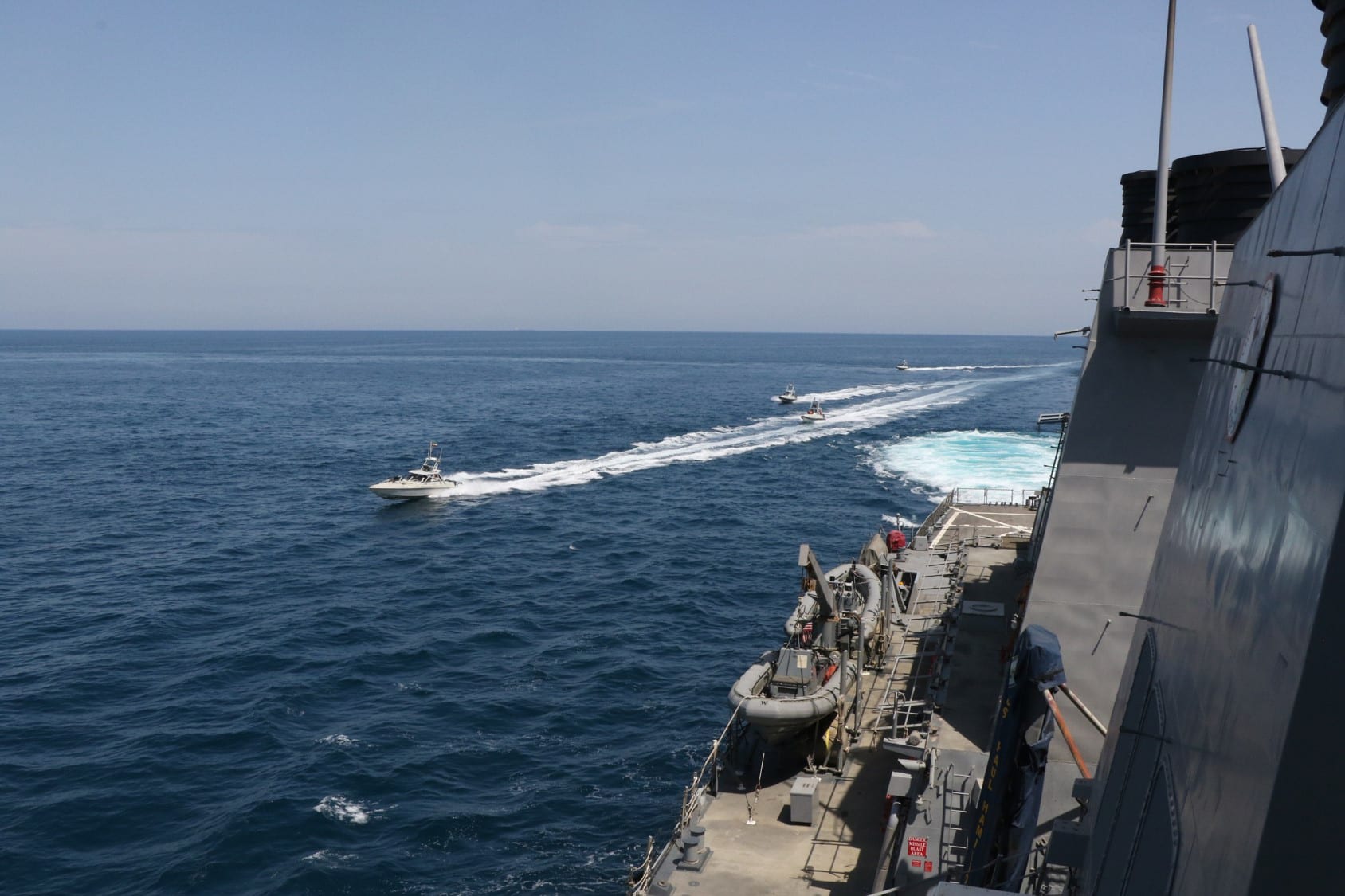
Over the following years, the IRGC Navy under Tangsiri developed a playbook built on asymmetric pressure—fast-boat swarms, close encounters with U.S. warships, and an expanding network of drones and coastal missile systems designed to hold vessels at risk across the narrow waterway.
By 2024, that approach escalated into direct action against commercial shipping. IRGC forces seized the Israeli-linked containership MSC Aries in a helicopter-borne boarding operation in the Strait of Hormuz—one of the most high-profile vessel seizures in years and a clear signal that Iran was willing to act on its threats.
In recent weeks, that strategy has entered a new phase.
In mid-February, Iran temporarily closed parts of the Strait of Hormuz during live-fire naval drills, a rare show of force that signaled Tehran’s willingness to disrupt traffic in the waterway. Since then, Iranian officials have declared they have “no red lines” in defending the strait and begun asserting more direct control over commercial shipping.
Tangsiri emerged as the face of that escalation, including publicly claiming responsibility for turning back the containership SELEN earlier this week and warning that all vessels must coordinate passage with Iranian authorities.
Industry reports indicate some vessels have faced ad hoc transit fees of up to $2 million per voyage, while overall traffic through Hormuz has slowed to a fraction of normal levels as shipowners weigh rising security risks, war-risk insurance withdrawals, and the lack of consistent naval protection.
Taken together, the shift points to something more structured than sporadic disruption—an emerging system of control over access to one of the world’s most important maritime chokepoints.
Tangsiri was central to that shift.
His public statements in recent weeks underscored a hardening position, with warnings that vessels must comply with Iranian protocols to transit the strait. The messaging, paired with real-world enforcement actions, marked the clearest indication yet that Tehran was moving toward a de facto managed transit regime.
For shipowners and charterers already navigating a high-risk environment, Tangsiri’s death may offer little immediate relief. Despite U.S. claims that Iran’s naval forces have been severely degraded, attacks on merchant vessels and disruptions to traffic have continued across the region, and the Strait of Hormuz remains effectively under wartime conditions.
For nearly a decade, Tangsiri telegraphed Iran’s approach to Hormuz—moving from threats to seizures to increasingly direct control over shipping.
He may be gone. But the strategy he helped build is still very much in play.
Editorial Standards · Corrections · About gCaptain

 Join The Club