DUBAI, July 16 (Reuters) – Iran has asked Yemen’s Houthi movement to stand ready to close the Red Sea oil route if the United States strikes Iranian power infrastructure, three sources told Reuters on Thursday, posing a potent new threat to global energy supplies.
The idea has been discussed within the Islamic Republic’s leadership, and the message has been conveyed to Iran’s Houthi allies, two senior Iranian sources and a regional source familiar with the matter said, speaking on condition of anonymity.
The sources said the Houthis had been informed recently of Tehran’s request, which has not been previously reported.
They did not give further details on how it had been conveyed or whether it was after U.S. President Donald Trump’s threat to attack Iranian power infrastructure on Tuesday.
Iran’s foreign ministry and a spokesperson for the Houthi group were not immediately available to respond to Reuters’ request.
HOUTHIS DEPLOY DRONES NEAR BAB EL-MANDEB, SAYS SOURCE
A source close to the Houthis said the group had completed preparations to attack shipping by deploying missiles and drones near Bab el-Mandeb strait, the gateway to the Red Sea, in Yemen’s highlands overlooking Hodeidah and the Gulf of Aden and was awaiting the order to begin.
Any threat to the Red Sea and its Bab el-Mandeb gateway risks hugely exacerbating the global energy crisis triggered by Iran’s closure of the Strait of Hormuz and underscores the explosive risks stemming from a new round of warfare.
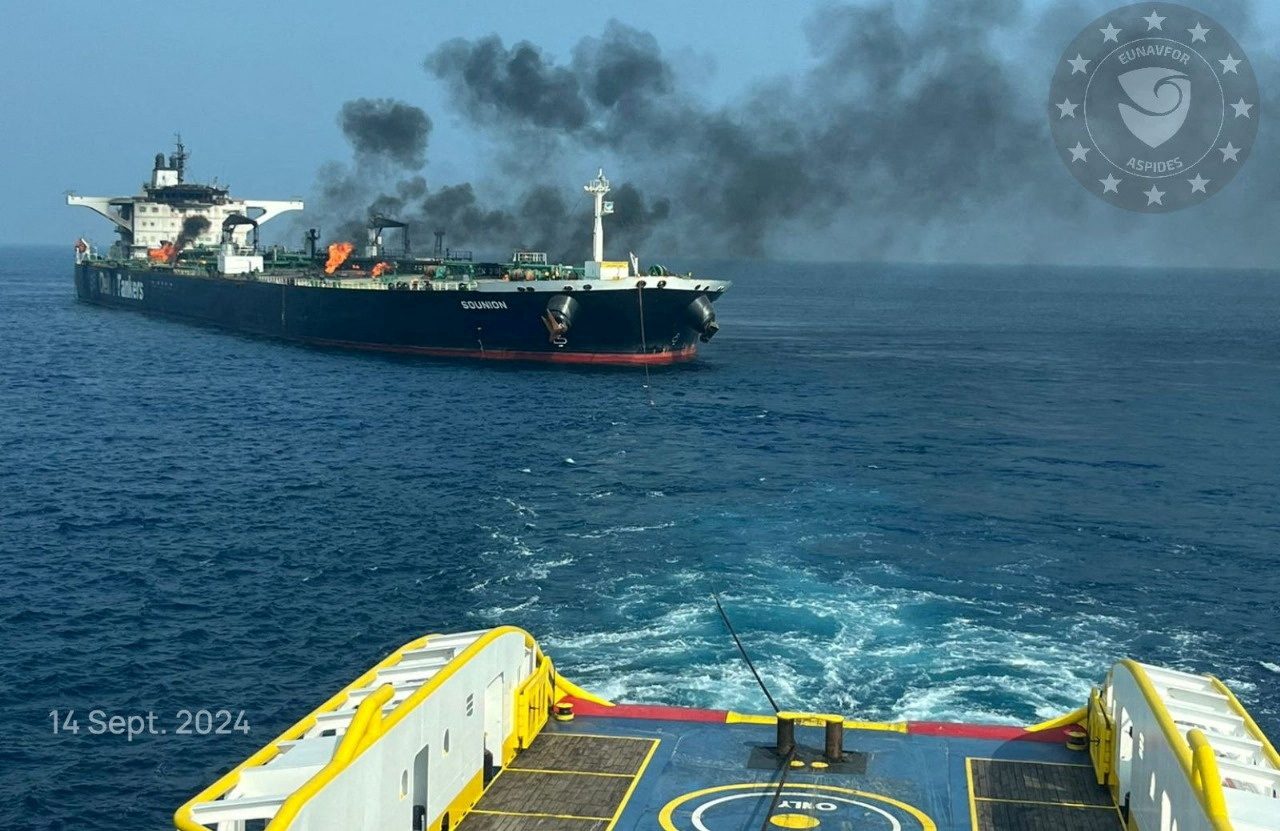
With the Hormuz strait already shut, any Houthi attacks on vessels or ports in the Red Sea would leave the Middle East’s two main oil export routes disrupted simultaneously, opening a new front in both the energy crisis and Iran’s wider conflict with the United States.
Representatives of Iran’s Islamic Revolutionary Guard Corps (IRGC) who are already in Yemen will control the decision on when to close the Bab el-Mandeb strait, said the source close to the Houthis.
In a sign of escalating tensions in the region, the Houthis fired missiles at Saudi Arabia after accusing the kingdom of bombing an airport under their control on Monday, breaking a four-year truce in the conflict between the kingdom and the group.
Torbjorn Solvedt, principal Middle East analyst with risk intelligence company Verisk Maplecroft, said the flare-up between the Houthis and Saudi Arabia had come at a bad time.
“If fighting intensifies and spills over into Red Sea export infrastructure and shipping, it will threaten the only major alternative route for oil exports from the region,” he said.
Two regional sources close to Riyadh said the kingdom was taking threats from Iran and the Houthis very seriously, adding that Riyadh was aware the Yemeni group was now closely coordinating with Iran over the Red Sea.
The conflict began on February 28, when Israel and the United States attacked Iran, leading Tehran to shut the Strait of Hormuz, the main route before the war for around a fifth of global energy supplies.
Tensions have mounted since a fragile June truce between Tehran and Washington collapsed, reviving fears of full-scale war and disrupting energy flows through the Strait.
RED SEA CLOSURE WOULD NOT BE DIFFICULT, SOURCE SAYS
A significant amount of Gulf oil has since been diverted to the Red Sea through a Saudi pipeline, and the waterway now carries around 7% of global energy supplies.
When the Houthis attacked shipping during the Gaza war, major shipping companies diverted their cargoes to the much longer, more expensive route around Africa.
With Saudi Arabia having itself diverted 70% of its energy exports through its Red Sea port of Yanbu, any direct attacks there would also be a big problem for oil markets.
One of the regional sources said Iran’s clerical rulers were seeking to pressure the United States by raising the potential cost to the global economy, threatening Red Sea shipping and the flow of Saudi oil exports through the waterway, in what the source described as part of “Iranian thinking.”
Closing down the strait would not be difficult, the source said, adding: “Anybody with a firing rifle can interrupt the shipping. You don’t have to have sophisticated missiles to interrupt the shipping.”
Iran views the Houthis as part of its regional “Axis of Resistance,” an alliance that also includes Lebanon’s Hezbollah and Iraqi Shi’ite armed groups that have already joined the regional conflict between Tehran and Washington.
But the Houthi rebels have not formally entered the fray.
The United States says Iran has provided the Houthis with weapons, funding and training, including support channeled through Hezbollah. Tehran has denied the accusation.
(Reporting by Parisa Hafezi in Dubai, Samia Nakhoul in Beirut, Mohammed Ghobari in Aden, Jonathan Saul in LondonWriting by Parisa Hafezi, Editing by William Maclean)
(c) Copyright Thomson Reuters 2026.

 Join The Club