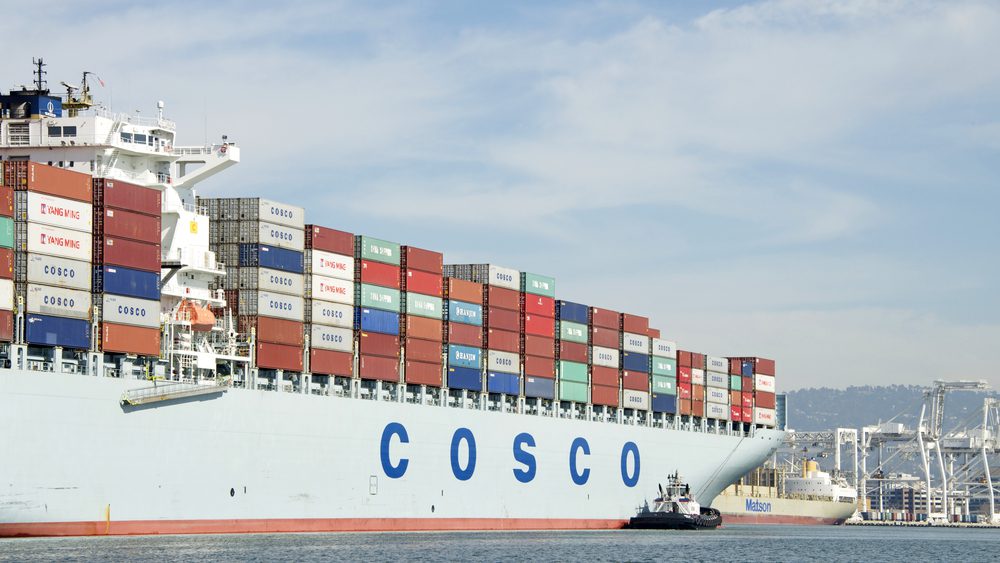
By Lori Ann LaRocco – Iran says it has begun enforcing new controls over shipping in the Strait of Hormuz, claiming it blocked multiple container ships—including two operated by China’s COSCO—under a “permission-to-transit” system that could reshape access to one of the world’s most critical maritime chokepoints.
Just hours after COSCO announced a Gulf network redesign and a return to the Strait of Hormuz, Iranian authorities said they had intervened to stop vessels that failed to comply with newly established transit protocols.
In an official statement, Iran’s Islamic Revolutionary Guard Corps (IRGC) said it had “blocked three container ships of different nationalities” after the vessels did not adhere to the new requirements.
The ultra-large container vessels (ULCVs) CSCL Indian Ocean and CSCL Arctic Ocean attempted to transit the Strait but reversed course at approximately 03:50 UTC, according to Kpler data. The vessels had been waiting near the UAE coast off Dubai and are now heading back toward those waters.
“This marks the first such crossing attempt by a major carrier since the beginning of the conflict,” said Rebecca Gerdes, Data Analyst for Container Intelligence at Kpler.
Iran had previously announced a “safe” shipping corridor on March 18, describing it as a framework for approved—and potentially paid—transits through the waterway. Friday’s incident suggests that access may now be conditional on compliance with Iranian-defined procedures.
Both COSCO vessels were bound for Port Klang, Malaysia.
At a regularly scheduled press conference on Friday, Lin Jian, Director of the Foreign Ministry Information Department, said China was closely monitoring developments.
“The Strait of Hormuz is a vital international shipping lane for global trade and energy security. The current situation of continued tension and military confrontation serves the interest of no one,” he said.
When asked whether China would escort its vessels to ensure safe passage, Lin added: “China’s position on the Middle East conflict is consistent. We believe that force will only lead to a vicious circle of violence. The pressing priority is to implement a ceasefire and promote a political settlement.”
The apparent denial of passage underscores the growing uncertainty facing commercial shipping in the region, where operators must now weigh not only security risks but also the possibility of selective access controls.
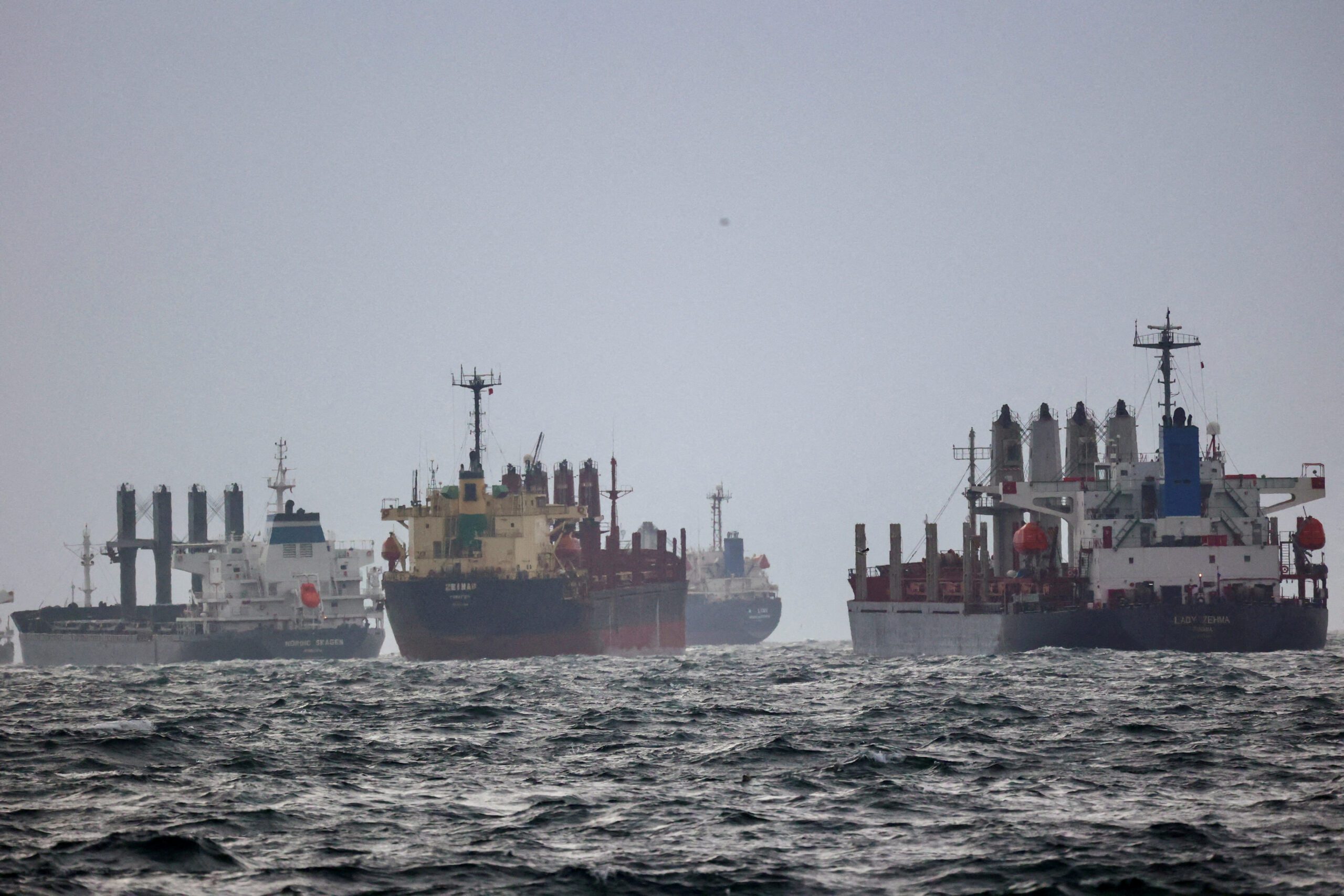
The waters in the Gulf increasingly resemble a holding area rather than a functioning transit corridor. According to Kpler analysis, approximately 470,000 TEUs are now stranded as operators hesitate to commit vessels without assurances that safe passage can be guaranteed.
Editorial Standards · Corrections · About gCaptain

 Join The Club