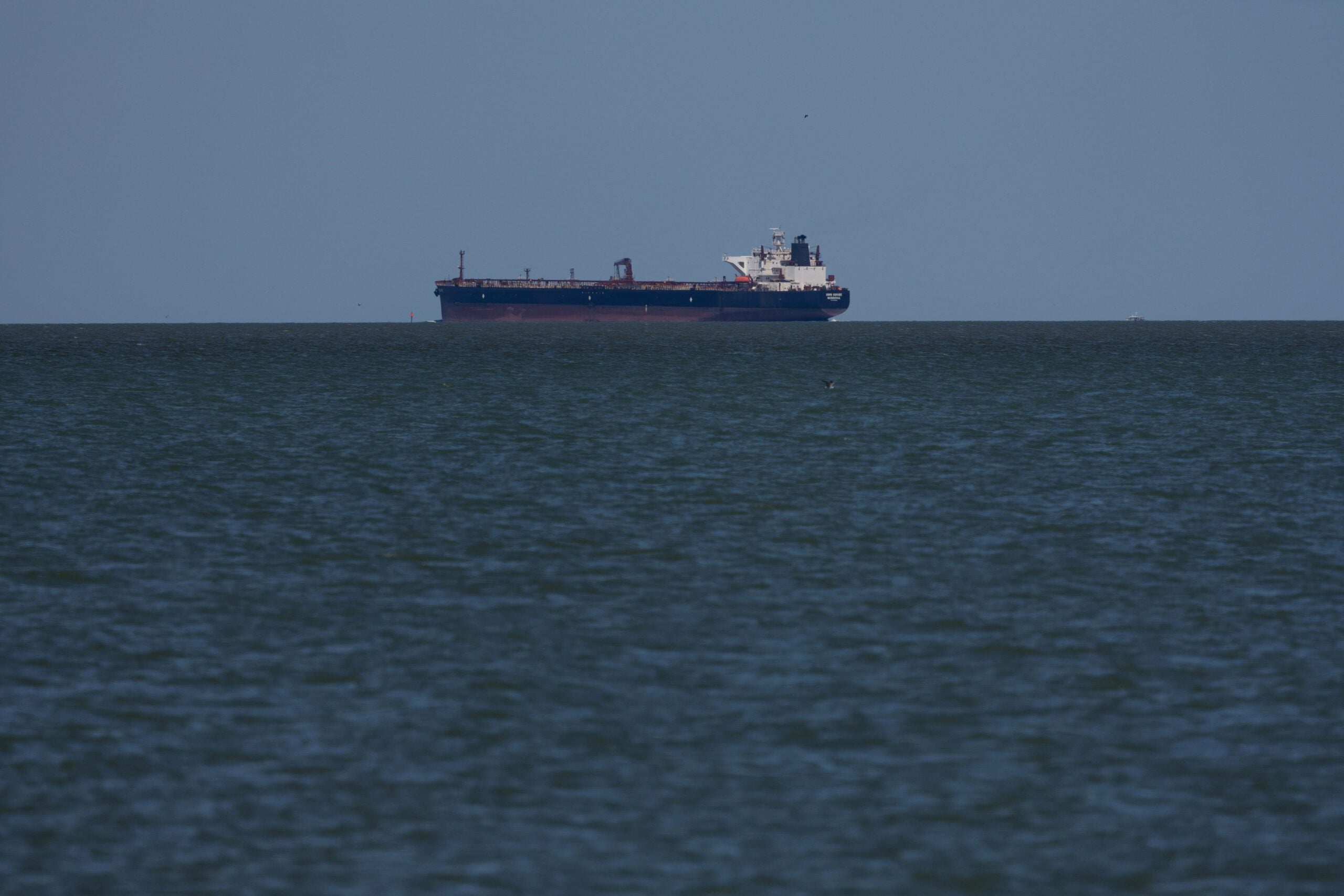
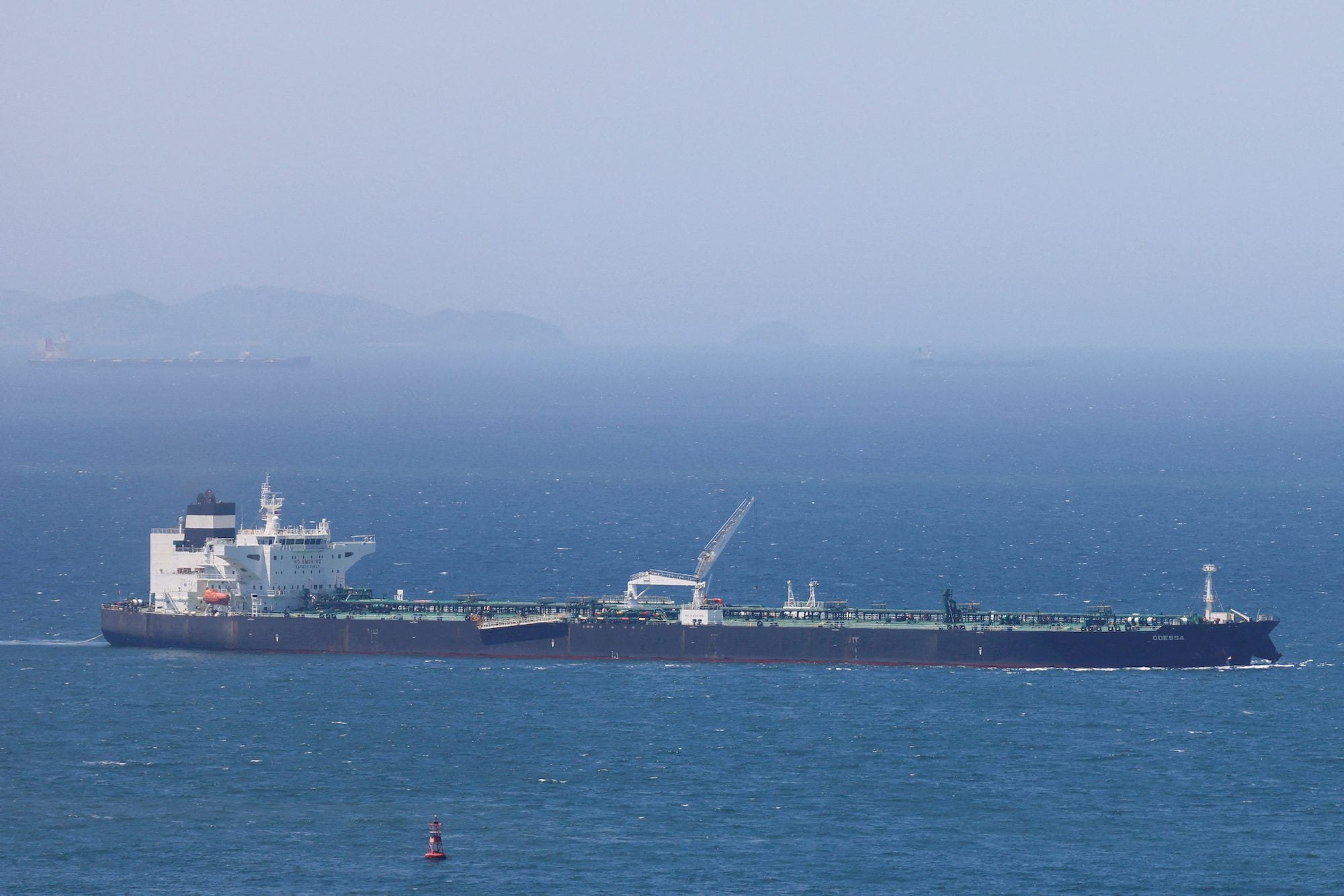
Iran’s Revolutionary Guards claimed Thursday that seven commercial vessels were struck overnight in the Persian Gulf and Strait of Hormuz, including four ships conducting oil transfers, prompting President Donald Trump to accuse Tehran of fabricating attacks to drive up oil prices ahead of the U.S. midterm elections.
The Islamic Revolutionary Guard Corps (IRGC) Navy said four vessels conducting ship-to-ship oil transfers in the northern Persian Gulf were struck simultaneously on Wednesday and caught fire. The vessels were allegedly transferring oil for an American company using routes Iran considers illegal.
In a separate claim, the IRGC said three additional vessels struck naval mines west of the Strait of Hormuz, causing fires that left them disabled, according to Reuters.
None of the seven incidents has been independently confirmed. Iran did not identify the ships, their owners or the American company allegedly involved. There were also no immediate details about casualties or potential oil spills.
UK Maritime Trade Operations (UKMTO), which tracks attacks on commercial shipping in the region, has not issued new incident reports corresponding to the claims.
President Trump responded Thursday by accusing Iran of inventing attacks as part of an effort to influence oil prices ahead of the November 3 elections.
“Iran is doing everything they can to drive up the price of Oil prior to the U.S. Midterm Election,” Trump wrote on Truth Social. “They are even making up fake hits, mines, and everything else, because more Oil is coming through the Hormuz Strait now than it did even prior to the beginning of the Conflict.”
The president’s accusation follows weeks of increasingly aggressive Iranian statements claiming that merchant vessels using routes outside Tehran’s control have been struck by mines or other weapons.
But the absence of UKMTO reports does not necessarily mean the attacks did not occur. In its October 16 weekly assessment, UKMTO acknowledged that it was struggling to establish the true number of attacks because the majority of vessels targeted were not reporting incidents directly to the organization.
UKMTO said it was aware of additional attacks through other sources but could not publish warnings without sufficient verification. That reporting gap has become increasingly important as the United States and Iran offer competing accounts of what is happening in the waterway.
Ship-to-Ship Transfers in the Crosshairs
The most significant element of Iran’s latest announcement is its claim to have targeted four vessels actively engaged in ship-to-ship oil transfers. If confirmed, the attacks would appear to mark the first reported direct targeting of an active ship-to-ship oil transfer operation during the conflict.
Such transfers have become a critical part of the improvised shipping network that has allowed Persian Gulf producers to restore much of their oil exports despite repeated attacks in the Strait of Hormuz.
Under a system operating with U.S. military assistance, tankers make short voyages through the strait, frequently with their AIS transponders switched off, before transferring cargoes to other vessels waiting in the Gulf of Oman. The receiving tankers then carry the oil to international markets.
The system has allowed producers to move substantial volumes of crude without relying on routes controlled by Iran, although at extraordinary cost.
The International Energy Agency reported Wednesday that tanker freight costs from the Middle East Gulf to Asia had climbed above $37 per barrel, more than five times prewar levels. For a fully loaded 2-million-barrel VLCC, that translates to more than $74 million in freight costs alone.
The location of Iran’s latest alleged attacks, in the northern Persian Gulf, is distinct from the Gulf of Oman transfer operations used by the U.S.-facilitated shuttle system. There is currently no independent evidence connecting the four vessels to that network.
Nevertheless, a confirmed attack on vessels during cargo transfers would represent a potentially significant expansion of the threat to regional oil shipping.
Mine Claims Remain Unsubstantiated
Iran’s latest claims also follow a series of announcements alleging that tankers have struck naval mines while attempting to transit the Strait of Hormuz without Iranian authorization.
Those claims have repeatedly been challenged by maritime security authorities.
In its October 18 advisory, the Joint Maritime Information Center (JMIC) addressed Iranian statements that two supertankers had struck mines the previous day, saying there was “no substantiation to these claims.”
U.S. Central Command has also rejected previous Iranian mine-strike announcements as false, accusing the IRGC of attempting to intimidate commercial shipping through disinformation.
However, JMIC continues to warn of a credible threat of renewed mining in and around the strait’s traffic separation scheme. Its latest assessment maintains the threat level for the Strait of Hormuz at SEVERE, with further deliberate attacks considered highly likely.
Competing Claims Over Oil Flows
Trump’s assertion that more oil is moving through Hormuz than before the conflict also comes amid conflicting assessments of the recovery in Gulf exports.
Overall Middle East oil shipments have approached or exceeded prewar levels in recent weeks, aided by an expanded network of pipelines, short-haul tanker voyages and offshore transfers.
But the recovery in total exports does not necessarily mean that more oil is moving through the strait itself.
According to reporting by The Wall Street Journal cited by gCaptain, flows through Hormuz, including offshore transfers, remained at approximately 82% of prewar levels, even as overall regional exports recovered.
UKMTO’s latest weekly overview also recorded just 254 vessel transits during the seven days ending October 14, approximately 70% below pre-conflict levels. Those figures include U.S.-reported facilitated transits that UKMTO says it cannot independently verify.
The figures measure different things—vessel movements, oil flows through Hormuz and overall regional exports—but illustrate the difficulty of determining how much shipping has actually recovered.
Meanwhile, the security situation continues to deteriorate.
UKMTO documented 12 attacks during the reporting period ending October 16, including 10 in the Strait of Hormuz. One vessel was lost, two were disabled or left not under command, and the outcomes of three others remained uncertain.
The escalation has included the sinking of the Singapore-flagged containership GFS Pride following an October 13 attack, as well as strikes on tankers operating inside the Persian Gulf.
Iran’s latest announcement adds another seven potential incidents to an already incomplete picture.
For now, neither Tehran’s claim that seven vessels were attacked nor Trump’s assertion that the incidents were fabricated has been independently established. What is clear is that merchant ships continue to face serious threats, even as oil producers find increasingly costly ways to keep cargoes moving.

 Join The Club