The security threat facing commercial shipping has expanded well beyond the Strait of Hormuz, according to new guidance from tanker industry group INTERTANKO, as fresh attacks on merchant vessels and intensifying U.S.-Iran military operations continue to reshape traffic through one of the world’s most important energy corridors.
In a security update issued Friday, INTERTANKO said the latest cycle of attacks demonstrates that risks now extend “across the whole region, from Kuwait and out into the Gulf of Oman.”
“The Arabian Gulf has seen a further cycle of violence with attacks on ships and shore installations,” the association said. “Such incidents highlight the threat which extends across the whole region, from Kuwait and out into the Gulf of Oman.”
The warning follows a series of new attacks and incidents involving commercial vessels. According to the UK Maritime Trade Operations (UKMTO), a tanker was struck on Thursday by an unknown projectile about 19 nautical miles east of Khasab, Oman, causing minor structural damage to its port side. No injuries or pollution were reported, and the vessel continued its voyage.
UKMTO also issued two additional advisories involving merchant tankers that were caught up in ongoing military activity—one near Iran’s Kharg Island in the Arabian Gulf and another roughly 100 nautical miles east of Duqm, Oman. While neither advisory described a direct attack, both said the vessels were “subject to interactions as part of ongoing military activity in the region.”
The latest incidents come after two tankers were struck while transiting the Strait of Hormuz earlier this week, killing one seafarer and injuring several others. INTERTANKO also referenced a separate chemical tanker hit by an anti-ship cruise missile in the Gulf of Oman that it said appeared to have been mistakenly struck after Iran targeted a warship.
Meanwhile, the United States has continued its military campaign against Iran for a sixth consecutive night. U.S. Central Command (CENTCOM) said American aircraft, drones and warships struck dozens of Iranian military targets, including coastal surveillance sites, air defense systems, logistics infrastructure and maritime capabilities used to threaten commercial shipping.
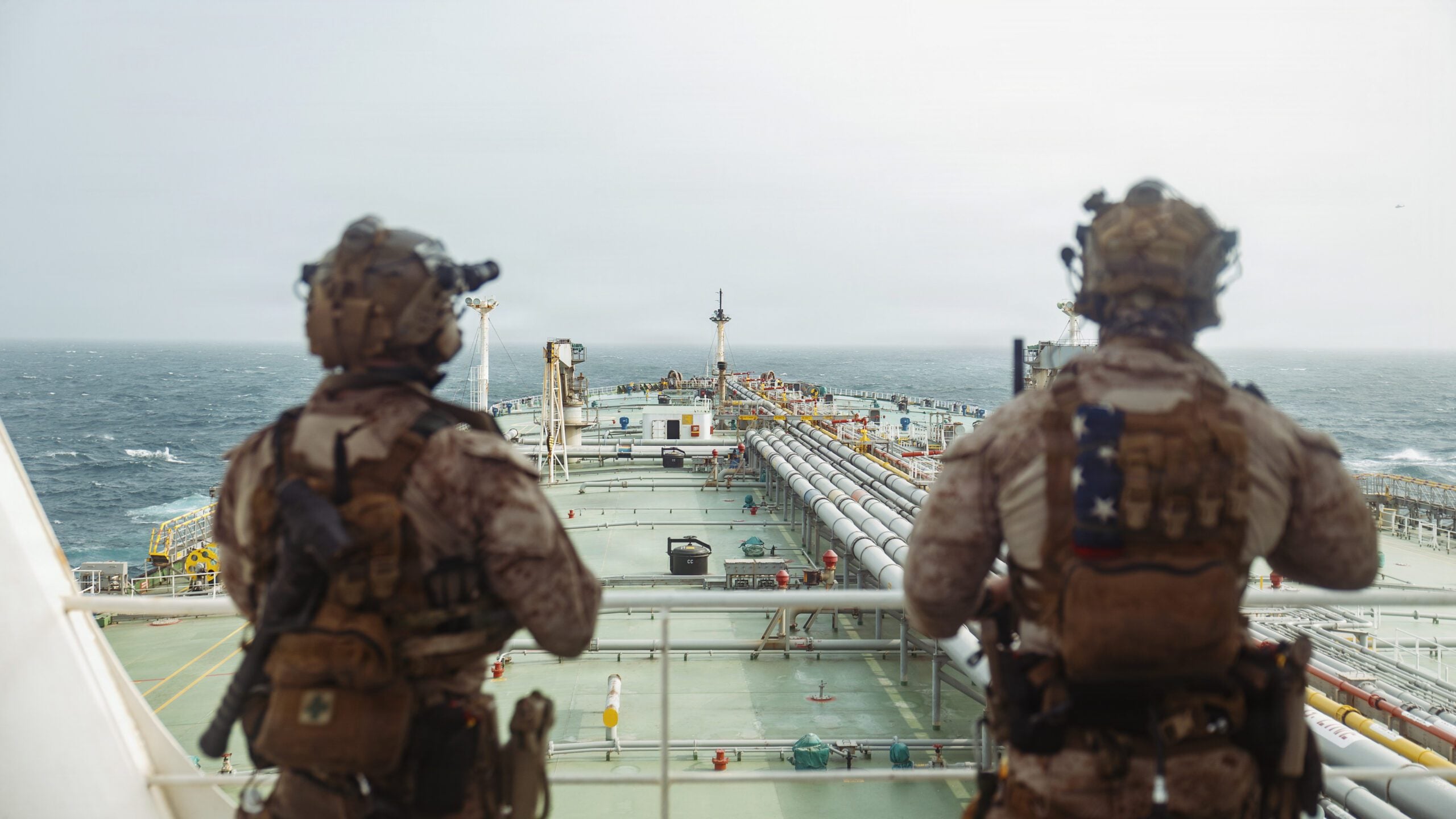
CENTCOM also said U.S. Marines from the 11th Marine Expeditionary Unit boarded the tanker Wen Yao in the Gulf of Oman as part of enforcement of the renewed U.S. naval blockade of Iran. According to the military, American forces have now redirected three commercial vessels attempting to enter Iranian ports, disabled one vessel that failed to comply, and boarded one vessel to verify compliance.
“Iran does not control the SoH,” Secretary of War Pete Hegseth proclaimed on social media.
Vessel traffic tells a more nuanced story. According to vessel-tracking firm Kpler, confirmed Strait of Hormuz crossings fell to just eight on Thursday, July 16, the lowest level in three weeks. Seven of those transits used the Iranian route north of the traditional Traffic Separation Scheme.
Kpler said commercial shipping patterns now suggest military developments are having a greater influence on routing decisions than diplomatic efforts.
INTERTANKO said there is little expectation that the exchange of attacks between the United States and Iran will subside. “Ships are likely to remain a significant target for Iran,” the association warned, pointing to an attack reported early Friday against a vessel using the southern route off Oman.
The deteriorating security environment is increasingly influencing commercial shipping decisions.
INTERTANKO also highlighted India’s latest measures to protect its seafarers after multiple attacks involving Indian crew members. India’s Directorate General of Maritime Administration has instructed shipowners, managers and crewing companies to avoid deploying Indian seafarers on voyages through the Strait of Hormuz until further notice, while allowing existing Indian crews to sail if operators document the risks and obtain explicit consent from individual seafarers.
While conditions continue to deteriorate in the Persian Gulf, INTERTANKO said the outlook remains more stable in the southern Red Sea. Citing the Joint Maritime Information Centre, the association said there are currently no indications that Yemen’s Houthis are preparing to resume attacks on commercial shipping despite renewed regional tensions.

 Join The Club