Mine clearance in the Strait of Hormuz is “not sufficient on its own” to bring commercial shipping back to normal, INTERTANKO warned, even as the tanker industry group welcomed the U.S. military’s clearing of mines from the internationally recognized shipping lanes.
INTERTANKO said clearing the Strait’s Traffic Separation Scheme removes a major hazard that has hung over shipping for months. But that does not necessarily mean vessels can safely return to the traditional route.
“This is real progress and we welcome it,” INTERTANKO Marine Director Phillip Belcher said. “Clearing the shipping lanes is a necessary condition for the return of normal traffic, but it is not sufficient on its own.”
“Our Members will continue to make their own voyage decisions on the basis of guidance and their own risk assessments, and above all the safety of their crews.”
Iran has not commented on the U.S. announcement and continues to insist that vessels only use the northern corridor through Iranian waters. INTERTANKO said it therefore “cannot be assumed that vessels using the TSS will be able to transit without interference.”
That leaves shipowners with a difficult choice even after months of U.S. mine-clearing operations.
U.S. Central Command Commander Admiral Brad Cooper announced last week that American forces had cleared mines from the TSS using Navy divers, Navy SEALs and air power from the Army, Navy, Air Force and Marine Corps.
“These are the long-standing lanes international shipping has historically used to transit the Strait of Hormuz,” Cooper said. “Over the past few months, our forces have meticulously and quietly cleared them of sea mines.”
Cooper’s announcement followed President Donald Trump’s earlier claim that all mines had been removed or detonated from the international waters of the Strait.
The Joint Maritime Information Center has continued to warn about the possibility of drifting or uncharted mines in and around the TSS, while mine surveying and clearance operations continue elsewhere in the Strait.
Mines are also only part of the threat. INTERTANKO said Iran has continued attacking shipping along the southern route off Oman, while additional attacks against vessels using the route have been intercepted by U.S. forces.
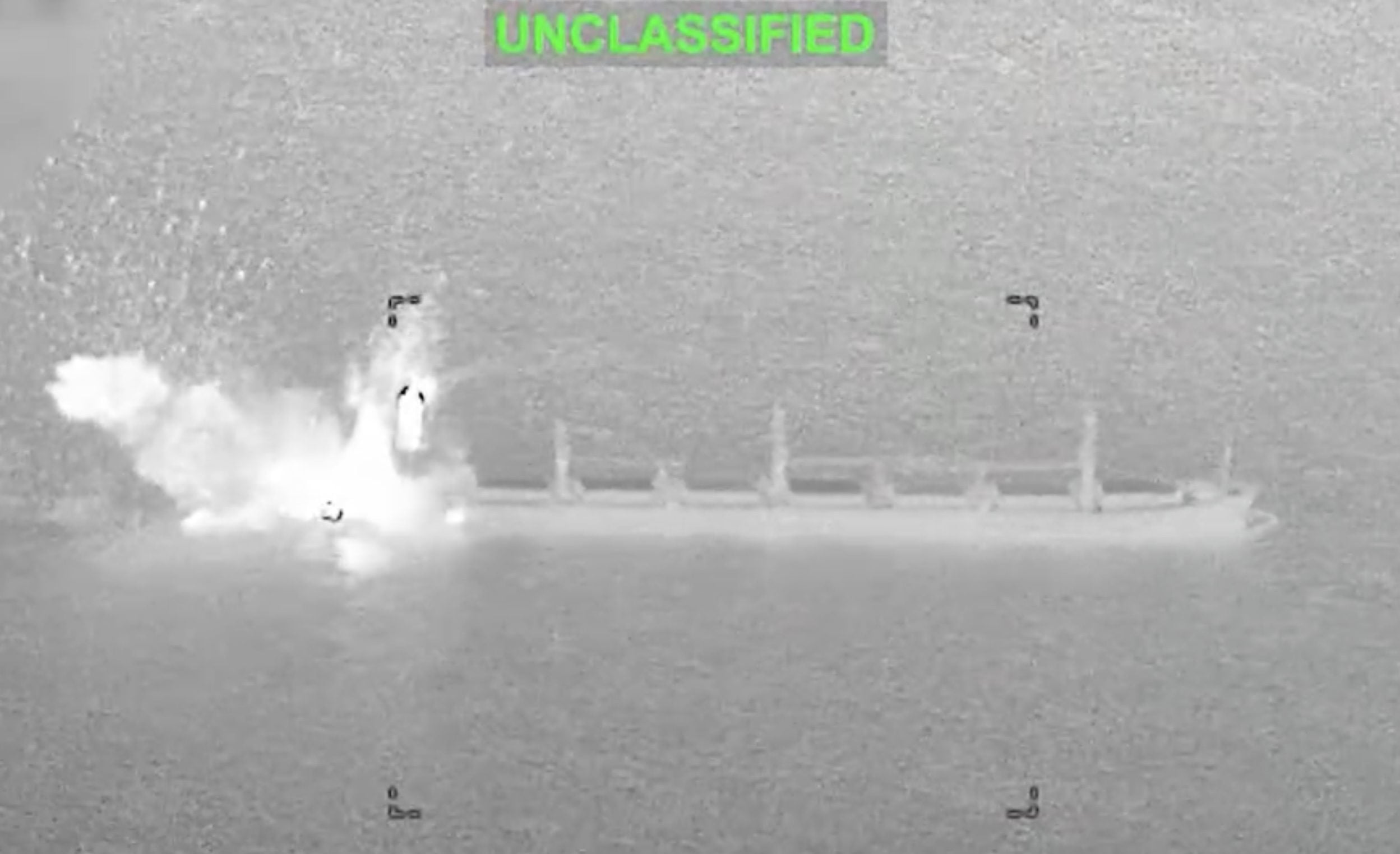
CENTCOM on Sunday also rejected an Iranian Revolutionary Guard Corps claim that a supertanker using the southern route had struck two mines and come to a complete stop.
CENTCOM called the claim “FALSE,” saying no ships had struck mines in the Strait and accusing the IRGC of using disinformation to intimidate commercial shipping.
The alternative northern route comes with its own complications.
The U.S. Treasury Department last month warned shipowners and maritime service providers against dealing with three sanctioned Iranian-linked entities accused of demanding payments for safe passage through Hormuz: the Persian Gulf Strait Authority, Persian Gulf Marine Insurance Company and Hormuz Safe Marine Services Authority.
The alert urges maritime companies to conduct enhanced due diligence, including checking voyage plans for signs that vessels entered Iranian territorial waters and asking counterparties whether safe-passage fees were paid or Iranian services were used.
INTERTANKO said the internationally recognized TSS should eventually return as the established route for commercial shipping once the broader security situation has stabilized.
For shipowners, however, clearing the mines solves only part of the problem. The bigger question remains whether ships can use the traditional lanes without being attacked or otherwise interfered with.

 Join The Club