A wave of announcements from defense technology firms, shipbuilders, and autonomy specialists is rapidly transforming the U.S. Navy’s Medium Unmanned Surface Vessel (MUSV) program into one of the most competitive maritime defense races in decades.
From global shipbuilding alliances to new high-end unmanned platforms, today’s updates show an industry moving in lockstep toward a single objective of delivering autonomous vessels at speed and scale.
At the center of the push is Anduril Industries, which is building what amounts to a transnational shipbuilding network with HD Hyundai and Edison Chouest Offshore.
The model blends Anduril’s autonomy and mission systems with Hyundai’s high-throughput shipbuilding and Chouest’s U.S. industrial footprint—an approach designed to bypass the bottlenecks of traditional naval procurement. The partnership builds on earlier agreements to jointly develop unmanned vessels for both U.S. and international markets, with prototypes already underway and further systems expected by the latter part of the decade.
The strategy reflects a broader realization inside the Pentagon that scaling autonomous fleets will require tapping global commercial shipbuilding capacity, not just domestic naval yards.
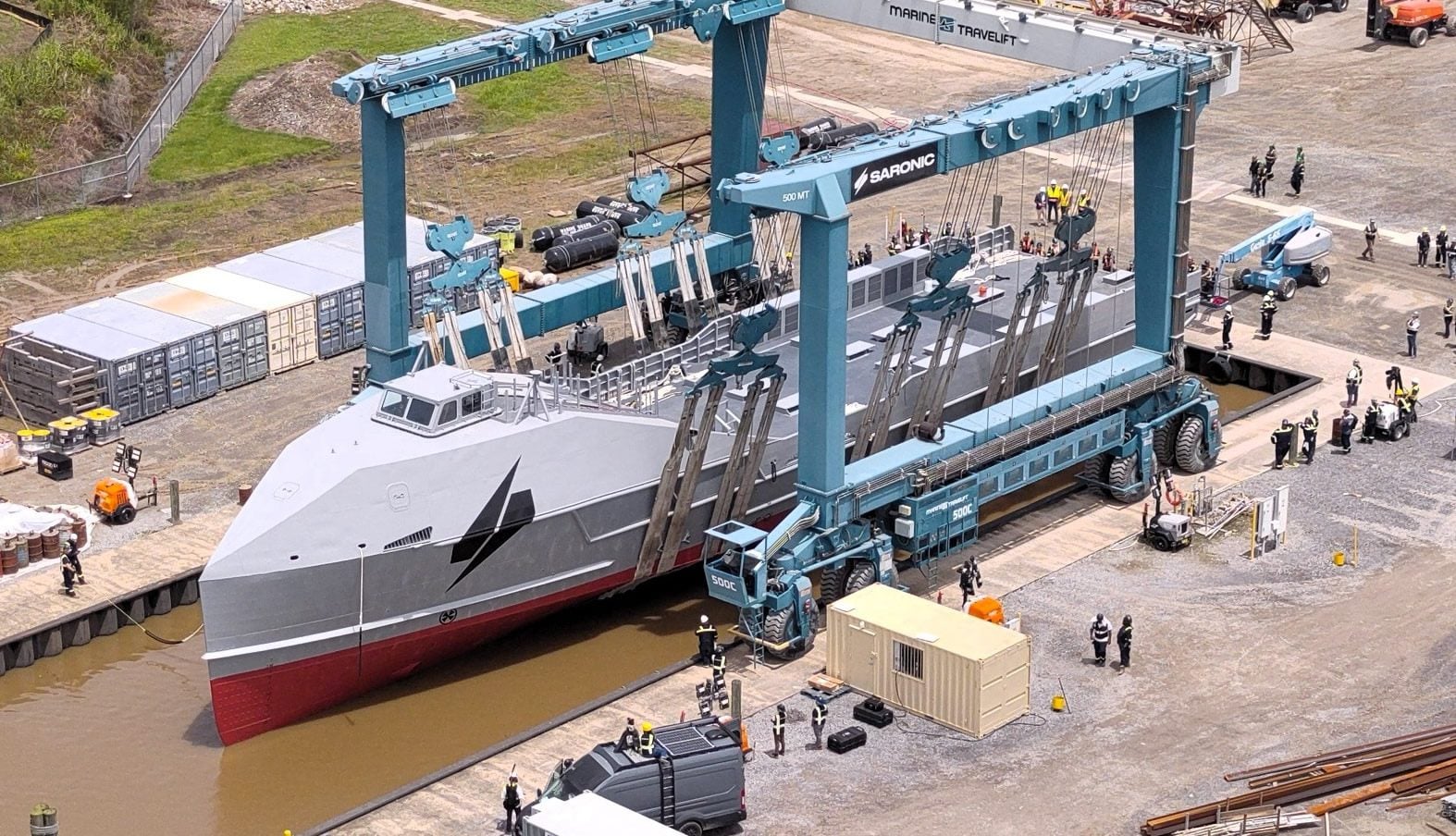
At the same time, Saildrone is moving beyond its ISR roots with the unveiling of its new Spectre platform—a 52-meter unmanned vessel designed for anti-submarine warfare and strike missions.
The platform marks a shift toward larger, more capable USVs capable of carrying containerized payloads, missile systems, and advanced sonar arrays—aligning closely with the Navy’s evolving concept of modular, multi-mission unmanned ships.
Backed by partnerships with Lockheed Martin and Fincantieri Marinette Marine, Saildrone is positioning itself at the high end of the MUSV spectrum, where endurance, payload flexibility, and integration with existing weapons systems are key differentiators.
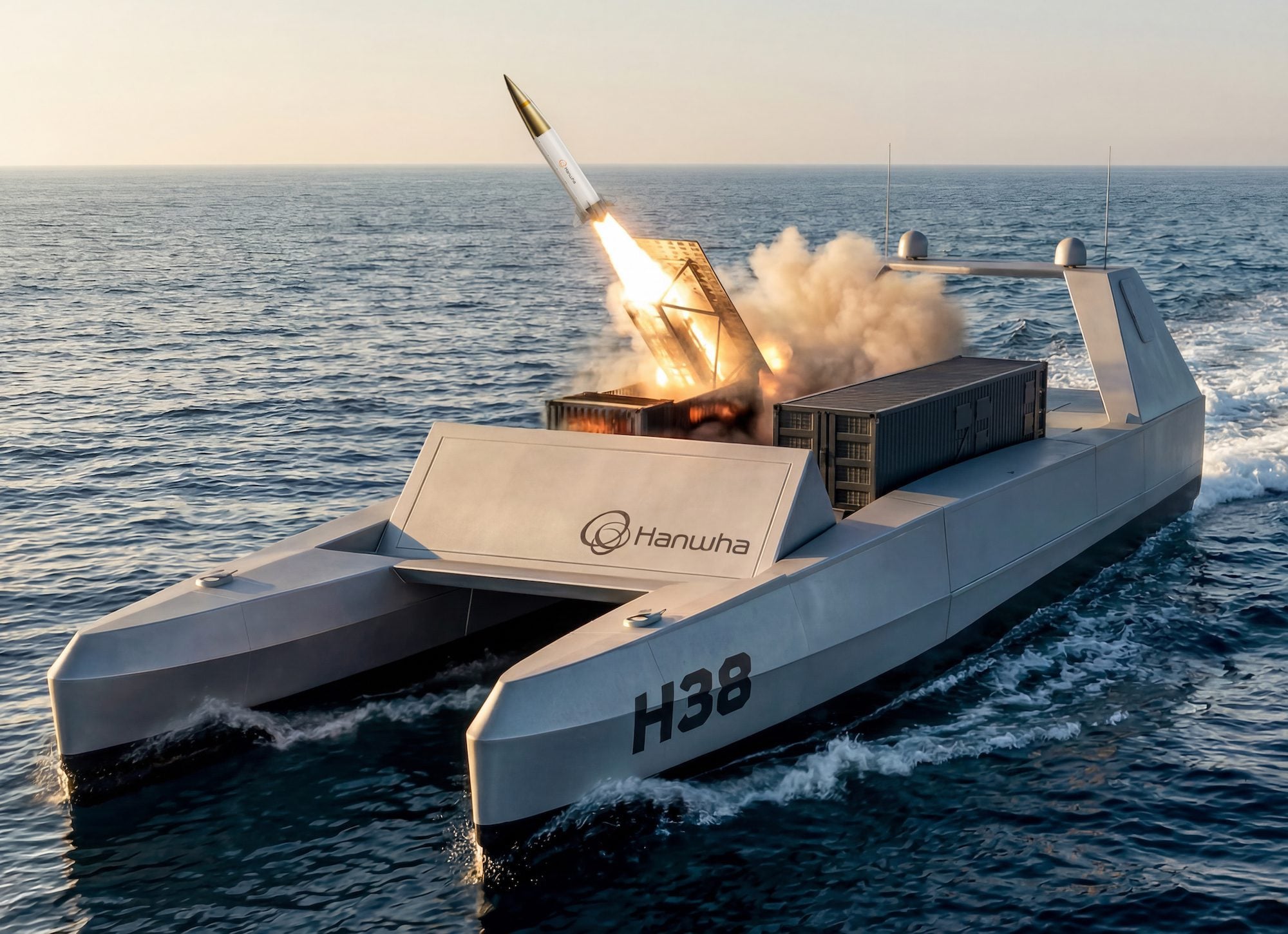
Meanwhile, Hanwha Defense USA has entered the fray through a partnership with Magnet Defense, aiming to produce a new class of 38-meter MUSVs designed for long-range, rapid-response missions.
The collaboration pairs Hanwha’s manufacturing capacity and weapons systems expertise with Magnet’s autonomy platform, highlighting a growing trend of defense primes teaming with smaller autonomy-focused firms to accelerate entry into the unmanned maritime space.
These moves come just as the U.S. Navy formally opens the MUSV program to broader industry participation through a prototype solicitation under its Portfolio Acquisition Executive for Robotic and Autonomous Systems.
Rather than selecting a single design, the Navy is creating a “marketplace” of competing solutions—an approach intended to accelerate innovation and allow multiple vendors to deliver production-ready systems on compressed timelines.
The shift replaces earlier, more limited prototyping efforts and reflects a wider requirement set, including containerized payloads that can be swapped across missions ranging from ISR to strike.
The timeline underscores the urgency. Navy officials are targeting on-water testing this year, with initial production vessels expected by fiscal year 2027—an unusually aggressive schedule for a new class of naval platforms.
That acceleration is being driven by a fundamental change in naval strategy. Autonomous vessels are no longer viewed as experimental adjuncts but as a core component of future fleet architecture.
Taken together, the announcements point to a rapidly forming industrial ecosystem around unmanned surface vessels.
With multiple teams now racing to deliver operational systems within the next two years, the MUSV program is quickly evolving from a concept into a proving ground for the future of maritime warfare.

 Join The Club