The head of the International Maritime Organization is calling on governments to stop attacks on merchant shipping as conflicts increasingly spill into some of the world’s most important trade routes.
IMO Secretary-General Arsenio Dominguez issued the warning Wednesday as the organization reported 80 verified attacks on international shipping in and around the Strait of Hormuz since the Middle East conflict began on February 28, killing at least 22 seafarers and injuring many others.
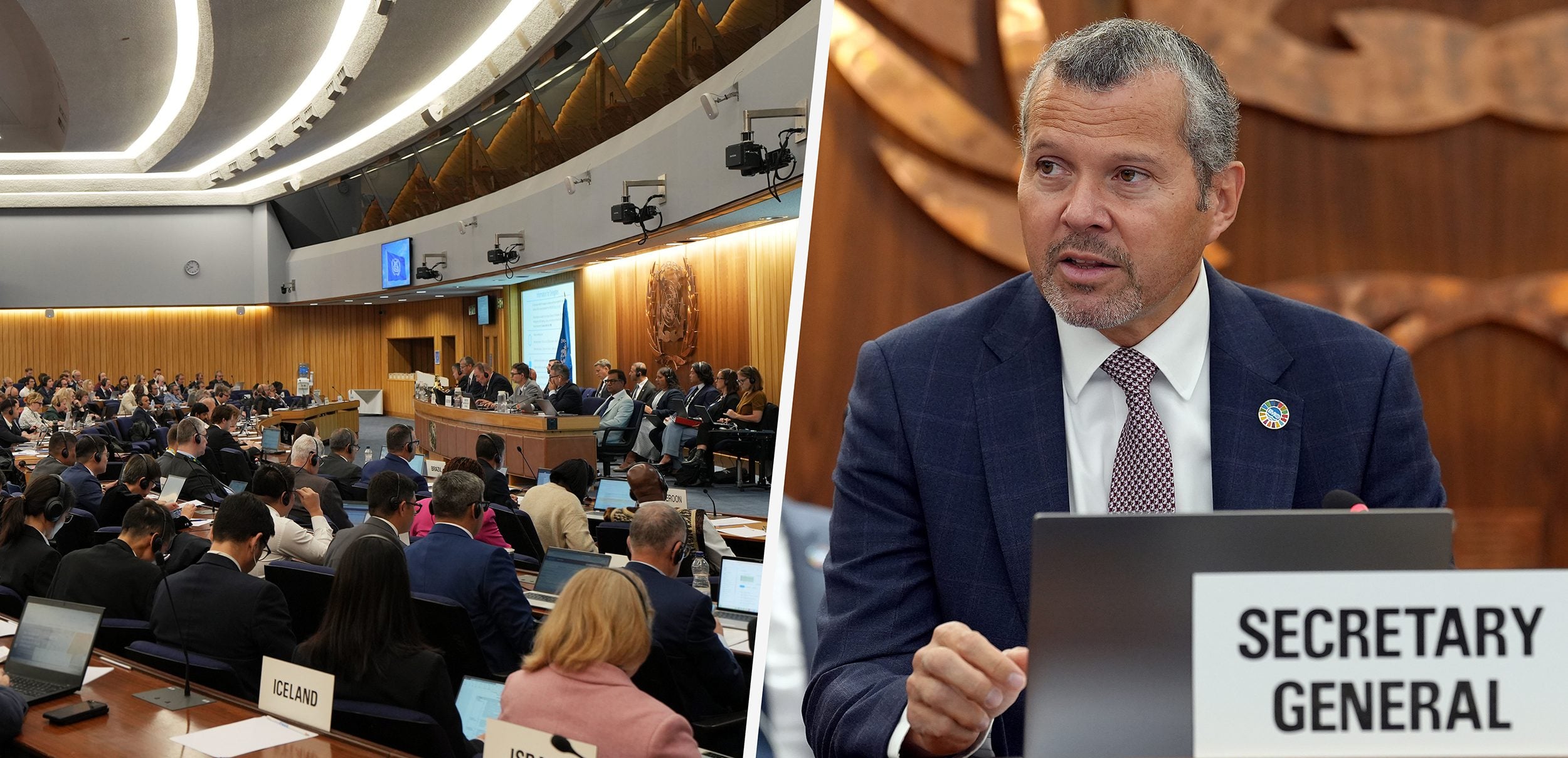
“We are reaching a point where these conflicts are being used as a pretext to attack merchant vessels and innocent seafarers,” Dominguez told delegates at the IMO’s Sub-Committee on Carriage of Cargoes and Containers in London. “Do not use these conflicts to attack innocent seafarers.”
The warning extends well beyond the Strait of Hormuz. In the Black Sea and Sea of Azov, the IMO said dozens of fatalities have reportedly resulted from attacks on international shipping in recent months, although the organization said precise casualty figures remain difficult to verify.
Violence has also returned to the Red Sea, where four seafarers were killed in the latest Houthi attack on a merchant vessel on August 11.
Dominguez stressed that attacks on merchant shipping across the different conflicts cannot be attributed to a single actor.
“In the Strait of Hormuz, it is not only one country attacking merchant vessels,” he said. “In the Black Sea and Sea of Azov, it is not only one country attacking merchant vessels.”
The latest figures underscore how quickly conditions have deteriorated around Hormuz. On August 28, six months into the crisis, the IMO said it had verified 70 attacks and 19 seafarer deaths. By September 15, that had climbed to 80 confirmed incidents and at least 22 deaths.
Recent incidents include the September 12 attack on the El Gaia in the Strait of Hormuz, which left the vessel damaged and two seafarers missing. The Hercules Star was damaged on September 9 in an attack that killed one seafarer, while two crew members were killed aboard the Sidr on August 31.
The security crisis has also left a large portion of the merchant fleet effectively trapped in the Persian Gulf. The IMO said in late August that as many as 400 ships carrying around 6,000 seafarers had been unable to safely depart the regionsince the conflict began.
The IMO Council in July reaffirmed that transit passage through straits used for international navigation must not be threatened, impeded or suspended, calling for a coordinated return to unhindered navigation through the Strait of Hormuz.
But the broader maritime security picture has continued to deteriorate.
Dominguez acknowledged that resolving the underlying conflicts falls outside the IMO’s mandate, but urged member states to take the consequences for international shipping back to their governments and other United Nations bodies.
“I call on you to share these impacts with the relevant bodies in your countries so that this can be dealt with within the United Nations, as appropriate,” he said.
For shipping, the growing concern is that merchant vessels and civilian crews are increasingly being caught in conflicts stretching across multiple critical waterways.
Disruptions in the Strait of Hormuz, Red Sea, Gulf of Aden and Black Sea affect not only vessel safety, but energy flows, commodity markets and global supply chains.
The IMO said its secretariat remains prepared to work with member states on technical and operational measures aimed at protecting shipping and seafarers.

 Join The Club