MartinLueke / Shutterstock.com
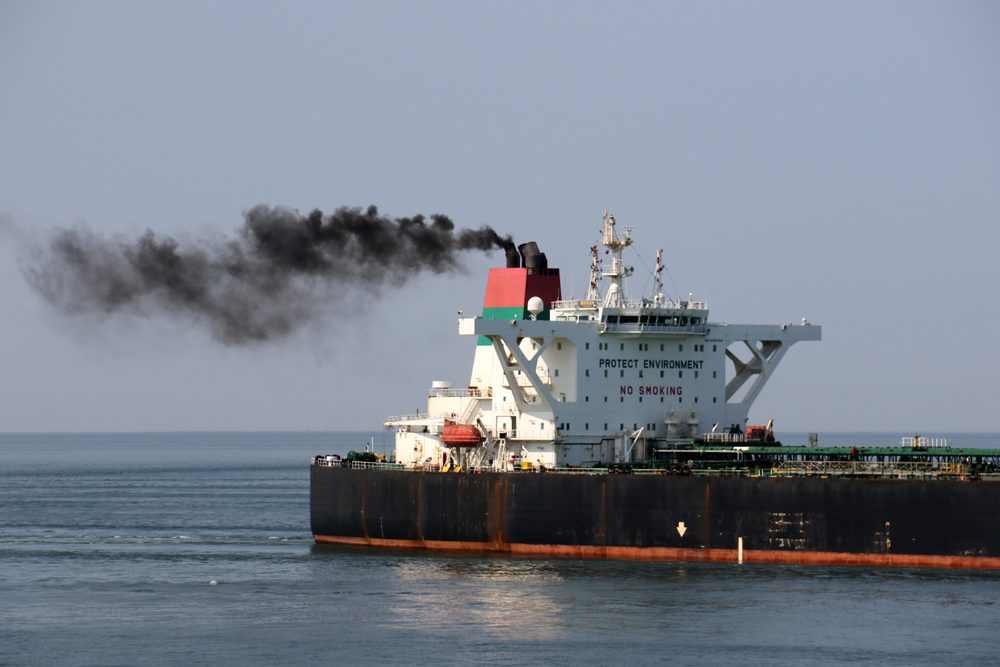
An open letter signed by more than 100 shipping companies and environmental organizations is urging the International Maritime Organization to impose mandatory speed limits for ships as a way to reduce harmful emissions from shipping.
The letter states that effectively addressing climate change is quite possibly the greatest challenge of lifetime. In response to this crisis, April 2018 the IMO agreed to an Initial GHG Strategy for international shipping, setting a goal of reducing the total annual greenhouse gas emissions from ships by 40% in 2030, and at least 50% by 2050 compared to 2008 levels, while pursuing at the same time full decarbonization.
One of the ideas that has been tabled for achieving the goal, specifically from France and Greece, is a mandatory speed limit for ships.
As a real-world example, the letter points to a dramatic reduction in GHG emissions witnessed with the implementation of slow steaming following the 2008 economic crisis, and recent studies which suggest that ships are speeding up again as global demand recovers.
“The signatories to this letter unite in stressing the urgent need for shipping to make its appropriate contribution to addressing climate change. As the initial step we express our strong support for the IMO implementing mandatory regulation of global ship speeds differentiated across ship type and size categories. Our preference would be to set maximum annual average speeds for container ships, and maximum absolute speeds for the remaining ship types, which take account of minimum speed requirements. Such a regulation should be implemented as soon as possible and the obligation for compliance should be placed both on shipowners and operators, including charterers,” the letter states.
The letter concludes asking that the mandatory speed limit for ships be considered at the next session of the IMO’s Marine Environment Protection Committee (MEPC) being held later this month at IMO’s London headquarters.
Policy Director at the UK Chamber of Shipping, Anna Zioupeed, argues in a blog post that any reduction regulation will actually slow low-carbon transition.
“If the IMO decides to rely on prescriptive speed regulation to meet its short-term target, it would delay the low-carbon transition and store up greater costs later on for the industry,” writes Zioupeed.
“The scale of ambition required for the industry to meet the target set should not be underestimated; therefore, we should incentivise and not penalise those shipowners that have been proactive and have already implemented a number of operational and technological measures to reduce emissions. Unfortunately, the speed limit proposals lack the principle of a level playing field which could present a barrier to innovation,” Zioupeed added.
The full letter can be found here.
Updated: November 18, 2020 (Originally published May 1, 2019)
Editorial Standards · Corrections · About gCaptain

 Join The Club