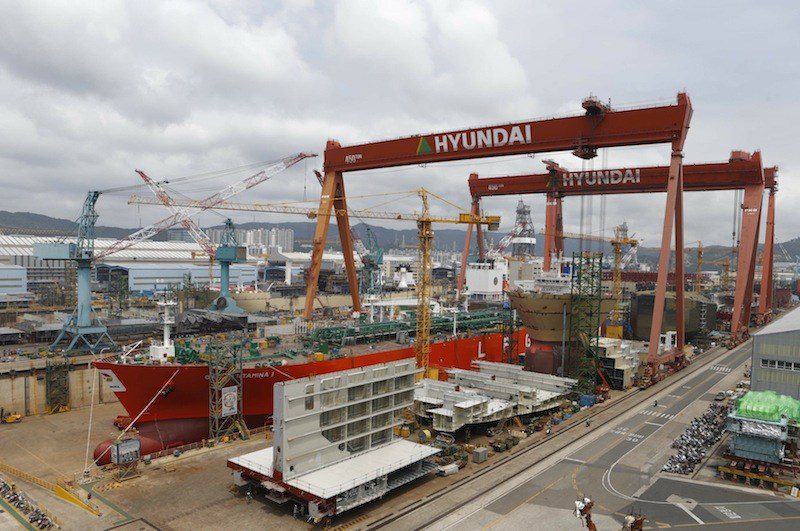
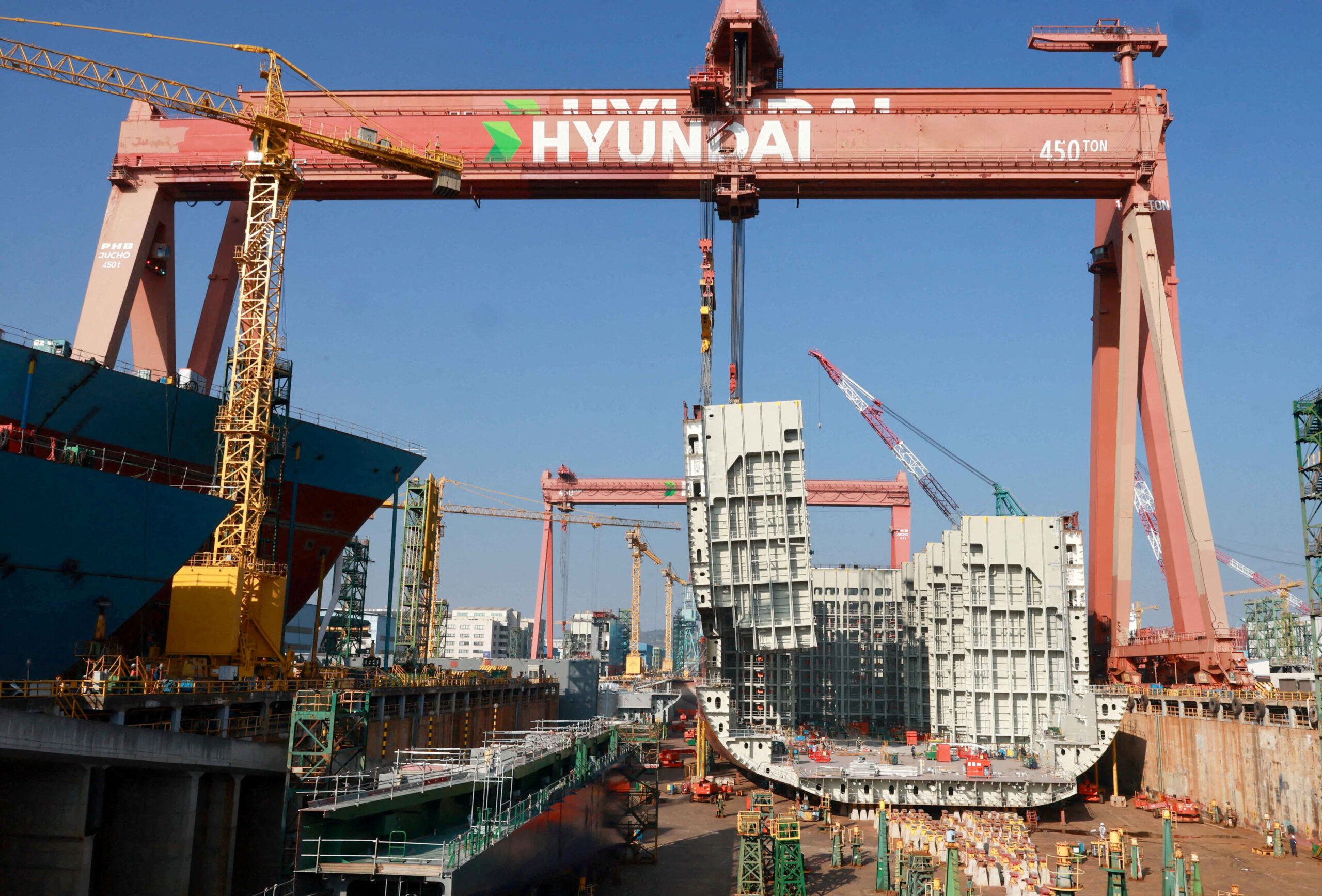
South Korean shipbuilder HD Hyundai recently gathered over 600 industry leaders, government officials, and technology partners at the APEC 2025 Future Tech Forum to unveil its strategy for transforming shipbuilding through artificial intelligence, autonomous systems, and international collaboration.
The late October event, held under the theme “Shaping the Future of Shipbuilding,” featured keynote presentations from HD Hyundai executives alongside partners including Huntington Ingalls Industries, Anduril Industries, Siemens, and the American Bureau of Shipping.
HD Hyundai Chairman Chung Kisun opened the forum by emphasizing that artificial intelligence is fundamentally reshaping both maritime operations and manufacturing processes. “AI is revolutionizing both maritime sustainability and digital manufacturing,” Chung said, adding that realizing the technology’s full potential will require “much closer collaboration across industry boundaries — a truly global alliance of innovation.”
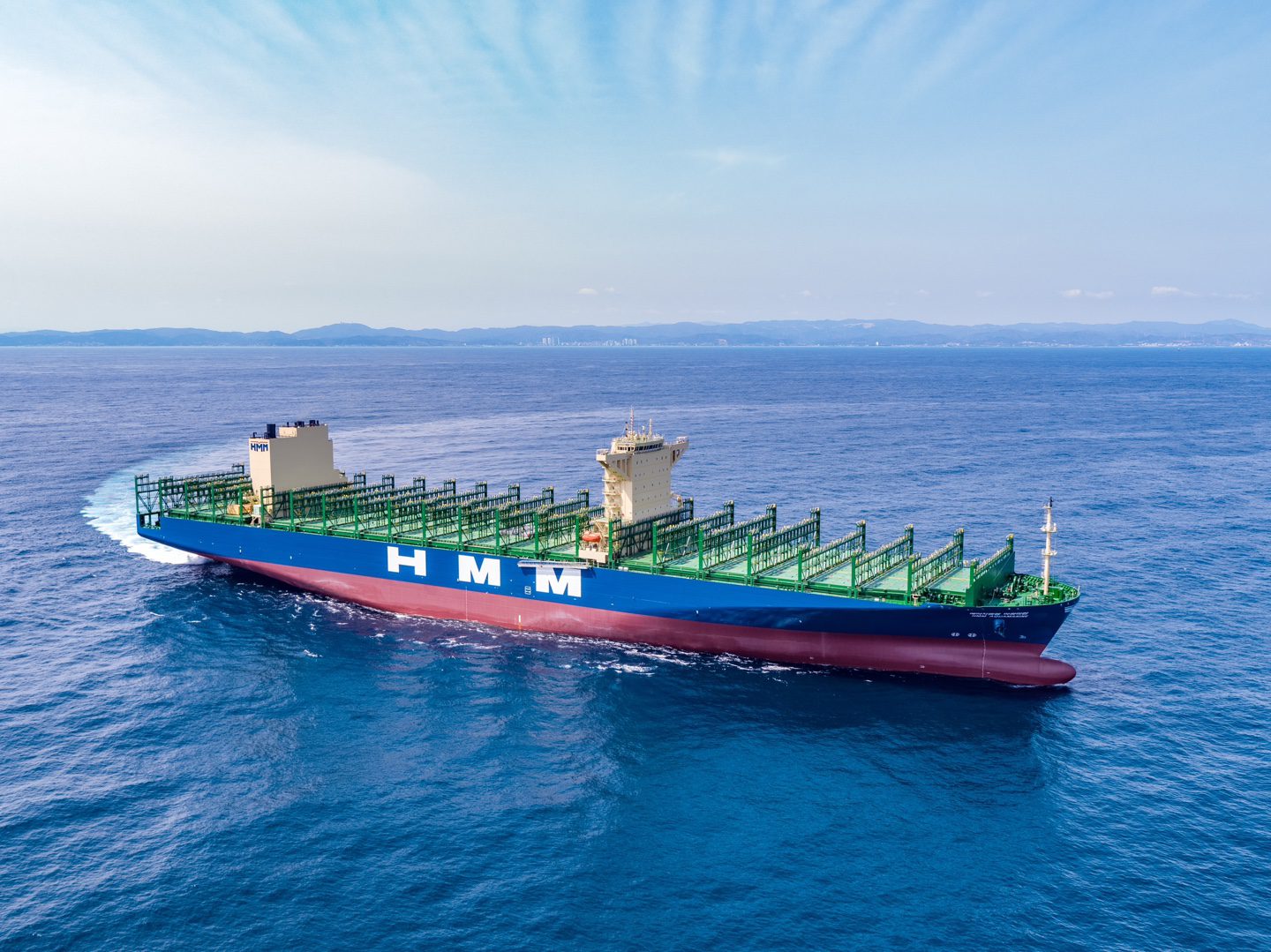
The company’s progress in autonomous navigation was highlighted through its subsidiary Avikus, which successfully completed a transpacific voyage in 2022 using AI-powered autonomous navigation on an LNG carrier transporting actual cargo—demonstrating that the technology has moved beyond testing to commercial viability.
Beyond vessel operations, HD Hyundai is deploying AI throughout its shipbuilding processes, developing smart shipyards powered by digital twin and robotics technologies to address skilled labor shortages while improving productivity and safety.
A significant portion of the forum focused on next-generation naval capabilities. John Kim, Head of Anduril Industries Korea, emphasized the defense sector’s need for rapid development cycles that traditional procurement structures struggle to provide. Anduril engineers, he explained, test systems directly in operational environments rather than from offices, identifying and resolving issues on-site to dramatically reduce development timelines.
This development philosophy has led to a partnership between Anduril and HD Hyundai to jointly develop unmanned surface vehicles. Kim Hyung-taek, HD Hyundai’s Research Director in AI & Unmanned Naval Systems, outlined how the collaboration will integrate HD Hyundai’s proven vessel autonomy—already deployed on more than 200 merchant vessels worldwide—with Anduril’s mission autonomy systems validated through U.S. and allied military programs.
“The integration of these proven technologies is expected to create an unmanned surface vehicle that will redefine traditional manned naval operations and emerge as a game changer in maritime defense,” according to the presentation.
Patrick Ryan, Chief Technology Officer of the American Bureau of Shipping, presented six core digital technologies driving industry transformation: AI, digital twins, smart shipyards, autonomous systems, remote inspection, and robotics.
ABS is collaborating with HD Hyundai on an AI-based design support system to process the vast amounts of information generated during ship design and rule verification, while also developing digital twin technology that incorporates real-time operational data to predict vessel fatigue life and structural integrity.
In one of the forum’s most forward-looking announcements, Nicolaus Radford, CEO of Persona AI, unveiled progress on humanoid robots being jointly developed with HD Hyundai for shipyard welding operations. The robots are being trained through motion capture of human welders, with thousands of physical simulations and reinforcement learning iterations teaching them to maintain balance and execute tasks autonomously in real-world working conditions.
The humanoid robots are targeted for deployment at HD Hyundai shipyard sites by 2027, with the project progressing on schedule.
Eric D. Chewning, Executive Vice President of Huntington Ingalls Industries—the largest defense shipyard in the United States—announced plans to expand strategic collaboration with HD Hyundai across four key areas: advancing shipbuilding capacity to meet growing U.S. Navy demands, jointly developing next-generation naval logistics ships, sharing design and engineering R&D, and cooperating on lifecycle support of naval vessels in the Indo-Pacific region.
Chairman Chung underscored the potential for Korea-U.S. cooperation, stating: “With all these innovative capabilities, we are fully ready to be a facilitating partner in this American naval renaissance.”
The forum signals that as maritime challenges grow more complex—from decarbonization to defense modernization—the industry is moving toward unprecedented levels of technological integration and international cooperation to meet them.
Editorial Standards · Corrections · About gCaptain

 Join The Club