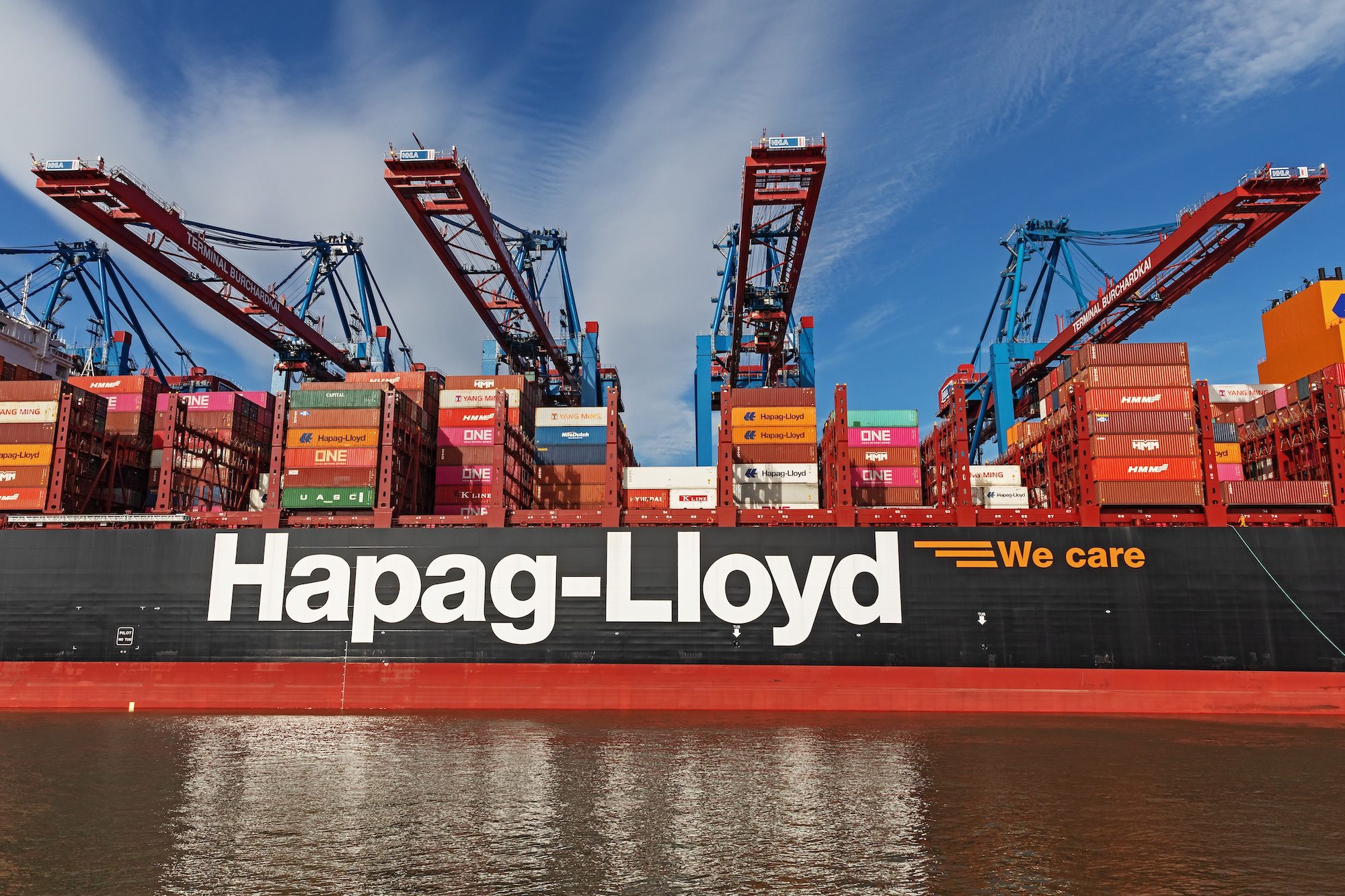
Hapag-Lloyd delivered solid operational performance in 2025, but a sharp drop in freight rates and rising disruption costs pushed earnings significantly lower as the container shipping market continued to normalize.
The German carrier reported Group profit of €924 million ($1.0 billion), down from €2.4 billion in 2024, while EBITDA fell to €3.2 billion and EBIT to €1.0 billion.
The decline came despite strong volume growth. Hapag-Lloyd carried 13.5 million TEU during the year, an 8% increase that outpaced the broader market, supported by the rollout of its Gemini Cooperation with Maersk. The new network delivered roughly 90% schedule reliability, a level the company says sets a new industry benchmark.
But pricing pressure proved decisive. Average freight rates fell 8% to $1,376 per TEU as capacity returned to the market and trade imbalances persisted. At the same time, costs climbed amid port congestion, tariff-related disruptions, Red Sea security tensions, and startup expenses tied to the Gemini network.
The result was a sharp compression in margins, with EBITDA margin dropping to 17.1% from 24.3% and EBIT margin falling to 5.1%.
Hapag-Lloyd said it will propose a dividend of €3.00 per share, down from €8.20 the previous year, reflecting the lower earnings base and a more cautious outlook.
That outlook is increasingly uncertain. The company expects 2026 EBITDA to come in between €0.9 billion and €2.6 billion, with EBIT potentially slipping into negative territory. Management pointed to freight rate volatility and escalating geopolitical risks—particularly in the Middle East—as key factors driving the weaker forecast.
Hapag-Lloyd Faces $40 Million to $50 Million Weekly Costs Due to Middle East Conflict
CEO Rolf Habben Jansen said the operating environment has become “more uncertain than ever,” citing slower market growth, additional vessel capacity, and ongoing geopolitical pressure, even as the company looks to offset some of the impact through cost savings tied to the Gemini network.
At the same time, Hapag-Lloyd is continuing to push ahead with its long-term strategy. The company expanded its terminal portfolio in 2025 and is working toward completing its planned acquisition of ZIM, a deal that would strengthen its position among the world’s largest container carriers and generate significant cost synergies if approved.
For now, the picture is clear: volumes are rising and operations are improving, but earnings are under pressure—and with geopolitical risks mounting, the next year could prove even more challenging for global shipping.
Editorial Standards · Corrections · About gCaptain

 Join The Club