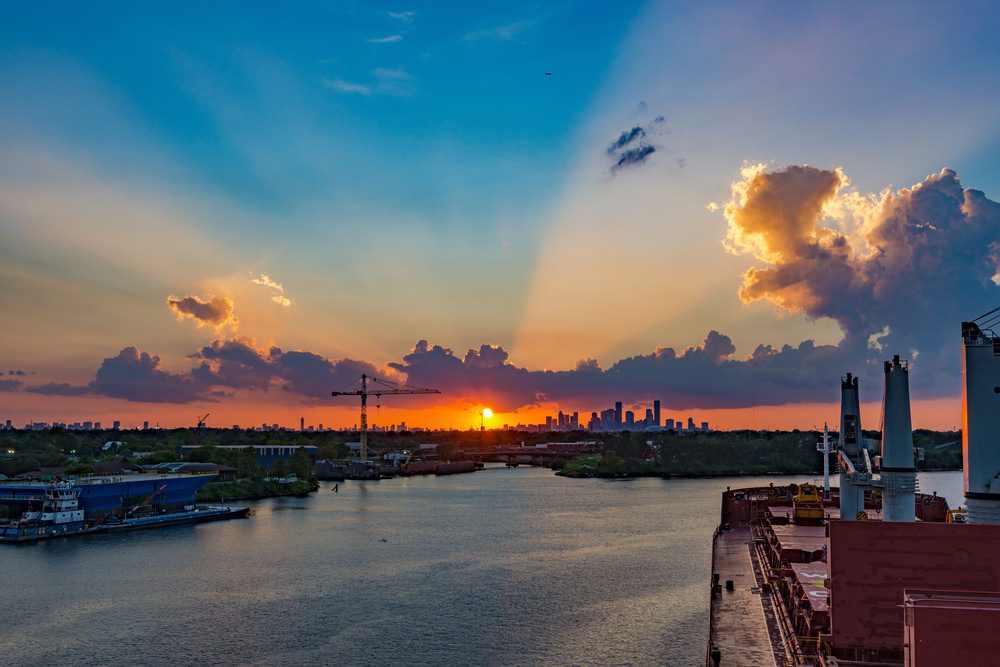
Photo of the Houston Skyline by nektofadeev, Shutterstock
By Jack Kaskey (Bloomberg) Chemical companies are pressing federal officials to spend billions of dollars on a coastal flood control system near Houston to protect petrochemical plants, oil refineries and shipping infrastructure from the next hurricane.
The coastal spine, as the project is called, is among the most important infrastructure investments needed to mitigate damage from major storms, Bob Patel, chief executive officer of LyondellBasell Industries NV, said Monday at an industry conference to discuss lessons learned from Hurricane Harvey.
The proposed system of seawalls, levies and flood gates in the Galveston, Texas, area would cost an estimated $14 billion, and would be designed to reduce flood damage similar to that seen by Hurricane Ike’s storm surge in 2008.
The flood barrier should extend from Freeport, Texas, where DowDuPont has its largest manufacturing site, to Beaumont on the upper Texas coast, where Exxon Mobil Corp. has chemical plants and refineries, said state Senator Larry Taylor, a Republican from the Houston area.
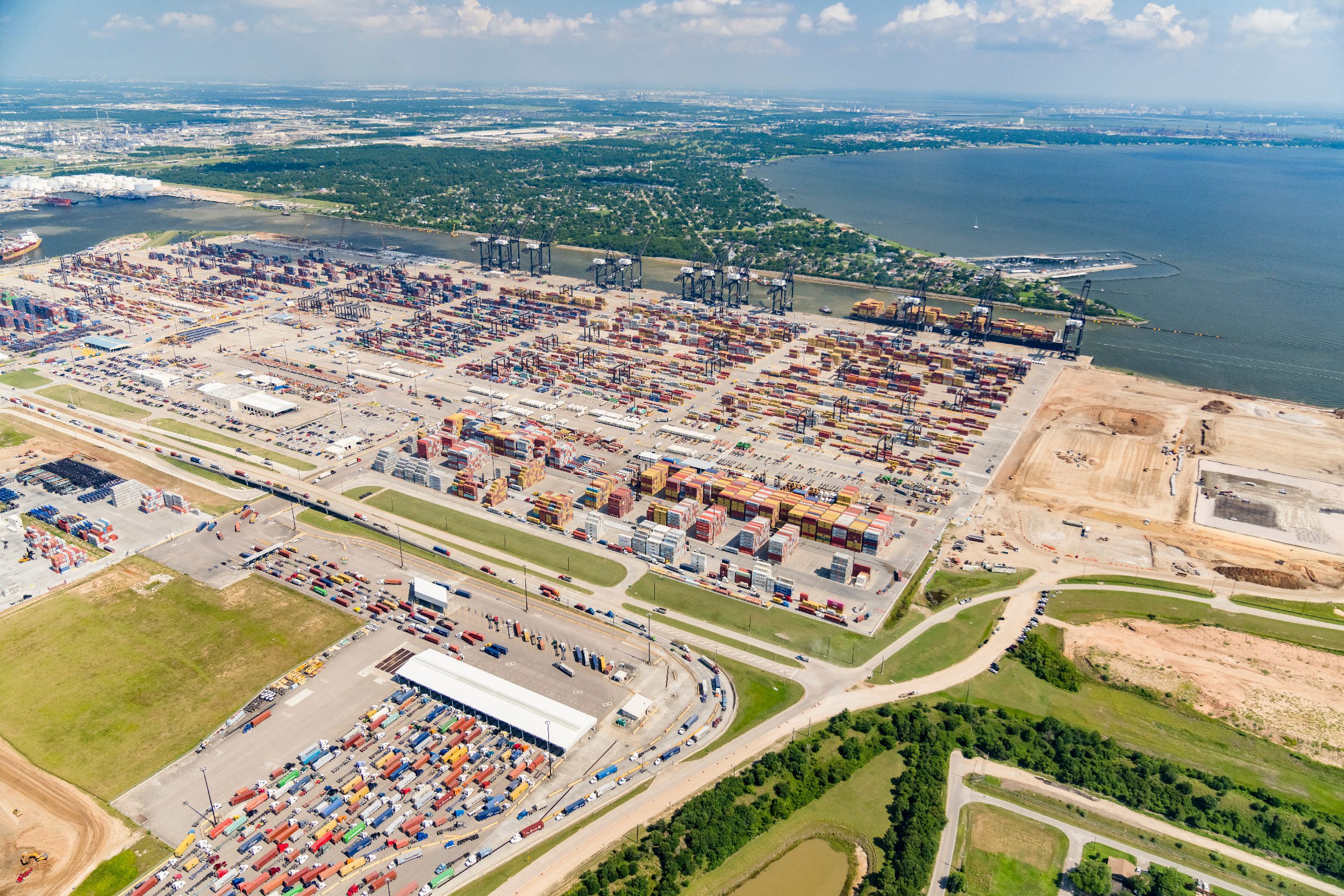
Protecting the oil and chemical industries is critical to the regional and national economies, said Cal Dooley, president of the American Chemistry Council, sponsor of the event. Safeguarding motor-fuel production and the Port of Houston is also a matter of national security, he said.
“You get that larger storm surge coming up there and we might not have the port shut down for a week — it could be shut down for months,” Taylor said.
Harvey also showed the need to invest in stronger railroad infrastructure and ship channel dredging, said LyondellBasell’s Patel.
Some of the region’s infrastructure is 70 years old and needs upgrading, particularly since companies are investing tens of billions of dollars building new chemical plants in the area, said Jim Fitterling, chief operating officer of DowDuPont Co. The storm threat won’t deter the company’s Dow unit from a plan to spend another $6 billion along the Gulf Coast after spending a comparable amount in the region in recent years, he said.
“Our view is, the Gulf Coast is the chemical industry,” Fitterling said.
‘Ball Is Rolling’
Because Harvey was more of a rain than a storm-surge event, it revealed problems such as low lying pumps at factories that now are being raised, Patel said.
The U.S. Army Corps of Engineers will begin studying a coastal barrier using the most recently approved tranche of hurricane disaster funding approved by Congress, Senator Ted Cruz said.
“The ball is rolling forward,” Cruz told the gathering in Pasadena, Texas.
Local officials are seeking an $8 billion grant from the Federal Emergency Management Agency for the project, said Hector L. Rivero, president of the Texas Chemical Council. As much as $35 million in local funds would be needed to fund annual maintenance of the barrier, he said.
Port Houston has reported exceptional growth in July, with container volumes surging 21% compared to July 2024, reaching 392,829 TEUs in one of the port’s strongest single-month performances on record....
Port Houston experienced significant operational disruptions in February due to widespread fog, leading to a 13% year-over-year decline in container throughput. The port handled 325,424 TEUs during the month, with...
Port Houston reported handling 364,866 twenty-foot equivalent units (TEUs) in May, marking a significant increase of 21% compared to May of last year. The year-to-date figure through May stands at...
June 26, 2024
Total Views: 765
Get The Industry’s Go-To News
Subscribe to gCaptain Daily and stay informed with the latest global maritime and offshore news
— just like 107,476 professionals
Secure Your Spot
on the gCaptain Crew
Stay informed with the latest maritime and offshore news, delivered daily straight to your inbox
— trusted by our 107,476 members
Your Gateway to the Maritime World!
Essential news coupled with the finest maritime content sourced from across the globe.

 Join The Club