The Tsleil-Waututh Nation has launched a legal challenge seeking to overturn federal approvals for a dredging project in Burrard Inlet that would allow oil tankers calling at the Trans Mountain pipeline’s Westridge Marine Terminal to load to full capacity.
The First Nation filed applications for judicial review in Federal Court on Wednesday, challenging both the Vancouver Fraser Port Authority’s project permit and a Fisheries Act authorization issued by Canada’s Department of Fisheries and Oceans for the Second Narrows Dredging Works.
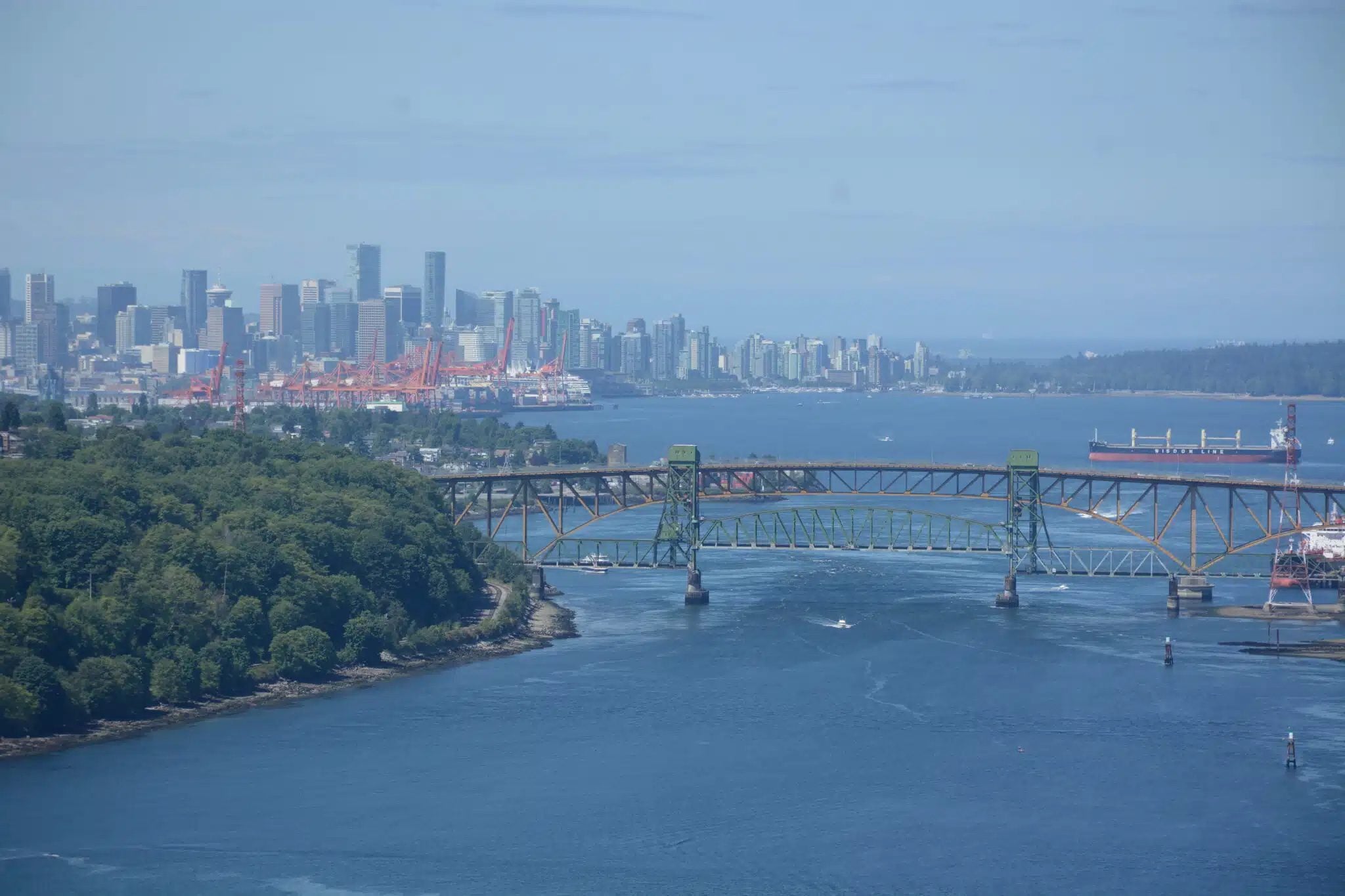
The dispute centers on a project to deepen sections of the navigation channel east of the Ironworkers Memorial Bridge in Vancouver’s Burrard Inlet. The work is designed to remove a longstanding depth restriction that currently limits Aframax tankers calling at Westridge Marine Terminal to about 80% of their cargo capacity.
According to the Tsleil-Waututh Nation, regulators failed to adequately assess the environmental and Indigenous rights impacts of the increased marine traffic the project would enable.
“While Tsleil-Waututh understands the proposed dredge is an important step for Canada’s international trade objectives, including increasing the amount of oil moving through the Inlet from Westridge Marine Terminal, the approval process has been rushed and has not addressed any of Tsleil-Waututh Nation’s concerns about marine shipping impacts,” Chief Justin George said in a statement.
The Nation argues the federal government failed to fulfill its duty to consult before the port authority issued the permit and that the agency’s conclusion that the project would not result in significant adverse environmental effects was unreasonable under Canada’s Impact Assessment Act.
Among its key concerns, the Nation says regulators evaluated only the direct physical impacts of dredging while failing to consider the broader consequences of allowing fully laden oil tankers to transit Burrard Inlet. It also contends the review did not adequately assess cumulative impacts on Indigenous rights, marine ecosystems, oil spill risks, shoreline erosion, and cultural resources.
The Vancouver Fraser Port Authority approved the project on June 23 following a Project and Environmental Review process that included public comment and consultation with First Nations and stakeholders.
According to the port authority, the project includes dredging approximately 25,000 cubic meters of material across roughly 17,000 square meters of the navigation channel, removing sections of decommissioned water pipelines, and installing new range lights to improve vessel navigation through the confined waterway.
The work is intended to improve shipping efficiency through Second Narrows and facilitate the potential for vessels calling at Trans Mountain’s Westridge Marine Terminal to load more fully. Dredging is expected to take place between mid-August and the end of February during Fisheries and Oceans Canada’s designated least-risk window for fish habitat.
The port authority said feedback received from the public, stakeholders, and First Nations during the review process was considered before issuing the permit.
The project has broader implications for Canada’s energy exports. When the federal government approved the Trans Mountain Expansion Project in 2019, environmental and marine risk assessments assumed Aframax tankers departing Westridge would remain subject to the existing 80% loading restriction imposed by the shallow Second Narrows channel.
If completed, the dredging project would remove that limitation, allowing tankers to depart fully loaded and increasing the export capacity of the expanded pipeline without requiring additional tanker calls. The Tsleil-Waututh Nation argues that no regulator has fully assessed how those changes alter marine traffic risks and environmental impacts in Burrard Inlet.
The Federal Court will determine whether the approvals complied with Canada’s consultation obligations and environmental assessment requirements.

 Join The Club