By Weilun Soon
Nov 23, 2026 (Bloomberg) –An Iranian oil tanker with no track record signaled earlier on Monday that it had sailed past a US blockade outside the Strait of Hormuz — an unlikely trajectory that is raising fresh questions about obfuscation tactics and analysts’ limited ability to accurately track movements in the area.
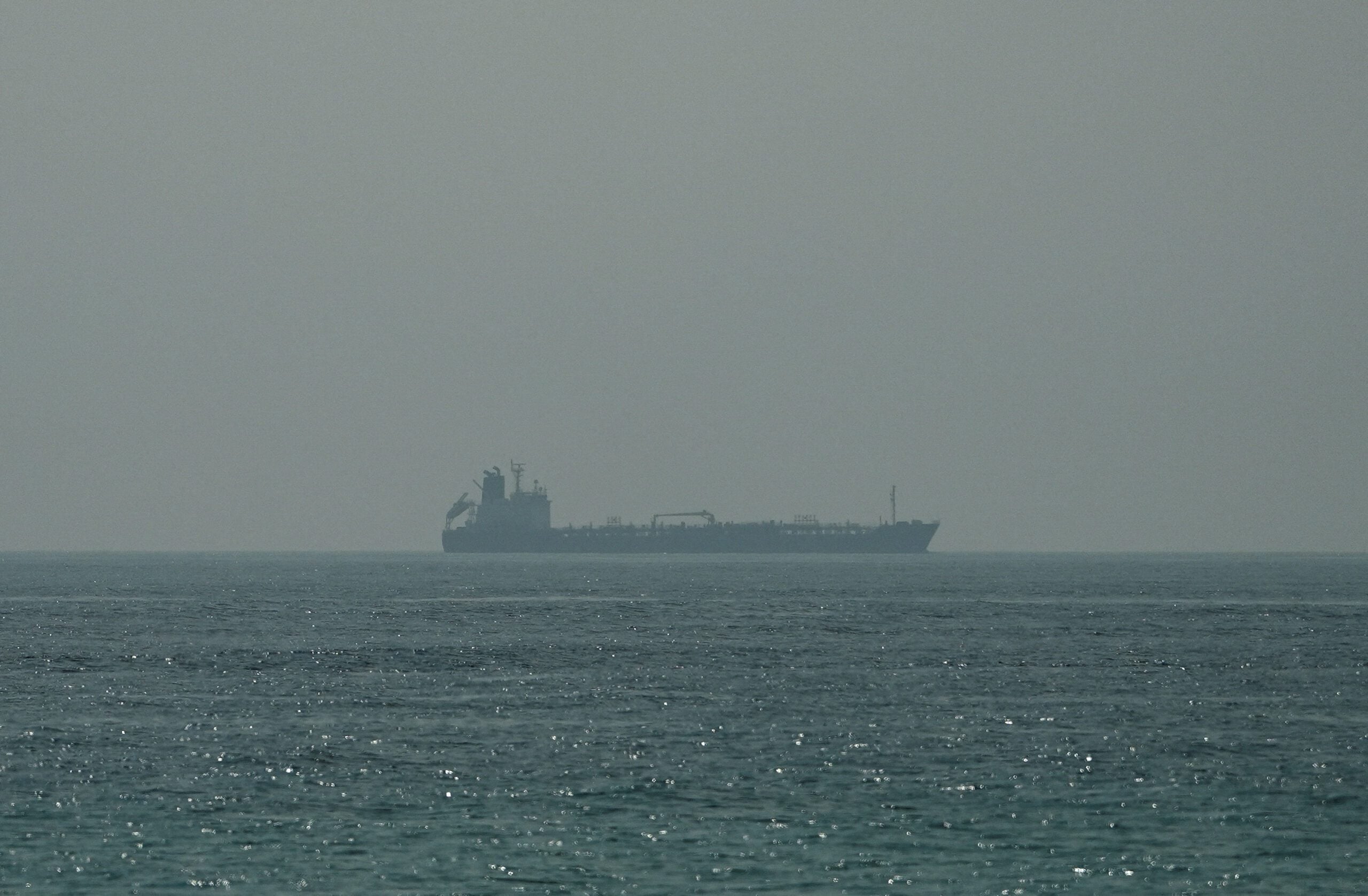
A vessel purporting to be the Khat Shekan, an Iranian very large crude carrier, appeared on Sunday on some ship-tracking platforms including MarineTraffic, indicating it was beginning an exit from the Persian Gulf. By Monday, signals suggested it had made it past US forces — a first since the blockade was reimposed in July.
The catch is that the position is very likely fake and the ship — whose name translates as “Line Breaker” — may not exist at all, according to analysts and maritime tracking experts. Tehran may instead be sending a message on what it can still do to tangle the global oil trade after nine months of conflict with the US, by making already challenging monitoring efforts even more difficult, they said.
“Any attempts to complicate the monitoring of traffic through the Strait of Hormuz are an unwelcome addition to an already dangerous situation,” said Mark Douglas, an analyst at ship-tracking platform Starboard Maritime Intelligence.
The signals suggest the vessel is a laden crude tanker heading for China’s Zhoushan port, but it has no International Maritime Organization number, a unique identifier for vessels that remains through their operational life. A search done on its maritime mobile service identity, or MMSI number on the IMO database, yields no results, with an error message stating: “Only ships in service are displayed.”
There is also no record of voyages prior to Sunday, and the vessel does not appear on Bloomberg or other ship-tracking and intelligence platforms, including Starboard, Kpler, Vortexa and Equasis.
“Our analysis indicates AIS spoofing,” MarineTraffic wrote in a social media post, referring to the practice of sending false tracking or navigation data to plant incorrect information or confuse observers.
Ship operators engaged in so-called “dark” trades have long sought to misrepresent vessels’ identities and locations in order to mask their journeys and the cargoes they are handling. Tankers ferrying US-sanctioned Iranian oil before the war often spoofed their positions, or assumed the identities of demolished ships.
Iran all but closed the Strait of Hormuz in response to US attacks, but its crude exports continued in the first months of the conflict. The reintroduction of a US naval blockade, however, severed a vital financial lifeline for Tehran at a time when others in the Persian Gulf are using dark shuttles and other workarounds to restore pre-war flows.
Iran’s Ministry of Foreign Affairs did not immediately respond to a request for comment. The country has repeatedly vowed to break the blockade, however. On Saturday, Deputy Foreign Minister Kazem Gharibabadi said the country would take “whatever measures are necessary” to do so.
Read More: Iranian Oil Moved Between Tankers as US Widens Blockade
Last week, Washington widened its blockade, warning it could also target ships receiving cargoes at sea. President Donald Trump said he is contemplating fresh attacks on Iran after the New Year if no deal is reached.
© 2026 Bloomberg L.P.
 Join The Club