Don’t Miss Your Daily Briefing for the Maritime Industry
Join the leading maritime news network
— trusted by our 106,241 members
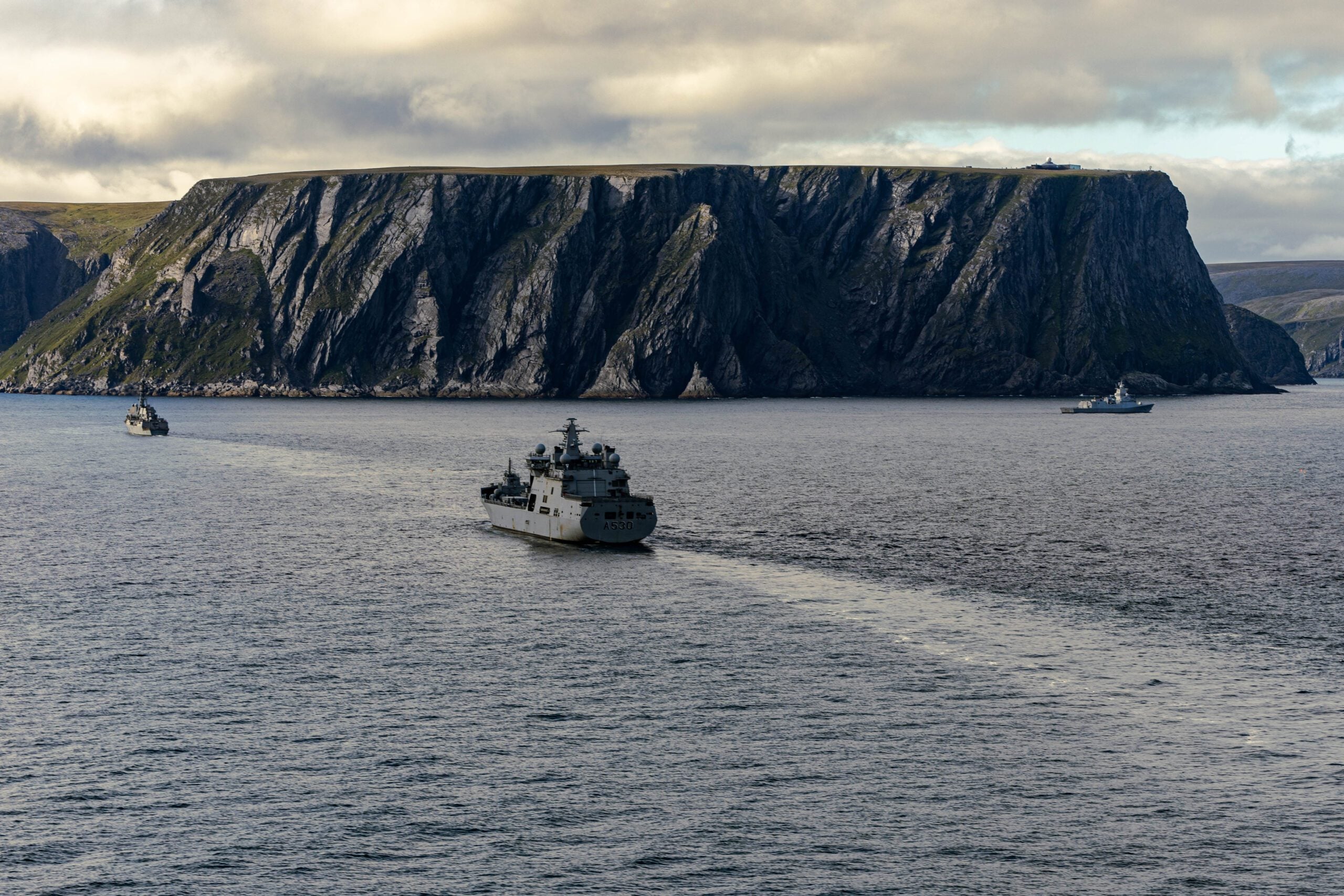
The Arleigh Burke-class guided missile destroyer USS Bainbridge (DDG 96), left, Royal Norwegian replenishment oiler HNoMS Maud (A-530), center, and Royal Norwegian Navy Fridtjof Nansen-class frigate HNoMS Thor Heyerdahl (F-314), transit the North Cape fjord in the Barents Sea above the Arctic Circle, Aug. 29, 2025. (U.S. Navy Photo by Mass Communication Specialist 2nd Class Alice Husted)
EU Retreats From Arctic Oil Ban Language In Strategy Draft
Oct 19, 2026 (Bloomberg) –The European Union looks to be relaxing its opposition to oil and gas production in polar areas, while still calling for all fossil fuels to be kept in the ground in its forthcoming Arctic strategy.
A draft of the strategy, seen by Bloomberg, contains no references to a moratorium on new oil and gas drilling in the Arctic, marking a shift in wording from the EU’s 2021 stance. The wording has been a topic of intense discussions between the trade bloc and Norway, which has lobbied hard for the EU to abandon its climate-based opposition to oil and gas exploration in the high north.
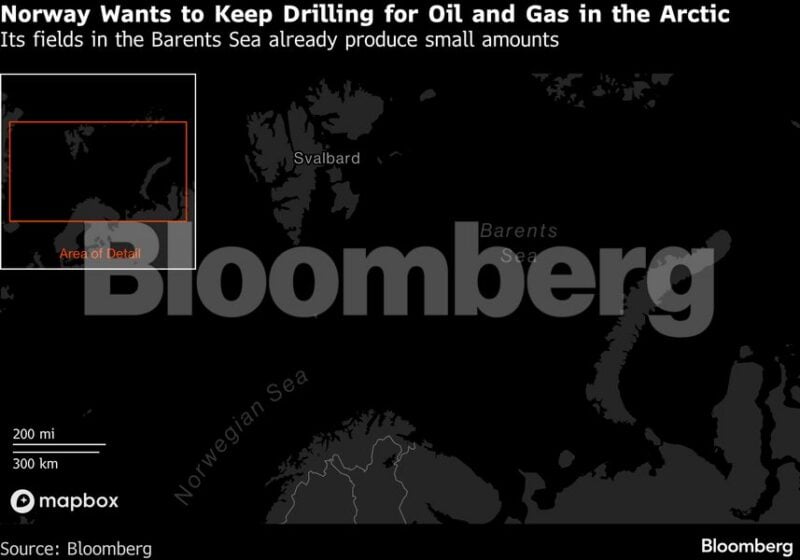
The Nordic nation awarded five oil and gas exploration licenses in the Barents Sea, which is part of the Arctic, in last year’s licensing round and opened up 38 blocks in 2026 for applications. Norway supplied almost a third of EU’s gas imports last year, including a small part from those fields.
The petroleum industry’s fear was that the EU would pledge not to buy oil and gas from Norway’s new Arctic fields. Instead, the draft says the union will “prioritize” renewable energy sources and hydrocarbons produced outside the Arctic. The European Commission also says it will work toward an international commitment to prevent further development of Arctic oil and gas resources, or purchases from them, when such activity “poses a threat to the Arctic ecosystem.”
In 2021, the EU had said that “building on the partial moratoriums on hydrocarbons exploration in the Arctic” in parts of the US, Canada and Greenland, “the EU is committed to ensuring that oil, coal and gas stay in the ground, including in Arctic regions” and that it would work toward “a multilateral legal obligation not to allow any further hydrocarbon reserve development in the Arctic or contiguous regions, nor to purchase such hydrocarbons if they were to be produced.”
The latest draft also reiterates the EU’s broader commitment to work toward keeping coal, oil and gas in the ground, including in the Arctic, in line with its climate targets. The bloc has set a legally binding goal of cutting net greenhouse gas emissions by 90% by 2040 from the 1990 level.
A spokesperson for Equinor ASA, which already produces oil and gas and is exploring more fields in the Barents Sea — referred questions to the Energy Department, and a spokesperson for the ministry declined to comment ahead of the strategy’s release.
Environmental groups said the changes don’t amount to a significant retreat by Brussels. Paal Frisvold, who heads the Alliance to Preserve the Moratorium on Oil Drilling in the Arctic, told Bloomberg that he believes that the omission of the word moratorium makes the key message on climate stronger, adding “EU is determined to keep fossil fuels in the ground.”
The draft text also maintains the EU’s opposition to deep-sea mining until scientific knowledge gaps have been “satisfactorily filled.” Norway in 2024 approved seabed mining, although no such works have yet started.
European natural gas prices hit a fresh three-year high as traders race to fill fuel storage facilities ahead of winter, while awaiting details of an Iran-Oman deal on shipping through the Strait of Hormuz.
European Union governments should prepare for a "prolonged disruption" to energy markets as a result of the Iran war, the bloc's energy chief has told countries' ministers ahead of an emergency meeting on Tuesday.
The European Union is planning measures to accelerate the bloc’s phaseout of Russian liquefied natural gas, just days after US President Donald Trump called on the EU to do more to curb Moscow’s energy trade.
September 18, 2025
Total Views: 963
Get The Industry’s Go-To News
Subscribe to gCaptain Daily and stay informed with the latest global maritime and offshore news
— just like 106,241 professionals
Secure Your Spot
on the gCaptain Crew
Stay informed with the latest maritime and offshore news, delivered daily straight to your inbox
— trusted by our 106,241 members
Your Gateway to the Maritime World!
Essential news coupled with the finest maritime content sourced from across the globe.

 Join The Club