Updated: February 28, 2019 (Originally published February 14, 2014)
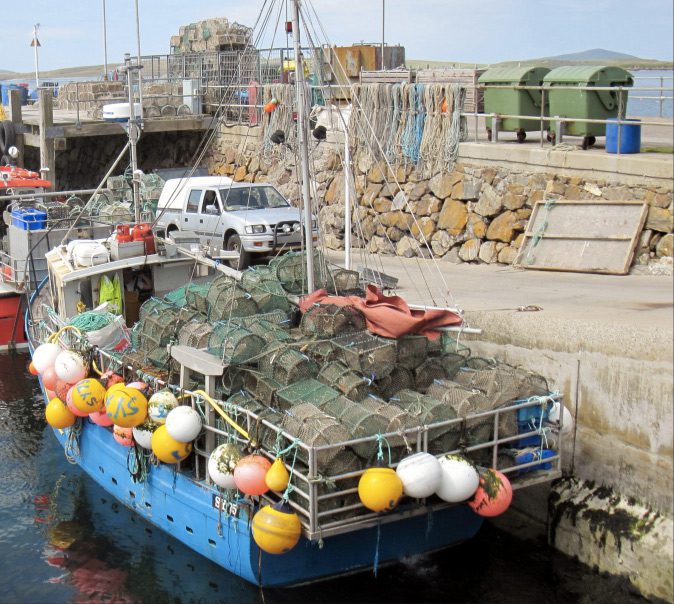
FV Achieve, image via MAIB
By Captain Richard Madden,
Those on deep-sea vessels frequently overlook the lessons learned from brown-water and fishing vessels. This is unfortunate as it is much nicer to learn from others’ mistakes – especially ones involving serious injury, fatalities or legal implications. One such incident was just published by the UK Maritime Accident Investigation Branch (MAIB).
Occurring almost a year ago, but recently published in January 2014, the MAIB’s report on the fishing vessel Achieve’s sinking offers at least one lesson learned. The small fishing vessel sank due to flooding in the fish hold which went undetected due to a disconnected high bilge sensor. Once the situation became apparent, the crew of the ill fated vessel had mere minutes to activate their distress call, launch the liferaft and abandon ship. As this incident occurred in the dead of winter in cold waters and survival suits were not used, the fact that there was only one fatality out of three crewmembers is significant.
The primary lesson learned is highlighted in MAIB’s report when they reveal that, “The MAIB is aware of three accidents (fishing vessels) where not using the DSC to raise a distress alarm has resulted in fatalities.”
Decades after DSC (Digital Selective Calling) came into use, confusion on its use is far too common. The use of the DSC distress button on Achieve’s VHF would have sent the Coast Guard their MMSI (Maritime Mobile Service Identity), position and distress condition. Confusion over the vessel in distress and position thereof lead to a suspected 45 minute delay in response. A secondary lesson learned would have allowed additional time for the crew to respond – namely keeping sensors such as high bilge sensors connected. Testing of such critical sensors on a routine basis should not be overlooked. Last, but certainly not least, the skipper and crew of the Achieve must be commended for keeping their liferaft ready for immediate use. Without this critical piece of equipment available, the loss of life may have been much higher.
Would you be able to successfully send a distress call – whether it be by VHF, Sat C or MF/HF – if you had seconds to do so? If the answer is “No” perhaps your next watch or hitch would be a good time to nail down those procedures. Proper and effective use of communications gear can save lives!
Captain Richard Madden, AFNI is an actively sailing mariner and maritime consultant with over 20 years of industry experience. He holds a USCG Unlimited Master’s license and Master of Towing Vessels License.
By Captain John Loftus – As one of the co-authors of “Spotlight on Safety”, I was onboard as part of the presentation team sponsored by the International Organization of Masters, Mates...
The U.S. Department of Labor’s Occupational Safety and Health Administration (OSHA) has cited five contractors for safety and health violations after three employees were killed and two others critically injured...
Updated: October 6, 2023 (Originally published June 13, 2018) by Capt. John Konrad (gCaptain) A disturbing and dangerous trend is growing offshore. Despite overwhelming evidence that knives are essential to...
June 13, 2018
Total Views: 489
Get The Industry’s Go-To News
Subscribe to gCaptain Daily and stay informed with the latest global maritime and offshore news
— just like 107,272 professionals
Secure Your Spot
on the gCaptain Crew
Stay informed with the latest maritime and offshore news, delivered daily straight to your inbox
— trusted by our 107,272 members
Your Gateway to the Maritime World!
Essential news coupled with the finest maritime content sourced from across the globe.

 Join The Club