Commercial shipping through the Strait of Hormuz has fallen to near-zero levels as the maritime security crisis gripping the Middle East continues, even as attacks on vessels temporarily paused over the past two days, according to the latest advisory from the Joint Maritime Information Center (JMIC).
In Update 009 of its regional advisory, JMIC said the maritime threat environment across the Arabian Gulf, Strait of Hormuz, and Gulf of Oman remains at a “CRITICAL” level, indicating that attacks against commercial shipping remain likely and operating conditions remain highly hazardous.
While no new confirmed attacks against merchant vessels were reported during the past 48 hours, JMIC cautioned that the pause should not be interpreted as a sign of easing tensions.
“The absence of new attacks in the past 48 hours should be interpreted as a temporary lull rather than a change in adversary intent,” the advisory said. “Maritime operators should anticipate that threat activity may resume with little warning following operational pauses.”
UKMTO Confirms Maritime Attacks
The United Kingdom Maritime Trade Operations (UKMTO) center has reported 13 maritime security incidents affecting vessels across the Persian Gulf, Strait of Hormuz, and Gulf of Oman between February 28 and March 8, according to Advisory #2026 issued March 9. Of those reports, 10 were classified as attacks while three involved suspicious activity, highlighting the scale of the maritime security crisis unfolding across one of the world’s most critical energy shipping corridors.
At least seven seafarers have been killed and several others seriously injured in attacks on commercial vessels during the crisis, according to Arsenio Dominguez. Speaking Monday at the opening of the Sub-Committee on Ship Systems and Equipment at the International Maritime Organization, Dominguez said the rising casualty toll highlights the human cost of the conflict for the maritime workforce.
“As I have said on numerous occasions, any attack on innocent seafarers or civilian shipping is unacceptable,” Dominguez told delegates. “These seafarers are simply carrying out their duties and performing an essential service to the global community, ensuring the continued flow of goods and energy.”
The attacks have transformed one of the world’s most critical maritime arteries into a volatile conflict zone. The strait normally carries roughly 20 percent of global oil shipments and a significant share of LNG exports, making it one of the most strategically important waterways in global trade. Even short disruptions can ripple through energy markets and global supply chains.
Shipping Through Hormuz Nearly Stops
The operational impact on global shipping has been dramatic. AIS-based traffic monitoring reviewed by JMIC shows commercial vessel transits through the Strait of Hormuz have collapsed to single-digit levels, with just one confirmed commercial transit recorded in the past 24 hours.
Under normal conditions, roughly 138 vessels pass through the strait every day, making the narrow waterway the world’s most important chokepoint for crude oil and liquefied natural gas shipments.
The sharp drop reflects a combination of security threats, insurance constraints, and operational caution among shipowners following a wave of attacks on commercial vessels earlier this month.
AIS-Dark Tankers Still Moving
Despite the collapse in visible shipping traffic, some tankers may still be transiting the region without broadcasting AIS signals.
Maritime analytics firm TankerTrackers.com reported that six sanctions-compliant tankers carrying oil or fuel—two VLCCs, three Suezmax tankers, and one Panamax tanker—have been offline from AIS for more than 48 hours west of the Strait of Hormuz, with declared destinations including China, India, and Japan.
One of those vessels, the Suezmax SHENLONG (IMO: 9379210), later reappeared on AIS while approaching Mumbai carrying roughly one million barrels of Saudi crude, suggesting some ships may be deliberately limiting AIS transmissions while transiting the high-risk area.
Offshore Energy Infrastructure Targeted
Although vessel attacks have paused temporarily, the advisory confirmed that offshore energy infrastructure remains exposed.
JMIC said a March 7 drone strike damaged the offshore drilling rig ARABIA III near Al Jubayl, Saudi Arabia, highlighting the growing risk to energy facilities across the region.
The attack follows a series of incidents affecting merchant vessels across the Gulf region since hostilities escalated at the end of February. Security analysts say the pattern suggests the campaign is designed primarily to disrupt maritime commerce rather than systematically sink ships.
“Recent incident patterns suggest a campaign focused on creating operational disruption and uncertainty rather than exclusively attempting to sink vessels,” JMIC said.
Severe GPS Interference Reported
In addition to direct kinetic threats, ships operating in the region are facing significant electronic disruption.
JMIC reported more than 600 GNSS disruption events in the past 24 hours, causing GPS spoofing, AIS anomalies, and intermittent signal degradation across the Strait of Hormuz, Gulf of Oman, and the Persian Gulf.
The disruptions are affecting hundreds of vessels and complicating navigation in already congested waters, prompting authorities to advise mariners to rely more heavily on radar ranges, visual bearings, and cross-checking navigation systems.
The Joint Maritime Information Center (JMIC) is a multinational maritime security coordination body supported by the U.S.-led Combined Maritime Forces that aggregates incident reports and intelligence from naval forces and industry sources to provide threat assessments and operational guidance to the global shipping industry.
Insurance and Security Pressures Mount
War-risk insurance conditions remain a major factor shaping shipping decisions.
The Joint War Committee’s expansion of listed risk areas across the Persian Gulf and adjacent waters has triggered additional premiums and stricter underwriting conditions for vessels operating in the region.
While coverage remains available, JMIC said insurance requirements may act as a practical barrier to transits, even in the absence of a formal closure of the Strait of Hormuz.
No Sign of De-Escalation
Despite the temporary pause in vessel attacks, JMIC said the broader maritime security environment shows no confirmed indicators of de-escalation.
The advisory warned that vessels anchored, drifting, or operating predictably remain particularly vulnerable, as do ships assisting damaged vessels near earlier incident sites.
The report also highlighted continued risks from missile and drone strikes, sabotage-style attacks using sea drones or limpet mines, and the possibility of naval mine deployment if the conflict escalates further.
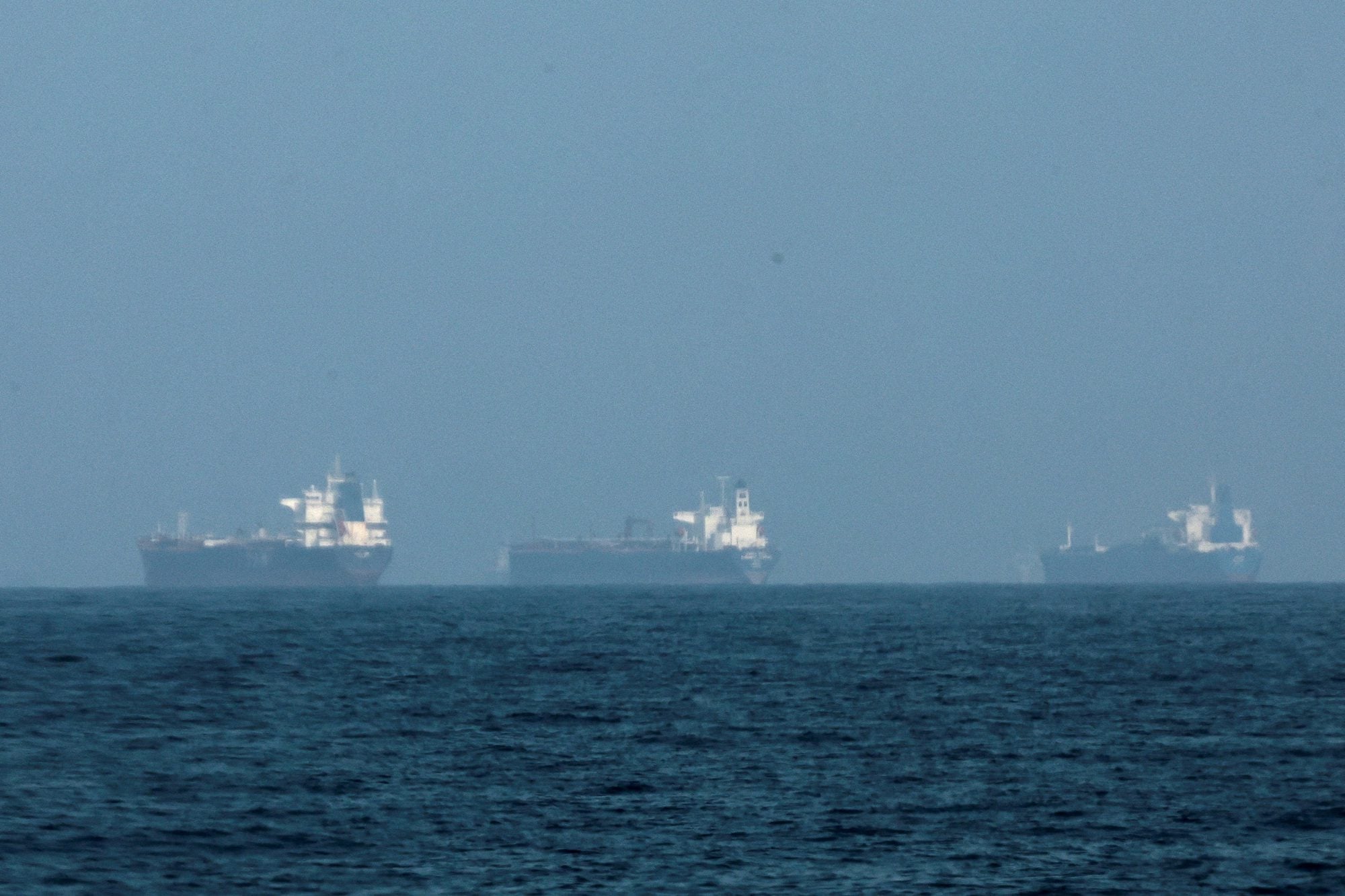
For now, the Strait of Hormuz remains open. But with shipping traffic reduced to a handful of movements and hundreds of vessels waiting at anchor across the Gulf, the world’s most critical energy shipping corridor is operating under conditions that increasingly resemble a wartime maritime exclusion zone.
Editorial Standards · Corrections · About gCaptain

 Join The Club