U.S. Secretary of Energy Chris Wright signed an export authorization yesterday for a 12% expansion at Cheniere Energy’s Corpus Christi liquefied natural gas terminal, underscoring America’s continued dominance in global LNG markets as the industry marks a decade of unprecedented growth.
The authorization permits additional exports of up to 0.47 billion cubic feet per day of U.S. natural gas as LNG to non-Free Trade Agreement countries from Trains 8 and 9 of the Corpus Christi Stage 3 Project. With the approval, Corpus Christi LNG is now authorized to export a total of 4.45 billion cubic feet per day, making it the second largest LNG export project in the United States.
“In the last ten years, American innovation and President Trump’s leadership transformed the United States into the world’s largest exporter of LNG,” Secretary Wright said during a visit to the terminal. “This order helps further strengthen America’s LNG export capacity, delivering peace abroad and prosperity for Americans at home. I could not be prouder to be here today in Corpus Christi, standing alongside the American workers responsible for unleashing American energy dominance.”
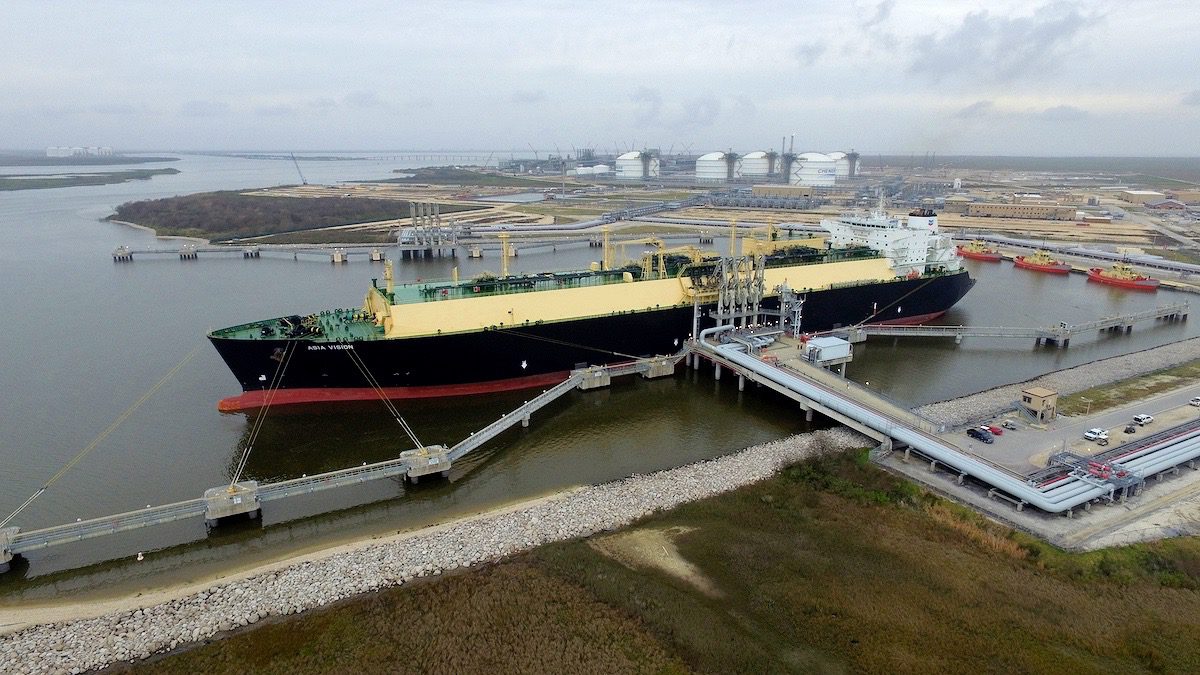
The expansion comes as the United States marks ten years since the LNG carrier Asia Vision departed Louisiana’s Sabine Pass Terminal in February 2016 carrying 3.3 billion cubic feet of liquefied natural gas bound for Brazil—the first cargo of U.S. LNG from the lower-48 states.
The transformation has been dramatic. U.S. LNG exports surged from just 0.5 billion cubic feet per day in 2016 to 15.0 billion cubic feet per day in 2025. The Energy Information Administration forecasts exports will exceed 18.1 billion cubic feet per day by 2027, or approximately 136 million metric tons per year.
Last year, the U.S. became the first nation to export more than 100 million metric tons of LNG in a single year. According to preliminary data, the country sold 111 million metric tons in 2025—almost 20 million metric tons more than Qatar.
Kyle Haustveit, Assistant Secretary of the Hydrocarbons and Geothermal Energy Office, emphasized the strategic importance of the expansion. “Every action we’re taking is focused on providing more reliable and secure energy to the world,” he said. “Our commitment to strengthening global partnerships through LNG exports helps to ensure a stable energy future and drive economic prosperity.”
Europe has emerged as the dominant market for U.S. LNG following Russia’s invasion of Ukraine in 2022. The continent received 69% of all U.S. LNG exports in 2022, up sharply from 34% in 2021. That dominance has continued, with Europe receiving 68% of U.S.-origin volumes from January through November 2025.
What sets U.S. LNG apart in global markets is contract flexibility and pricing structure. Many other LNG-exporting nations use more rigid, Brent crude oil futures-indexed long-term contracts. In contrast, U.S. contracts generally feature destination flexibility, allowing customers to redirect cargoes or resell access to terminal capacity. U.S. contracts also often feature lower feedgas costs indexed to Henry Hub futures prices, making American LNG less expensive than LNG produced elsewhere.
Corpus Christi LNG has been operating as an export terminal since 2018, and Cheniere Energy announced a positive final investment decision on Trains 8 and 9 in June 2025.
Since the Trump Administration ended the previous administration’s LNG export approval ban to non-FTA countries, the Department has approved more than 18.2 billion cubic feet per day of LNG export authorizations—a volume greater than the export capacity of the world’s second largest LNG exporting nation.
The U.S. currently operates eight LNG export terminals, and by 2031, export capacity is expected to nearly double compared with December 2025 levels. The Plaquemines LNG facility began operations in late December 2024 and delivered 16.4 million metric tons in 2025 after a rapid ramp-up. Golden Pass LNG—a joint venture between QatarEnergy and Exxon Mobil—is expected to ship its first cargo in early 2026.
Since that first cargo departed Sabine Pass a decade ago, the terminal has shipped over 3,300 cargoes worldwide—accounting for 39% of all U.S. export cargoes through November 2025.

 Join The Club