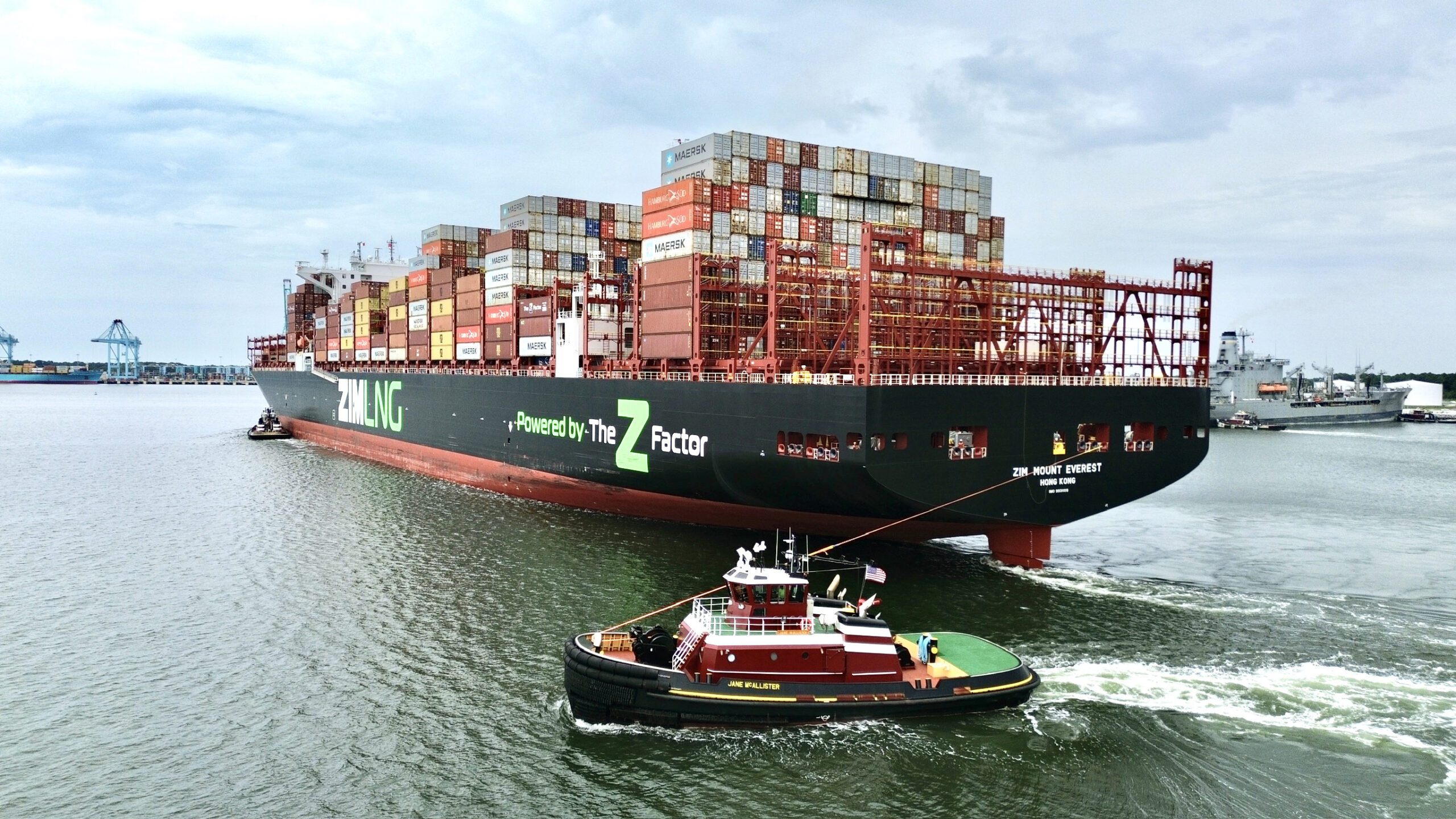
The maritime industry’s shift toward alternative fuels held firm in 2025 despite a sharp pullback in global newbuilding, with LNG-fuelled containerships emerging as the main source of decarbonization momentum, according to new data from DNV.
Alternative-fuelled vessels accounted for 38% of gross tonnage in the global orderbook, even as overall newbuild orders slumped from 4,405 in 2024 to 2,403 in 2025, DNV’s Alternative Fuels Insight platform shows. That resilience came almost entirely from the container sector, which bucked the broader downturn by lifting orders from 447 to 547 ships year-on-year.
Container vessels made up roughly 49% of total gross tonnage and a striking 68% of all alternative-fuel new orders in 2025. Within the segment, LNG dominated the fuel mix at 58% by tonnage, followed by conventional fuels at 36% and methanol at 6%.
“The resilience of the alternative fuels orderbook in 2025 is mainly driven by cargo owners who have set their own emissions-reduction targets despite market slow-down and regulatory uncertainty,” said Jason Stefanatos, DNV’s Global Decarbonization Director. “They are prioritizing investments where there is strong alignment between fuel infrastructure, regulatory certainty, and commercial viability — particularly in container shipping, where LNG and methanol are backed by established supply chains and customer demand.”
Outside the container segment, the picture was far more subdued. Orders for LPG and ethane carriers fell 73%, while car carrier contracting collapsed by 90% compared with 2024. Bulk carriers, crude tankers, and oil and chemical tankers also recorded steep declines as owners focused on cost control rather than alternative-fuel investments.
Across all ship types, LNG-fuelled vessels led the market with 188 orders, accounting for 31% of total gross tonnage. Methanol-fuelled newbuilds dropped sharply from 149 in 2024 to just 61 in 2025, while ammonia and LPG saw only limited uptake.
DNV Maritime CEO Knut Ørbeck-Nilssen said the slowdown reflects a difficult year for investment decisions.
“While indicative of a turbulent year where strategic choices were harder to make, the slowdown in 2025 also reflects a natural reduction after several years of extraordinary ordering activity,” he said. “Looking ahead, progress will depend on effective global regulations that incentivize alternative-fuel uptake, create a level playing field, and foster fair competition.”
Infrastructure spending continued to support the transition, with 22 LNG bunker vessels added to the orderbook alongside new ships capable of supplying methanol and biofuels — a sign of growing confidence in LNG supply chains and emerging multi-fuel capabilities that reduce operational risk for shipowners.
The data underscores an industry at a crossroads: regulatory uncertainty and market pressures are slowing investment in some segments, while cargo-owner commitments and established infrastructure are keeping momentum alive in others.
Editorial Standards · Corrections · About gCaptain

 Join The Club