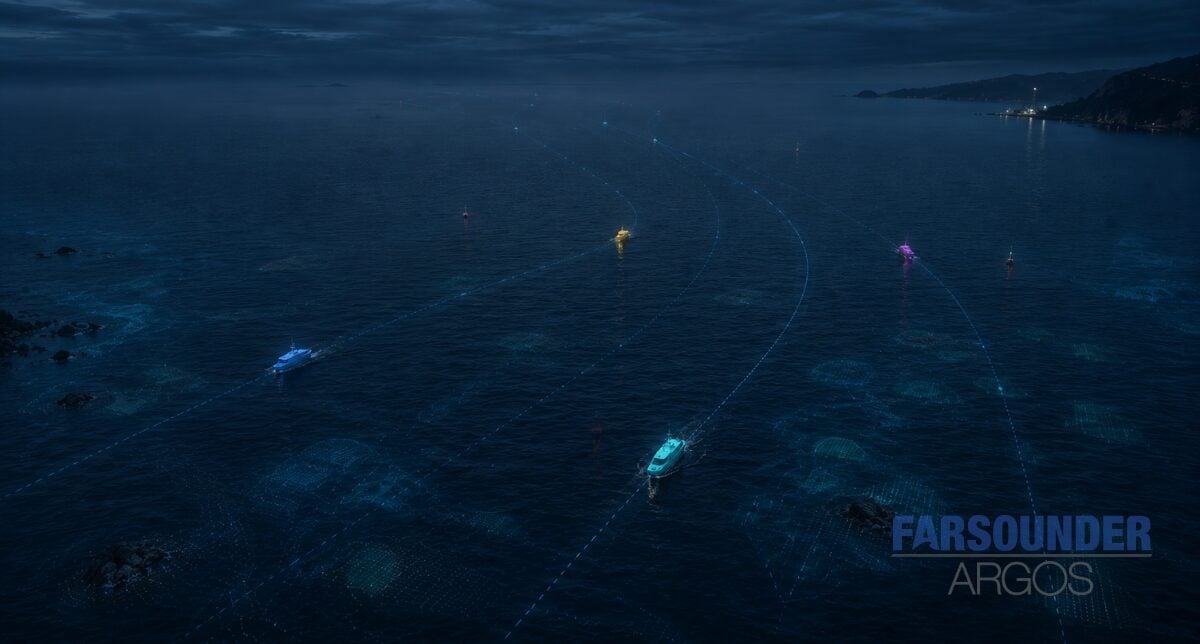
The maritime industry is undergoing rapid change. Advancements in autonomy are allowing uncrewed vessels to transit oceans with growing sophistication. A growing network of marine technologies is paving the way for the future of maritime operations. Yet, across all sectors of the industry, adoption of these capabilities is slow to match the pace of innovation.
Innovators within the industry must work together to bridge the gap between concept and deployment.
Realizing the Potential of Autonomy
Autonomy is often discussed as an inevitable path for the maritime industry. It is easy to imagine that for autonomous ships, it is more difficult to integrate the many subsystems that make autonomy viable in practice. Trust remains central in bringing this concept to reality. Policy and regulatory agencies are struggling to determine what this inevitable future looks like. The challenges to overcome are in the awareness of existing technologies and the practical pairing of complementary solutions.
This is easier said than done. FarSounder is helping with underwater perception by pursuing integration to move closer to implementation. Through a growing number of partnerships, FarSounder is set on creating cohesive bonds between complementary solutions.
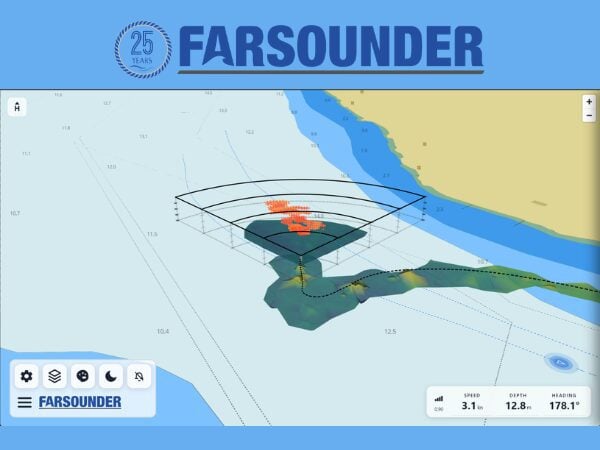
Machines cannot infer what they cannot perceive. FarSounder’s Argos 3D Forward Looking Sonars provide underwater perception by detecting submerged obstacles up to 1000 meters ahead of a vessel while simultaneously creating a map of the seafloor everywhere the vessel goes. FarSounder’s technology is an example of a mature solution that is used by a variety of vessel types and is now being used by USVs to provide increased situational awareness and autonomy.
A recent integration between FarSounder’s Argos 3D FLS and SEA.AI machine vision systems is helping to consolidate above and below-surface awareness, making navigation more efficient for both machine and human operators. Advanced perception through sensor fusion helps set a strong foundation for vehicle control systems and pilot-assist platforms to make intelligent navigation decisions in real-time.
Crew Shortages and Operational Load
Parallel to autonomy’s development, crew shortage is another persistent industry challenge. Many sectors of the maritime industry are facing a shortage of qualified crew members. As members of the industry focus more efforts on attracting new members of the workforce, unmanned and autonomous solutions provide a path to sustain operations.
In this sense, autonomy functions as augmentation and allows smaller crews to do more while maintaining safety and efficiency. Machine-guided navigation, predictive hazard awareness, and integrated sensor fusion are helping reduce cognitive burden on the bridge.
The Next Era of Subsurface Awareness
This year, FarSounder is celebrating 25 years of advancing its Argos 3D forward looking technology. Their efforts to enhance underwater perception and awareness have not slowed down. At the start of this year, FarSounder received a Manufacturing Innovation Voucher from the Rhode Island Commerce Corporation.
Under the Innovation Voucher program, FarSounder will build on an existing proof-of-concept to bring machine-learning target recognition into a fully integrated software prototype. This work will introduce automated classification of key sonar targets, focusing on seafloor features, wake-related bubbles, and in-water objects such as whales, ice, rocks, and coral. The underlying framework is designed to expand over time, enabling additional target classes as new data becomes available. This research will further support emerging maritime applications aiding both human operators and autonomous systems in interpreting complex underwater environments.
Autonomy will not succeed through singular breakthroughs. It will mature through deliberate interconnection. Technologies like forward-looking sonar will not remain an isolated display. They will increasingly inform autopilot logic, route optimization, and automated hazard-avoidance systems. Whether manned, unmanned, or fully autonomous, coherent awareness above and below the surface is critical. The work now is to continue to connect the pieces.
The next era of naval superiority will be decided by how effectively USVs integrate within broader fleet operations. Unmanned and autonomous systems are rapidly reshaping naval operations, advancing from experimental...
As unmanned and autonomous surface vessels (USVs) expand their role in the maritime sector, their missions are moving into increasingly complex and dynamic environments that often present unpredictable hazards. These...
Whales are magnificent, intelligent mammals whose life span can be as long as a human’s. However, their lives can be cut short. As many as 80 whales are estimated to die each...
May 20, 2024
Total Views: 2654
Get The Industry’s Go-To News
Subscribe to gCaptain Daily and stay informed with the latest global maritime and offshore news
— just like 106,899 professionals
Secure Your Spot
on the gCaptain Crew
Stay informed with the latest maritime and offshore news, delivered daily straight to your inbox
— trusted by our 106,899 members
Your Gateway to the Maritime World!
Essential news coupled with the finest maritime content sourced from across the globe.

 Join The Club