By Mike Wackett (The Loadstar) –
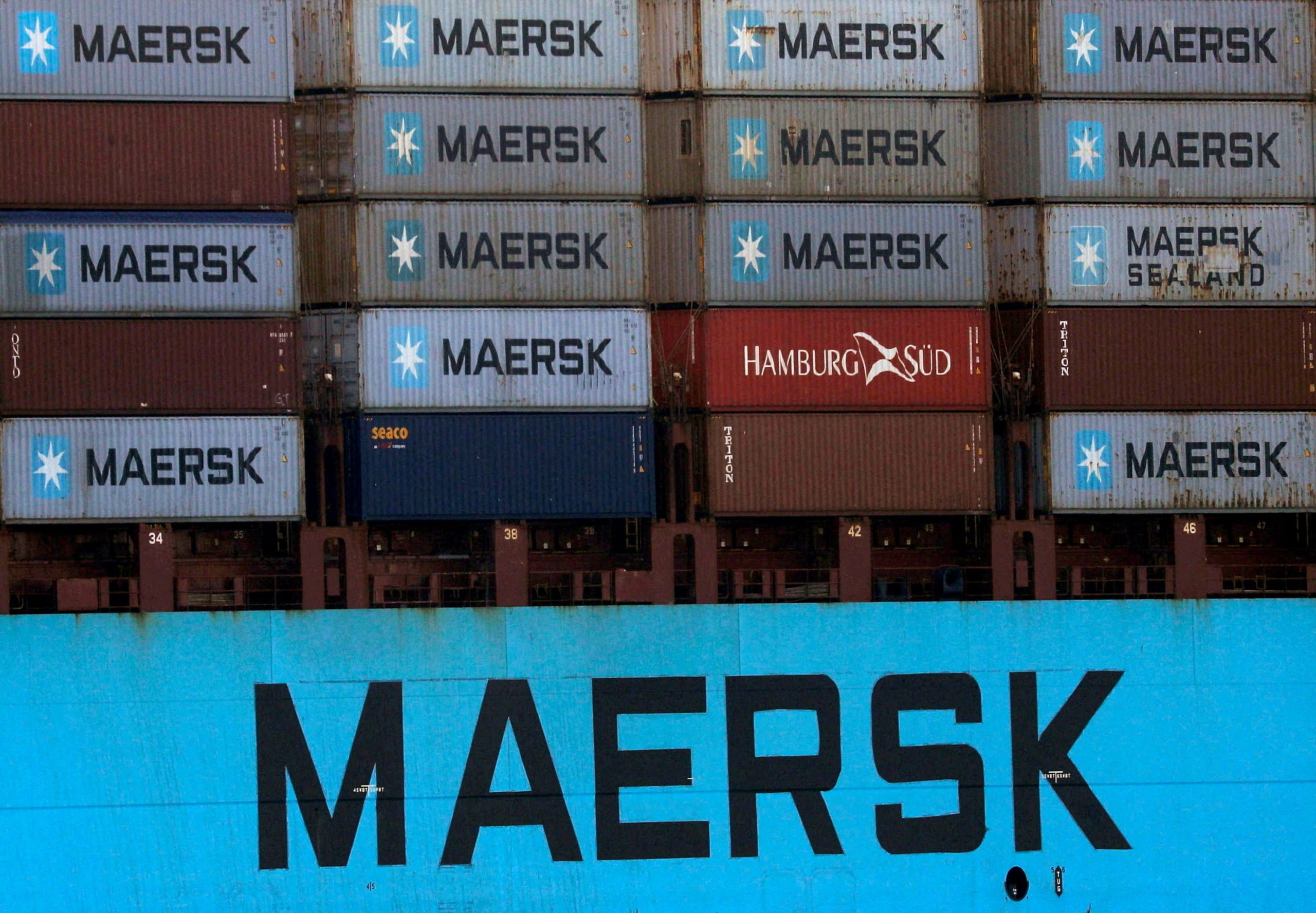
Maersk CEO Soren Skou told investors today he remained “confident” about the shipping line’s contracted customers sticking with their agreements, despite a backdrop of softer demand and container spot rates declining.
He said his confidence in the integrity of the contract business, which now represents some 70% of of the carrier’s volumes, was in the make-up of its top-200 client portfolio.
Mr Skou said: “What’s important to understand when you look at our portfolio today is that it is heavily weighted towards BCOs, and they have traditionally been quite compliant, and the risk has been more on the volume, not on the price.
“When it comes to the contracts we now have with global freight forwarders, they have dramatically changed in the way that they are structured, so it is a block space agreement, it is take or pay, and the language is very clear; there is a dead freight provision and we are billing our freight forwarder clients for this, so that is why we believe we will have high contract compliance.”
Maersk recorded a net profit of $8.6bn in the second quarter, for a half-year result of $15.4bn, which, to put into context, compares with the $16.9bn profit it posted for the whole of last year.
Moreover, the Danish transport and logistics group advised that its “booking visibility” ensured “an equally good third quarter”, although it did anticipate “a progressive decline” in Q4.
Maersk said the Q2 record result was mainly driven by a “better-than-expected conclusion” for its core contracted business across its liner networks, and it now expects average contract rates this year to be about $1,900 per 40ft higher than a year ago.
Maersk Upgrades Guidance as Congestion Lingers ‘Longer Than Anticipated’
It said it had approximately 3.8m teu secured on multi-year contracts and 85% of its short-term or spot bookings were now sourced through its Maersk Spot or Twill online platforms.
Freight revenue of $15.35bn was achieved from 7.4% less volume, of 6.2m teu (compared with the 5% decline reported by ONE), for an average rate of $2,491 per teu, representing a 64% increase on the previous year.
Maersk’s logistics and services division, which included its recent acquisitions of Pilot and Senator, saw revenue growth of 61%, to $3.5bn, for an ebit increase of 53%, to $234m.
Within the logistics sector, revenue generated by managed services grew 80%, to $570m, “on the back of strong demand from retail and lifestyle customers as well as new business wins”.
At its terminal division, turnover jumped 16%, to 1.1bn, on flat volume, driven by higher rates and storage income, for an ebit of $316m, impacted by its divestment in its Russian terminals business, versus $302m the year before.
Meanwhile, it was revealed that by year-end, Maersk will have built up a potential $19bn cash war-chest it said it could use towards more acquisitions in the logistics and services space.
The Loadstar is known at the highest levels of logistics and supply chain management as one of the best sources of influential analysis and commentary.
Editorial Standards · Corrections · About gCaptain

 Join The Club