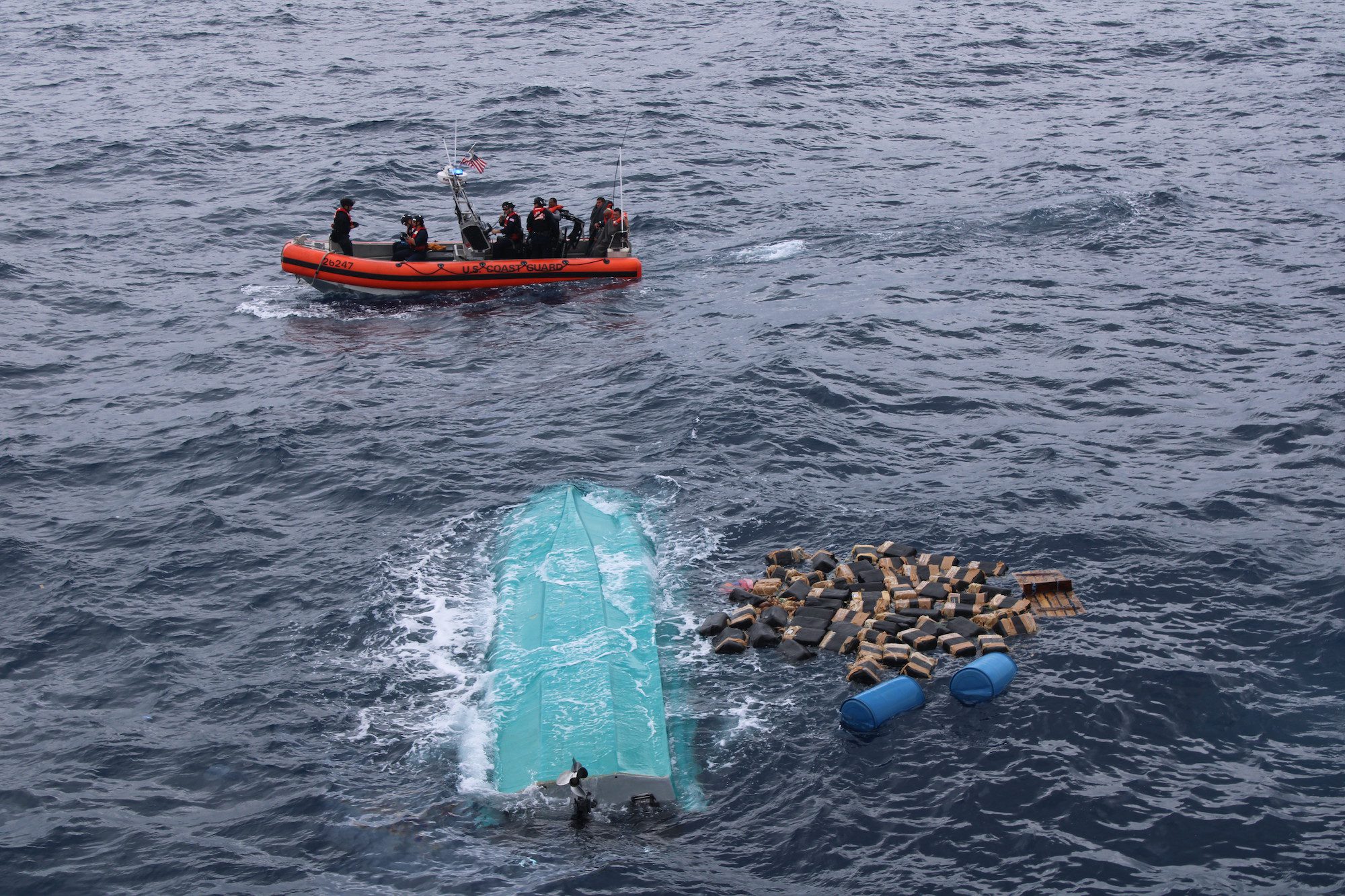
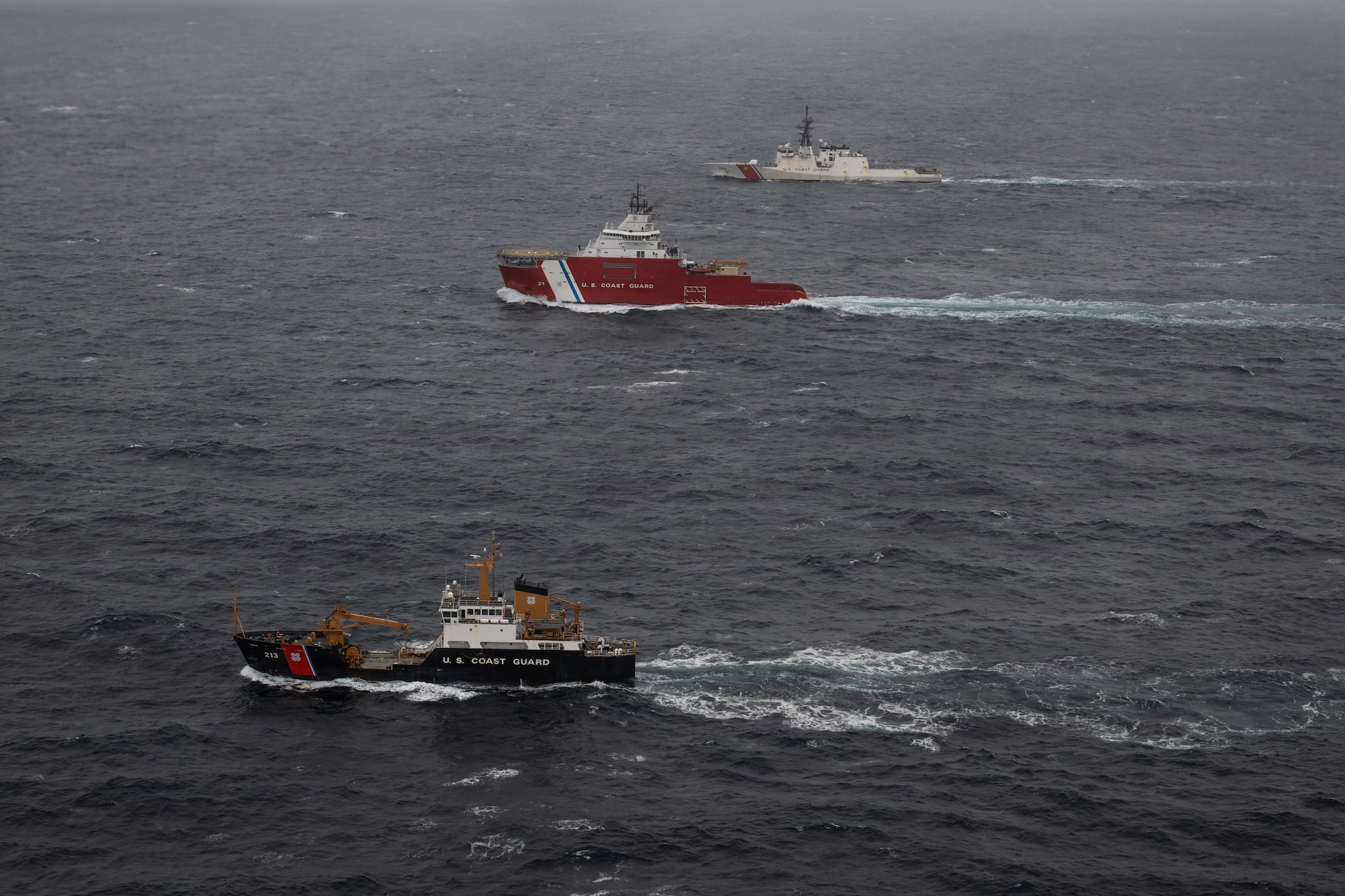
The U.S. Coast Guard announced it has seized more than 100,000 pounds of cocaine in the Eastern Pacific Ocean since launching Operation Pacific Viper in early August, averaging over 1,600 pounds interdicted daily.
The drug seizures and the apprehension of 86 individuals suspected of narco-trafficking were the result of 34 interdictions since early August. Through Operation Pacific Viper, the Coast Guard is accelerating counter-drug operations in the Eastern Pacific Ocean, where significant transport of illicit narcotics continues from Central and South America.
“The Coast Guard’s seizure of over 100,000 pounds of cocaine, in such a short timeframe, is a remarkable achievement,” said Rear Adm. Jeffrey Novak, deputy commander of U.S. Coast Guard Pacific Area. “When we say the Coast Guard is accelerating counter-narcotics operations, we mean it. Alongside our partners and allies, our maritime fighting force is scouring drug smuggling routes in the Eastern Pacific and dismantling narco-terrorist networks.”
The announcement comes as the Trump administration pursues a parallel approach using military strikes against suspected Venezuelan drug vessels. President Donald Trump on Tuesday announced another military strike against a suspected narco-trafficking vessel in international waters off Venezuela, killing six individuals the administration described as “narcoterrorists.”
In a Truth Social post, Trump stated: “Under my Standing Authorities as Commander-in-Chief, this morning, the Secretary of War, ordered a lethal kinetic strike on a vessel affiliated with a Designated Terrorist Organization (DTO) conducting narcotrafficking in the USSOUTHCOM area of responsibility — just off the Coast of Venezuela.”
The operation follows at least four similar strikes against suspected drug boats since early September as part of a broader shift in the Trump administration’s approach to drug interdiction. Earlier this month, the Trump administration formally determined that the United States is engaged in a “non-international armed conflict” with drug cartels, according to documentation provided to Congress justifying the legal basis for deadly strikes.
An earlier strike on October 3 killed four individuals aboard another suspected narco-trafficking vessel. Secretary of War Pete Hegseth defended the operation: “Our intelligence, without a doubt, confirmed that this vessel was trafficking narcotics, the people onboard were narco-terrorists, and they were operating on a known narco-trafficking transit route. These strikes will continue until the attacks on the American people are over!”
Legal experts have questioned the administration’s approach, particularly the use of military force rather than traditional maritime law enforcement agencies like the Coast Guard. They also question why non-lethal methods aren’t attempted before resorting to deadly force.
Speaking to reporters on Wednesday, President Trump said called the Coast Guard’s method of seizing drugs at sea “totally ineffective.”
Some experts have said the legal explanations given by the Trump administration for killing suspected drug traffickers at sea instead of apprehending them fail to satisfy requirements under the law of war. Amnesty International USA’s Director for Security and Human Rights, Daphne Eviatar, described the latest strike as “murder—plain and simple,” and questioned their legal justification.
“There is no plausible legal justification for the Trump administration to use the U.S. military to kill whoever it unilaterally deems a ‘terrorist’,” said Eviatar. “These airstrikes outrageously flout international law and set a dangerous precedent for other leaders around the world.”
Detecting and interdicting narco-terrorism on the high seas involves significant interagency and international coordination. U.S. Southern Command’s Joint Interagency Task Force-South, based in Key West, Florida, detects and monitors both aerial and maritime transit of illegal drugs. Once interdiction becomes imminent, the law enforcement phase of the operation begins, and control of the operation shifts to the U.S. Coast Guard throughout the interdiction and apprehension.
Interdictions in the Eastern Pacific Ocean are performed by members of the U.S. Coast Guard under the authority and control of the Coast Guard’s Southwest District, headquartered in Alameda, California.The Coast Guard is the United States’ lead federal agency for maritime drug interdiction.

 Join The Club