The U.S. Coast Guard has released a sweeping review of risks facing critical U.S. port infrastructure following the 2024 collapse of Baltimore’s Francis Scott Key Bridge, finding that existing waterways risk assessment tools are underused as ships grow larger and port operations become more complex.
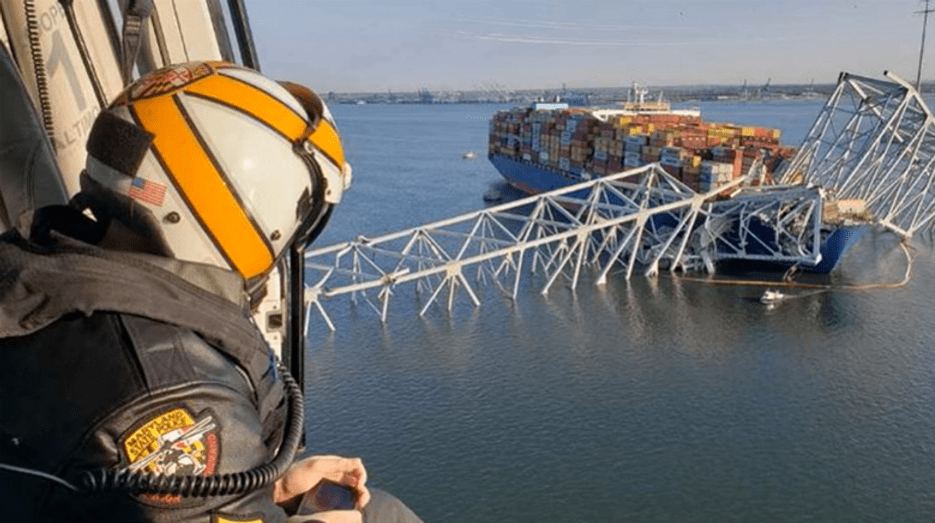
The Ports and Waterways Safety Act Board of Inquiry was convened following the March 26, 2024, allision of the containership Dali with the Key Bridge. The casualty killed six people, destroyed the bridge and forced the prolonged closure of the Port of Baltimore.
The 974-foot Dali lost electrical power while outbound from Baltimore before striking Pier 17 of the bridge. The Board noted that while the bridge had a pier protection system, it was insufficient to withstand the impact. It also pointed to a broader mismatch between aging infrastructure and modern shipping, noting that the size, tonnage and power of today’s containerships can greatly exceed those contemplated when many bridges were designed.
Rather than reinvestigating the casualty itself, the Board was tasked with examining the wider implications for the nation’s Marine Transportation System.
The inquiry ultimately evaluated 11 port areas, including Los Angeles/Long Beach, New York/New Jersey, Houston/Galveston, New Orleans, Virginia, Puget Sound and Corpus Christi. The Coast Guard combined port visits and stakeholder interviews with vessel movement and casualty data to identify vulnerabilities and potential mitigation measures.
One of the clearest findings was that the problem extends well beyond Baltimore.
Deepwater channels and bridges ranked as the most important types of critical infrastructure identified by maritime stakeholders, while ports consistently reported handling larger commercial vessels than a decade ago. Several also reported increased commercial traffic, while most saw growth in recreational vessel activity.
Bridge allisions emerged as the most commonly identified worst-case scenario during the port reviews, cited at eight of the ports studied. Vessel collisions and major weather or natural disasters were each identified at seven.
The Board also found weaknesses in the Coast Guard’s existing system for identifying and managing those risks.
Its report concluded that waterways risk assessment tools are underutilized and that port infrastructure is increasingly exposed to risks created by the changing use of the Marine Transportation System. The Board called for updated Coast Guard risk policies, establishment of baseline maritime risk metrics, better workforce development and closer collaboration with port stakeholders.
In some cases, existing assessment requirements are simply not being completed. The Coast Guard’s Waterways Analysis and Management System, for example, requires reviews of critical waterways at least every five years. But 18 of the 41 Captain of the Port zones surveyed had no record of completing one since 2015, according to the report.
The Board also found that risk-management efforts across the Coast Guard can be siloed, with policies that are not always mutually supportive, and called for a more coordinated governance structure covering policy, personnel and training.
Staffing is another concern. The report says the Coast Guard’s Waterways Management program is operating with an estimated 31% staffing deficit, equivalent to 57 billets. The shortage, the Board warned, makes it more difficult to carry out mandated waterways assessments and could affect both navigational safety and national security.
The Board issued 20 recommendations in all.
Among them are proposals to establish a broader Coast Guard risk-management framework, regularly review existing assessment tools, develop integrated data sources for maritime risk metrics, create a centralized repository for completed assessments and improve training for waterways managers. It also recommended making the WAMS process more risk-based so resources can be concentrated on waterways with greater navigational complexity or consequences.
The report also highlights several practical measures raised repeatedly by local port stakeholders, including additional dredging, greater salvage and oil-spill response capacity, more tug capacity and tug escort requirements, additional bridge protection and fendering systems, and installation of real-time current, tide, weather and bridge-clearance sensors.
“The tragic Key Bridge incident underscores the urgent need to strengthen our approach to port safety and risk management,” said Rear Adm. Wayne Arguin, chair of the Board of Inquiry. “The Board’s findings and recommendations provide a roadmap to enhance the resilience of our ports and ensure the continued security of the Marine Transportation System.”
The Coast Guard is now seeking stakeholder comments on the findings through February 28, 2027.
Those comments will help inform the Commandant’s Final Action Memorandum, which will determine what actions the Coast Guard takes in response to the Board’s recommendations. The final memorandum is expected to be released publicly in August 2027.

 Join The Club