By Charlotte Goldstone (The Loadstar) –
CMA CGM has postponed its $150 per TEU Low Water Surcharge on cargo moving from South America’s west coast through the Panama Canal, where more restrictions on draught and transits are expected.
The French carrier had announced the surcharge would take effect on 1 September, but told customers yesterday it was pushing the start date back to 1 October.
The charge will apply to all cargo from South America’s west coast to North Europe, the Mediterranean, North Africa, Indian Subcontinent, Middle East Gulf, Red Sea, South Africa, West Africa, Central America east coast, Caribbean, Leeward and Windward islands, Mexico’s east coast, US east coast, US Gulf, and Canada’s east coast.
Industry consultant Lars Jensen commented: “Strictly speaking, the 1 September date was announced just three days ago, making this seem more like an initial miscommunication of the implementation date.”
The move comes as restrictions on Panama Canal transits are expected to tighten, with implications for container vessel capacity.
Braemar analyst Jonathan Roach said: “This time the issue is not simply fewer transit slots. It is fewer slots and less cargo per ship.”
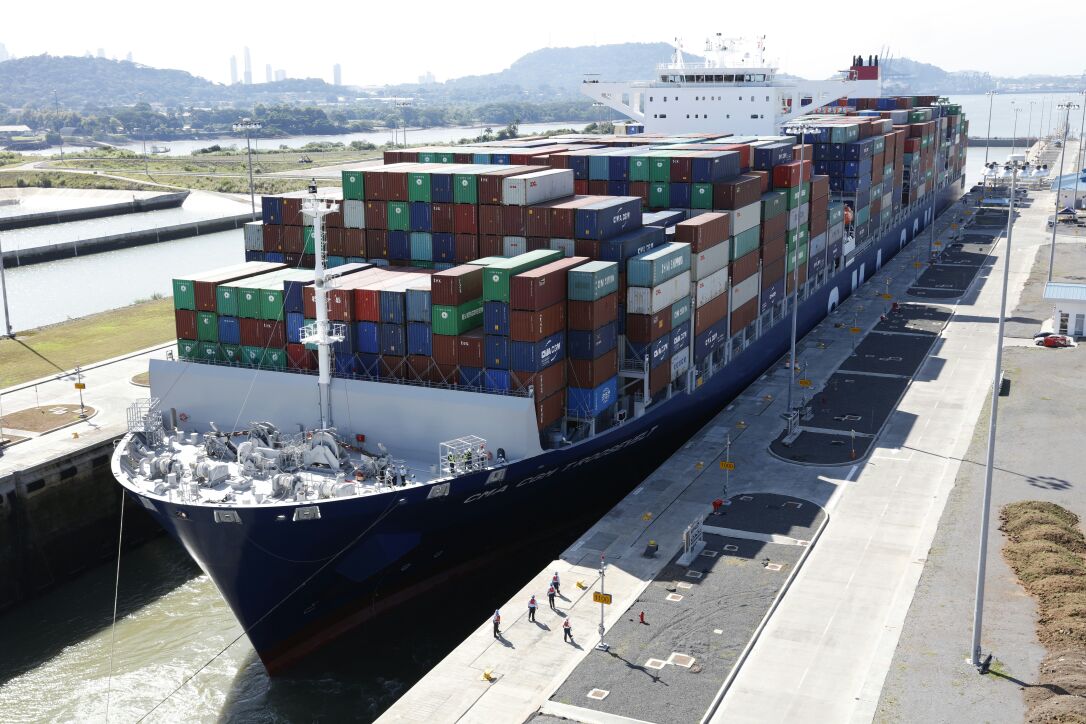
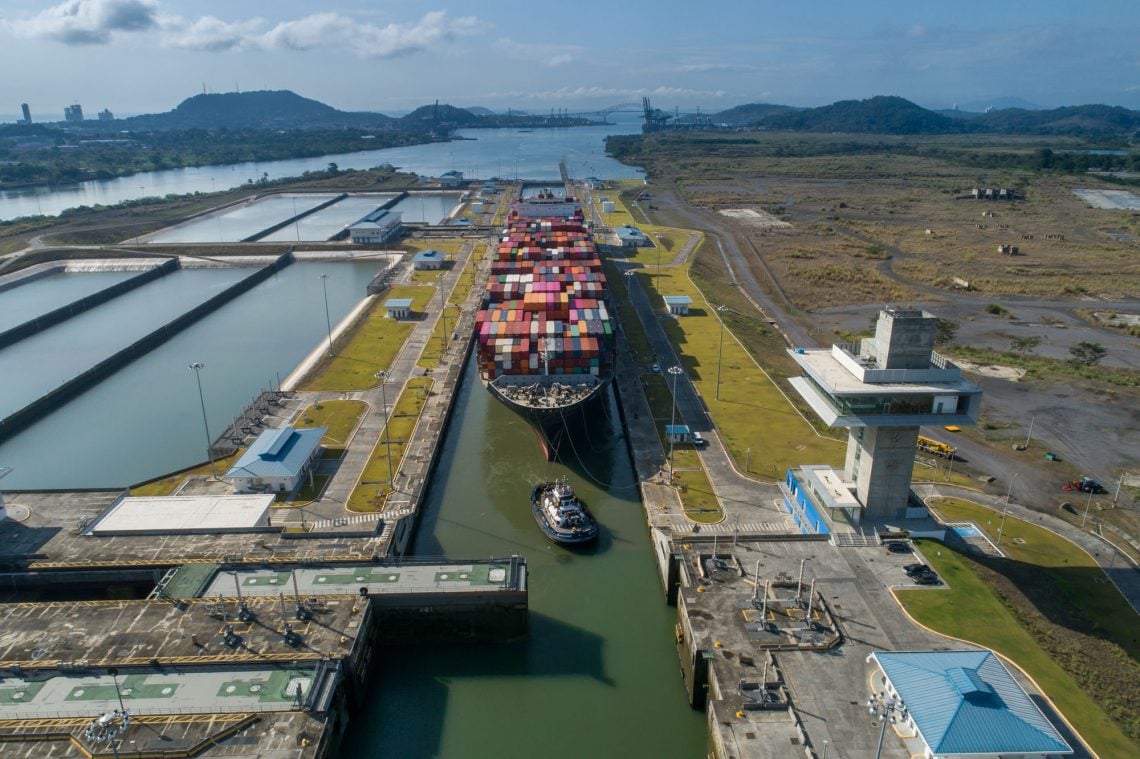
From 2 September, the maximum permitted draught for Neopanamax vessels will be 14.63 metres, dropping to 14.48 metres from 1 October. The number of daily transits is also expected to fall, from 36 to 34, on 3 September and then to 32 from 15 September, although this is subject to change.
Braemar’s July data recorded 189 Neopanamax transits, 85 of which – involving 78 individual vessels – were by ships drawing 15 metres or more. That means around 45% of Neopanamax transits could be affected by the new draught restrictions, representing about 55% of nominal teu capacity moving through the Neopanamax locks.
“The immediate response is likely to be less cargo, rather than fewer ships,” said Mr Roach. “Vessels can remain on their existing services, but may have to sail below their normal intake to meet the draught restriction.”
A further reduction in daily transits could bar some ships from the canal altogether, while queues and delays compound the effective capacity loss.
If conditions deteriorate, carriers could consider diverting Asia-US east coast services around the Cape of Good Hope, adding roughly 30% to transit times and tying up vessels for longer.
“The Panama Canal does not need to close to disrupt container shipping; it only needs to become a little less deep and a little less available,” warned Mr Roach.
And he noted that the capacity squeeze could extend beyond the canal, as cargo displaced from Panama would have to be absorbed elsewhere in the global fleet.
The Loadstar is known at the highest levels of logistics and supply chain management as one of the best sources of influential analysis and commentary.

 Join The Club