Malta’s transport authority confirmed on Tuesday that the LNG tanker Arctic Metagaz is drifting in the Mediterranean, contradicting earlier reports from Libya that the vessel had sunk following the March 3 explosion southeast of the island.
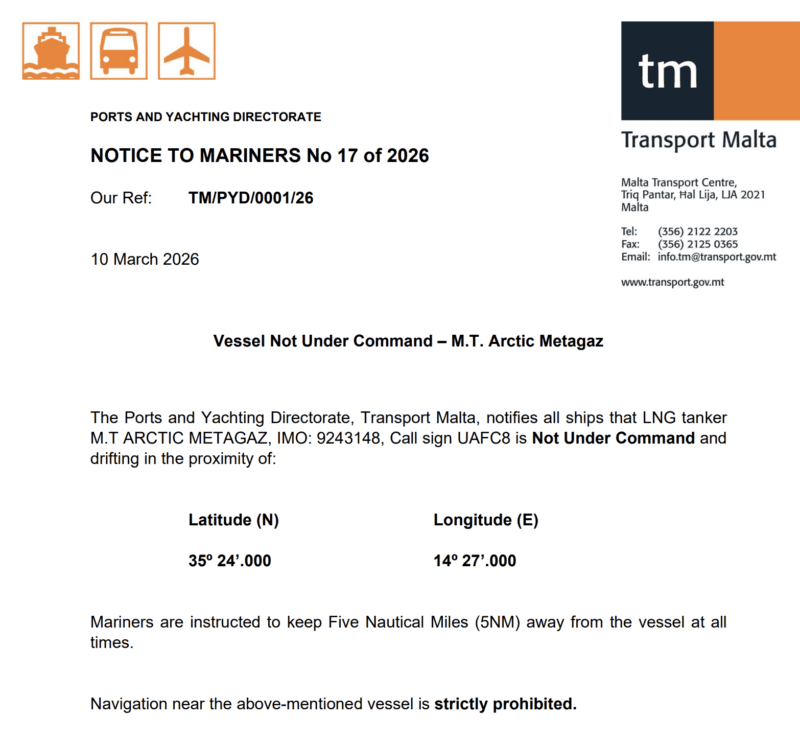
Malta’s Ports and Yachting Directorate issued a notice to mariners on March 10 warning that the liquefied natural gas (LNG) tanker Arctic Metagaz is “not under command” and drifting in the central Mediterranean. The vessel, initially reported as sunk, is now located at 35º24’.000 N and 14º27’.000 E, approximately 37 nautical miles south of Malta.
The notice instructs all vessels to maintain a minimum distance of five nautical miles from the tanker and prohibits navigation in its vicinity.
This official notice confirms that the vessel did not sink but has been slowly drifting westward following the initial explosion roughly 170 nautical miles southeast of Malta.
Transport Malta notice to mariners warning to keep clear of Arctic Metagaz. (Source: Transport Malta)
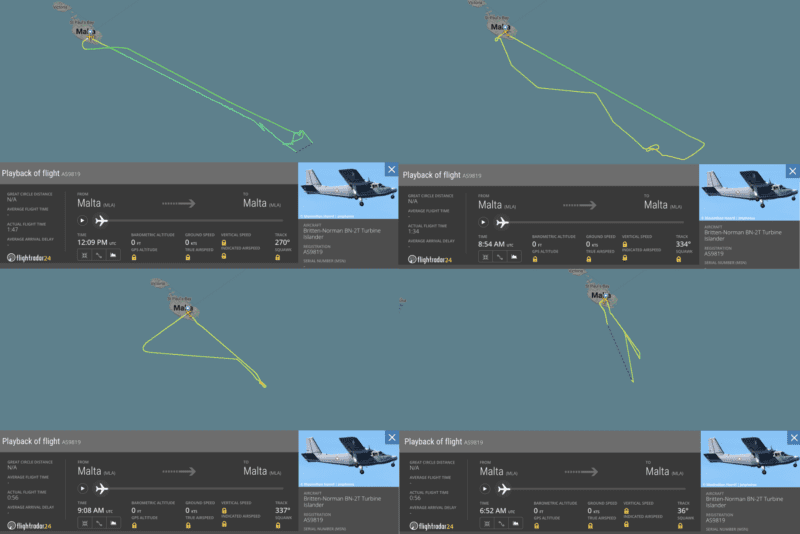
Daily survey flights by the Malta Armed Forces had already suggested that the tanker remained afloat. Data from FlightRadar24 shows a series of monitoring flights moving progressively closer to Maltese waters since at least March 6. The latest flight on March 10 tracked the vessel at the same coordinates as indicated in the notice to mariners.
Authorities in Malta are reportedly drawing up contingency plans in the event that the vessel drifts into the country’s territorial waters. Officials have contacted the tanker’s owner, although no details about potential salvage operations for the sanctioned vessel have been released.
Maltese armed forces naval patrol flights March 6-8 and March 10 getting progressively closer to the island. (Source: FlightRadar24)
Prime Minister Robert Abela emphasized Malta’s preparedness. “If the tanker does float into our territorial waters, we will take the necessary action to ensure the security of our country,” he said, underlining the ongoing risk posed by the drifting vessel.
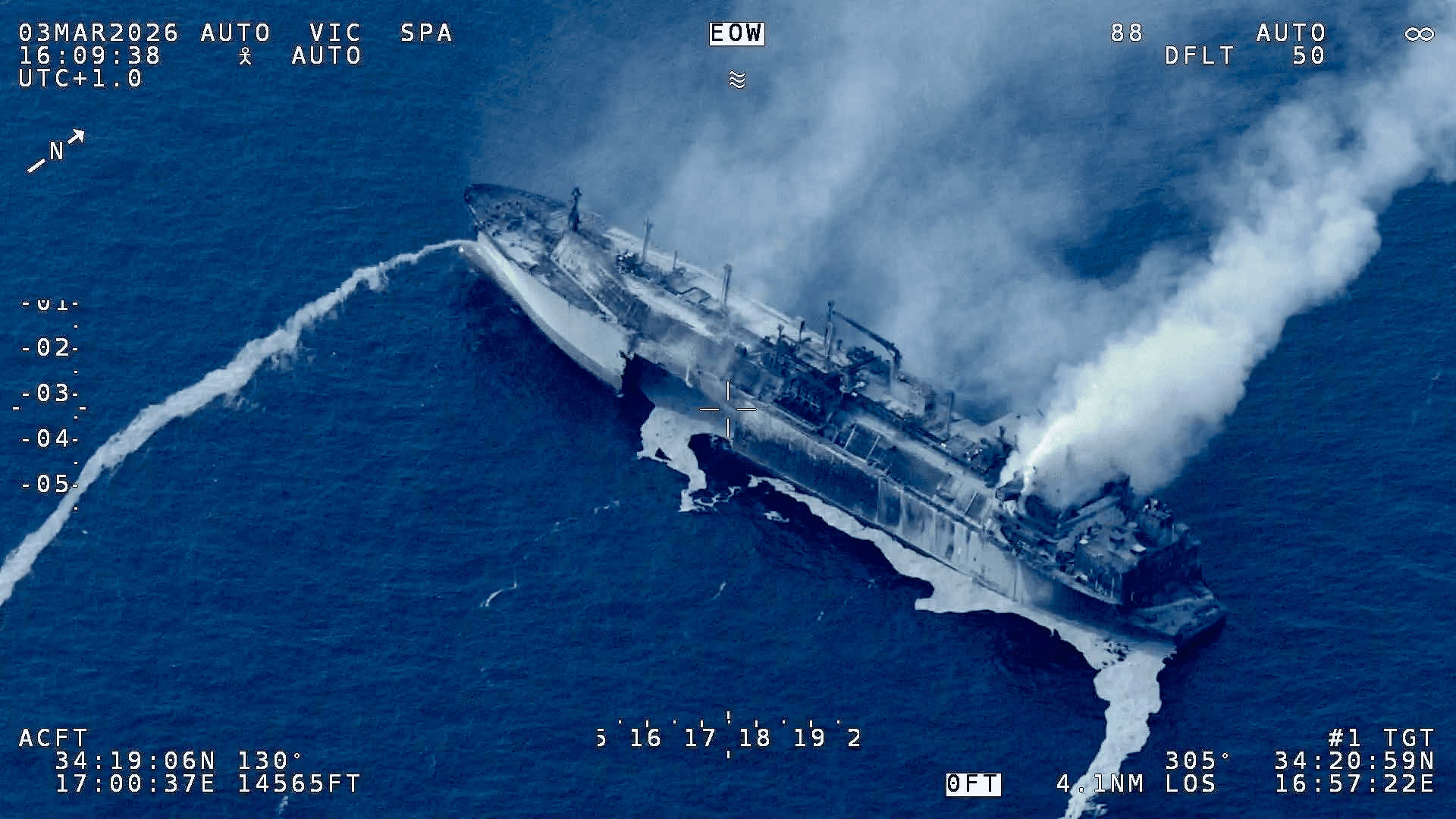
The current condition of the Arctic Metagaz remains a concern. Latest imagery indicates that the vessel is listing to starboard, with its number two LNG tank destroyed. Other compartments appear structurally intact, but the vessel shows extensive fire damage. Maltese authorities have established a five-nautical-mile quarantine zone, suggesting that the tanker may still hold volatile cargo.
No official confirmation has been released regarding the quantity of LNG remaining on board. Transport Malta has urged all vessels in the area to exercise extreme caution stressing that navigation near the ArcticMetagaz is strictly prohibited until further notice.
Experts say the prolonged drifting of the tanker reduces the likelihood of it immediately sinking, although the eventual fate of the vessel remains uncertain.
“If the structure of the vessel (double hull) is not affected, the probabilistic stability of this kind of vessel with damage to only one tank should prevent it from sinking, but this will depend on sea conditions,” explains Hervé Baudu, Professor Emeritus of Maritime Education at the French Maritime Academy (ENSM).
The vessel is part of Russia’s shadow fleet carrying LNG for the Arctic LNG 2 project. It loaded cargo at Saam FSU near Murmansk on February 17 before suffering an apparent explosion and massive fire two weeks later.
The Russian government claimed the incident was a deliberate attack by Ukraine calling it an “act of international terrorism and maritime piracy.” Ukraine has not publicly commented on the event. The crew of thirty made it into life rafts and was rescued by another Russian shadow fleet tanker, the Respect, passing nearby.
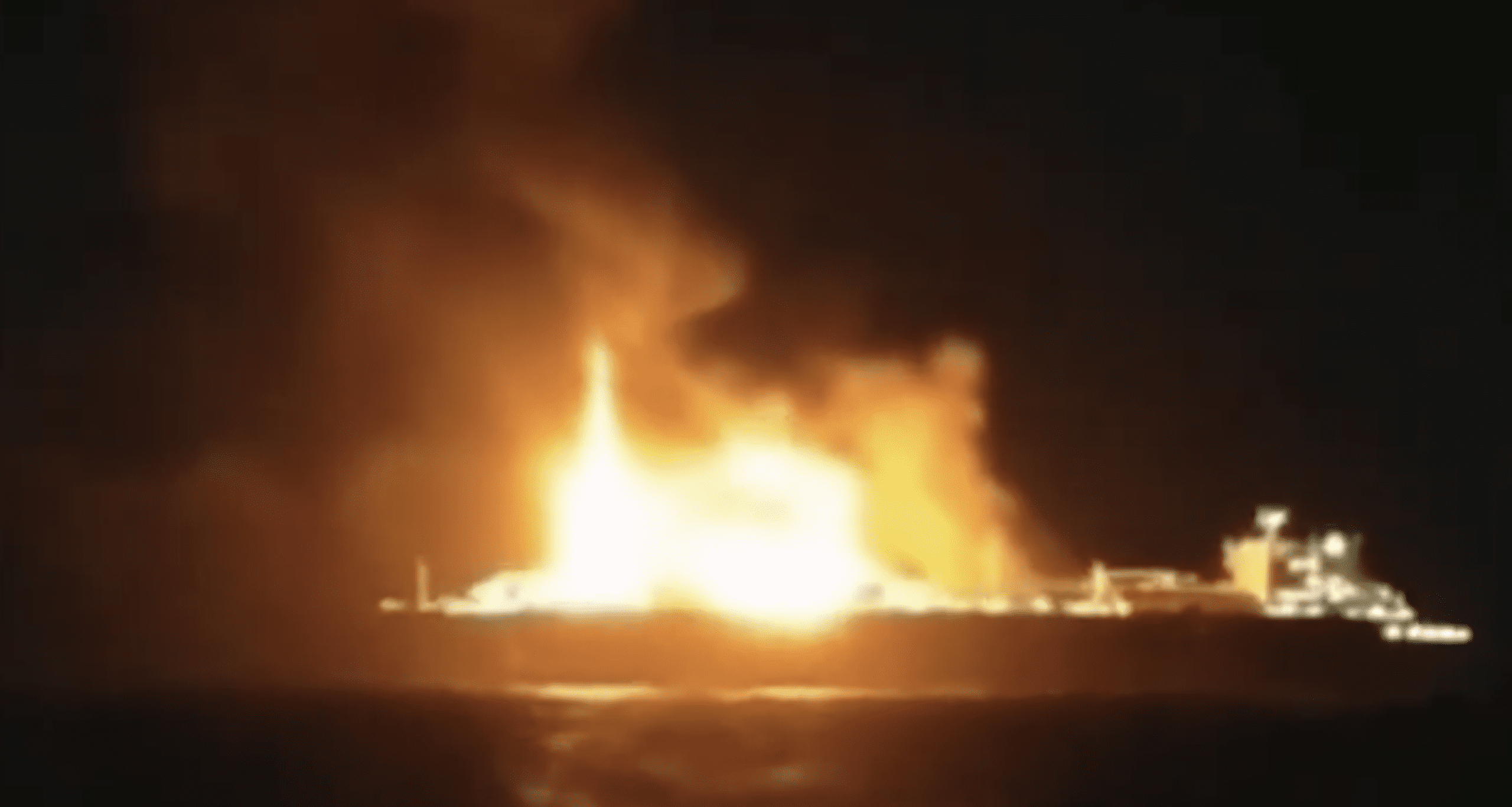
An LNG carrier central to Russia’s sanctioned Arctic gas trade was rocked by an explosion around 4 a.m. on March 3 roughly 150 nautical miles southeast of Malta, in an incident Moscow said was a Ukrainian attack and that could ripple through the Kremlin’s fragile LNG shadow fleet logistics network.
An LNG carrier identified as the Arctic Metagaz, part of Russia’s emerging shadow fleet transporting sanctioned liquefied natural gas, was reportedly on fire early Tuesday in the central Mediterranean off the coasts of Malta and Libya.
French naval forces intercepted and diverted the Russian-linked oil tanker Grinch on Thursday in the western Mediterranean between the southern coast of Spain and northern Morocco, in the first known case of a crude oil shipment loaded in Russia’s Arctic being seized under Western sanctions.
January 22, 2026
Total Views: 873
Get The Industry’s Go-To News
Subscribe to gCaptain Daily and stay informed with the latest global maritime and offshore news
— just like 107,452 professionals
Secure Your Spot
on the gCaptain Crew
Stay informed with the latest maritime and offshore news, delivered daily straight to your inbox
— trusted by our 107,452 members
Your Gateway to the Maritime World!
Essential news coupled with the finest maritime content sourced from across the globe.

 Join The Club