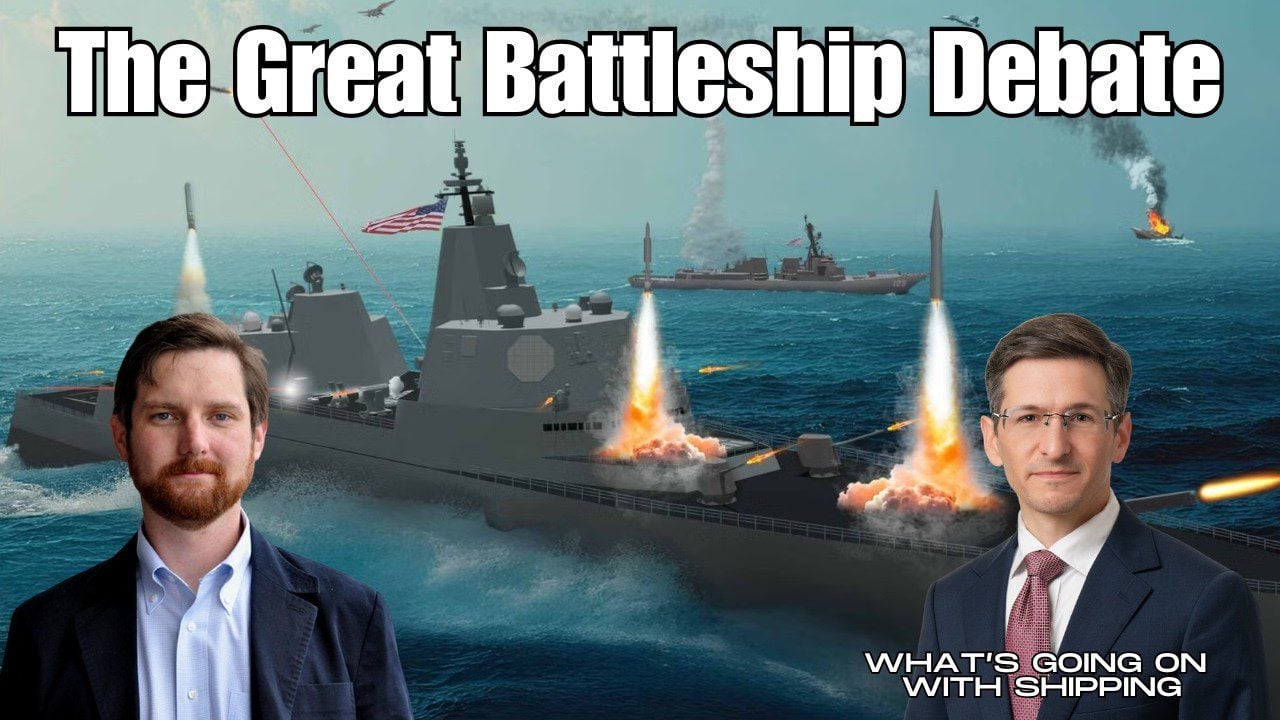
The U.S. Navy has not commissioned a battleship since 1944. Donald Trump now wants as many as 25. The first, USS Defiant, will displace more than 35,000 tons, carry hypersonics, lasers, and a 32-megajoule railgun, and will potentially cost more than a nuclear aircraft carrier. Bath Iron Works and Ingalls Shipbuilding are quietly raising hands but whispers of new entrants like Hanwha’s Philly Shipyard or California Forever are starting to emerge.
Last week, on Sal Mercogliano’sWhat’s Going On With Shipping, gCaptain founder John Konrad sat down with Dr. Zack Cooper of the American Enterprise Institute to have the actual argument Sal is calling The Great Battleship Debate. One hour. No talking points. No carrier admirals running cover. No gatekeeping. Two people who disagree, looking at the same hardware, the same shipyards, and the same Chinese missile threat, reasoning out loud about what the Navy should build.
Cooper is sharp. He is the smartest version of the Beltway consensus that battleships are a distraction from other priorities, which is exactly why Mercogliano put him in the chair. Cooper argues a 35,000-ton flagship is a multi-billion-dollar bullseye for the People’s Liberation Army Rocket Force, that distributed lethality is the future, and that smaller and more numerous beats big and few. He brings receipts: Yale University Press author of Tides of Fortune, NSC and OSD experience, a serious China brain. If you want to understand why many navalists believe the BBG(X) (now BBGN) is a vanity project, listen to Cooper. He says it cleanly, on the record, with his name attached.
Konrad takes the harder seat.
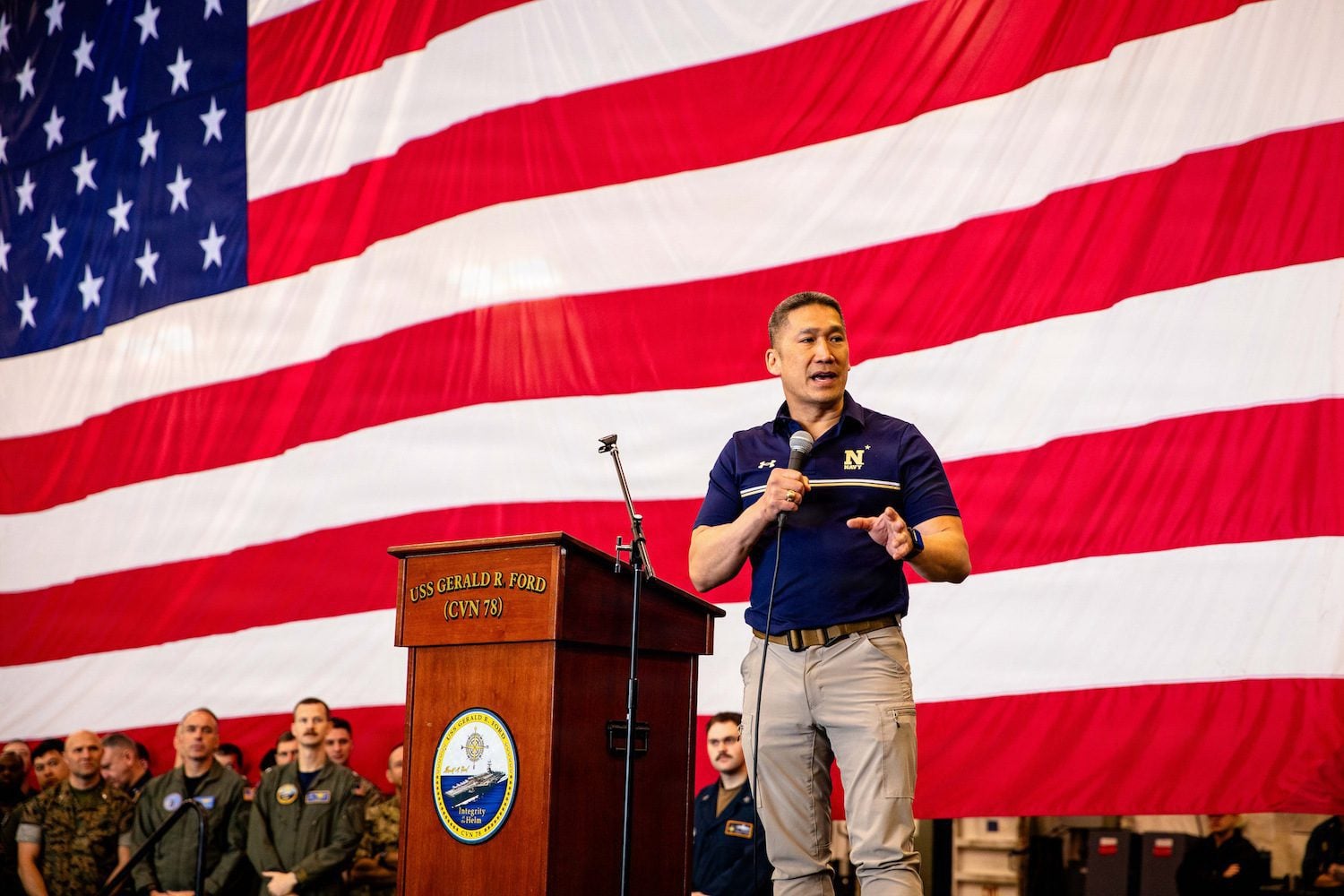
Not because the (now former) Secretary of the Navy John Phelan rollout at Mar-a-Lago in December was flawless. Konrad readily admits the concurrent acquisition model that GAO blamed for killing the Constellation-class frigate was not fixed before announcing this new program. The shipyards are not ready. The CNO knows it. Acting Secretary of the Navy Hung Cao knows it. Everyone in Crystal City knows it.
The underlying question, however, is real. And the Beltway keeps flinching from it.
If American carriers have to operate at standoff distance in the South China Sea, who shoots? If destroyers burn through their Mk-41 cells in week one of a peer fight, who reloads them? If a saturation salvo arrives in the Red Sea, the Black Sea, or the Strait of Hormuz, and the Navy has already retired the Ticonderogas and walked the Ohio-class SSGNs out the door, what holds the line? The drone-everything crowd has an answer. That answer has never been tested in a peer fight against an adversary that shoots back. The fleet is being bet on PowerPoint, not realistic SINKEX exercises with modern merchant ships.
That is the debate. Mercogliano breaks it into the five questions that actually matter:
How does the BBG(X) fit into a force structure that still cannot deliver Flight III Burkes on time?
Is the Trump-class a real revolution in naval affairs, or a Pentagon vanity project dressed in railguns?
Does the Red Sea, the Black Sea, or the Strait of Hormuz actually require a 35,000-ton hull, or is that the wrong shape for those fights?
Can American industry even build this thing? Bath and Ingalls cannot meet current destroyer timelines, and Hanwha Philly Shipyard’s first new-build LNG carrier does not deliver until 2028, with its first MR tankers not until 2029.
If not this, then what, and on what schedule? The missile-cell shortfall is arriving in the early 2030s whether the Defiant exists or not.
These are not academic questions. The Navy is shrinking, the threat is growing, and the response from most of the defense commentariat has been to argue about whether the Iowa-class Tomahawk modification was worth it in 1991. But according to Konrad, while the battleship is not perfect, American Destroyers are doing good job protecting merchant ships in choke points. The problem? They run out of munitions and fuel quickly.
“The battleship provides deeper magazine and fuel reserves,” said Konrad. “Plus additional defensive weapons and shore bombardment capabilities to assist landing Marines.”
Konrad and Cooper do not agree on the answer. That is the point. They agree on the stakes, and both men showed up to make a real argument in public.
This is the conversation Combatant Commanders, Chief of Naval Operations Daryl Caudle, and the BBG(X) program executive officers should be hosting at the Pentagon, on the record, with the industrial base in the room( that might change with Hung Cao now in office). So Mercogliano hosted it on YouTube, with a Campbell University maritime historian moderating, because in 2026 very few in DC or the media are willing to host hard debates.
America’s problem is not capacity. It is not will. It is the people in Washington who would rather post on LinkedIn than answer the five questions above.
Sal asked them. Zack answered them. So did Konrad.
Hit play.
Editorial Note: After filming the debate the Navy announced that the battleships would be nuclear powered, an idea both Cooper and Konrad endorsed. Read about the update HERE.
What (Acting) Secretary Hung Cao’s First Five Months Tell Us About the Job Ahead By Bruce Kimbrell (Policy Op-Ed) President Trump has nominated the Honorable Hung Cao to become the...
By Jennifer A. Dlouhy and María Paula Mijares Torres Sep 6, 2026 (Bloomberg) –US Navy escorts that are helping tankers cross the Strait of Hormuz are essential to sustaining crude flows...
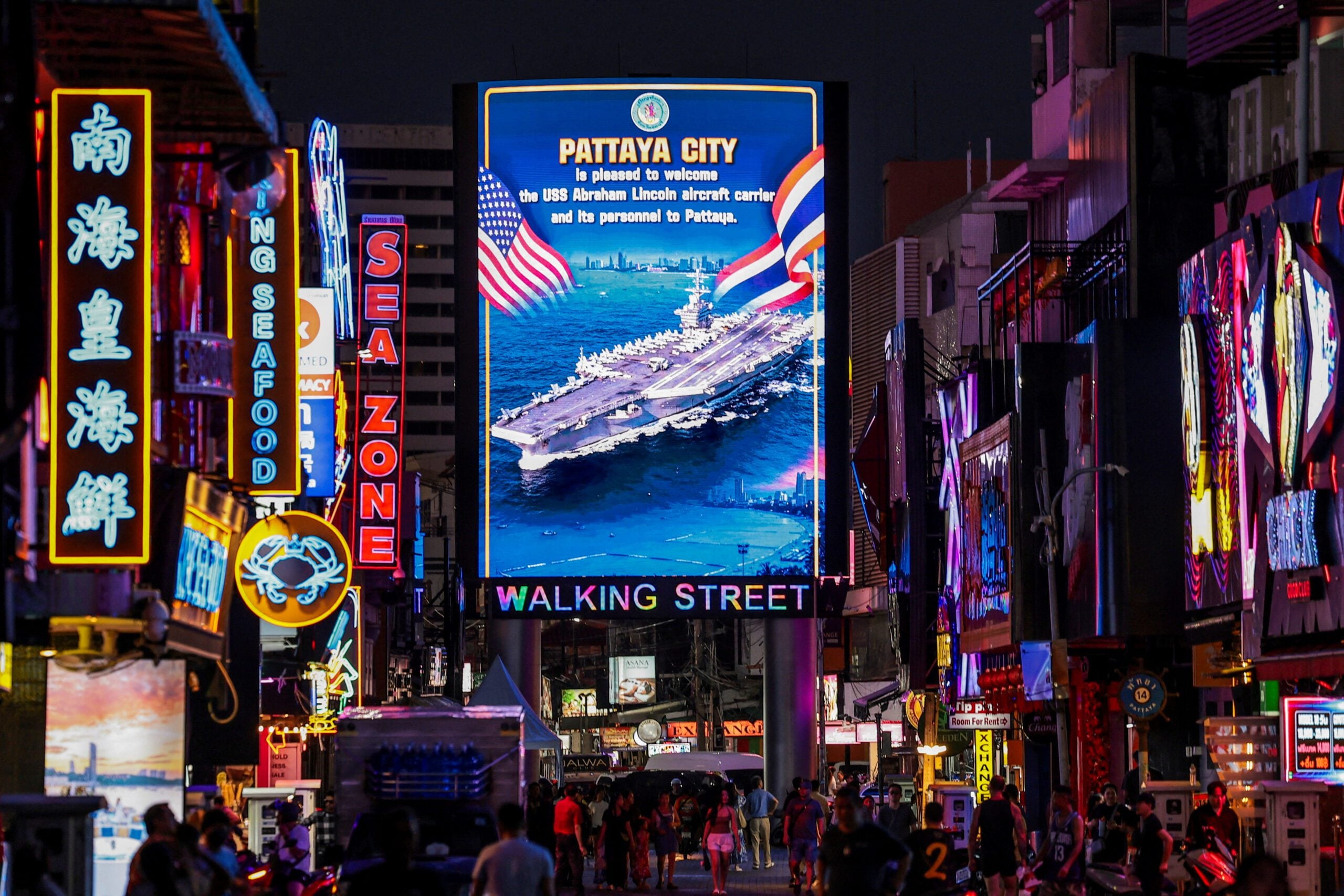
Sept 6 (Reuters) – The U.S. aircraft carrier Abraham Lincoln left Thailand on Sunday after a five-day port visit, ending a respite from an extended deployment that included operations in the Middle East, the U.S. Navy said. “We...
September 6, 2026
Total Views: 2014
Get The Industry’s Go-To News
Subscribe to gCaptain Daily and stay informed with the latest global maritime and offshore news
— just like 106,969 professionals
Secure Your Spot
on the gCaptain Crew
Stay informed with the latest maritime and offshore news, delivered daily straight to your inbox
— trusted by our 106,969 members
Your Gateway to the Maritime World!
Essential news coupled with the finest maritime content sourced from across the globe.

 Join The Club