gCaptain.com

A Blog About Ships

Fastream Maritime Leaderboard


Future Ships - R/V Aurora Borealis

July 25th, 2008 · Comments

9653288C-76C9-4E56-8AFA-4D9AF39650C9.jpg

Aurora-Borealis-icebreaker.jpg

The most technologically advanced drillship in the world is not on lovaton in the gulf of mexico or in a Korean shipyard. Actually it’s not even built yet. Meet the Aurora Borealis, a dynamically positioned, drillship/icebreaker, arctic research vessel designed for the European Union. The official website tells us;

The Research Icebreaker AURORA BOREALIS will be the most advanced Polar Research Vessel in the world with a multi-functional role of drilling in deep ocean basins and supporting climate/environmental research for the next 40 years.

The new technological features will include azimuth propulsion systems, satellite navigation, ice-management support, deep-sea drilling under a closed sea-ice cover and the deployment and operation of Remotely Operated Vehicles (ROV) and Autonomous Underwater Vehicles (AUV) from one of the two moon-pools.

The unique feature of the vessel is the drilling rig, which will enable sampling of the ocean floor down to 5000 m water depth and with 1000 m penetration into the seafloor at the most inhospitable places on earth. The drilling capability will be deployed in both polar regions and AURORA BOREALIS will be the only vessel worldwide to undertake this type of scientific investigation.

Technical Details:

• Powerful icebreaker with ca. 55 MW (diesel-electric)
• Highest classification for icebreakers
• Twin hull
• Two moon pools 7 x 7 m each
• Dynamic Positioning System
• Deep-sea drilling under a closed sea-ice cover
• Drilling rig: max. 5,000 m water depth and 1,000 m core
• Riserless drilling technology
• Modularized mobile laboratory systems - mission specific laboratories
Length over all ca. 180 m | Beam ca. 40 m | Personnel (crew + scientists) 120 | Expedition duration 60 days.

arctic-drillship-icebreaker-1.jpg

For more information on the Aurora Borealis visit the official website HERE or download the presentation HERE. For the oceanography geeks a more detailed study can be found HERE.

UPDATE: The BBC has just run an excellent article on this vessel which can be found HERE.

Drillship Icebreaker

Note: This article was originally posted in Jan 08

CommentsTags: · , , , , , , , , , ,

The Awful Racket Of Fish

April 19th, 2008 · Comments

The New York Times ran a great feature last week:

What’s Making That Awful Racket? Surprisingly, It May Be Fish

deepsea fish
Steven Senne/Associated Press

Mating calls of the black drum can carry through sea walls and into homes. Click here to listen to the sounds of the black drum and other fish. Don’t miss the Interactive Feature

The article by Noony de la Pena covers the story of James Locascio, a doctoral student in Marine Science at the University of South Florida, who rescued the city of Cape Coral, Fl. from financial folly.   Here’s an excerpt:

“Eerie Thumps Haunt Some Cape Residents,” a headline in The News-Press of Cape Coral, Fla., said. “Noise May Cost City Big Bucks.”

The retirees who had come to spend their winters relaxing on the gentle estuaries and canals of the Gulf Coast in Florida blamed the municipal utility system. They were pushing the City Council to pay an engineering firm more than $47,000 to eliminate the noise reverberating through their homes.

It was the end of January 2005, during the spawning season for a fish appropriately called the black drum. Nightly mating calls were at a crescendo. But no one living in the area seemed to realize the din was of aquatic origin.

The full post is at the New York Times, here.

___________________________

This post was written by Richard Rodriguez, Rescue Tug Captain, and US Coast Guard approved instructor for License Training. You can read more of his articles at the BitterEnd of the net.

CommentsTags: · ,

Jason and Argo, Together Again forcasting Ocean Climate

April 2nd, 2008 · Comments

(Ed. note: Thanks to colleague and regular gCaptain commenter, Capt. Jack Richards pointing me to information on Argo.)

Brief History of Argo

The name Argo was chosen to emphasize the strong complementary relationship of the global float array with the Jason satellite altimeter mission. In Greek mythology Jason sailed in a ship called “Argo” to capture the golden fleece.

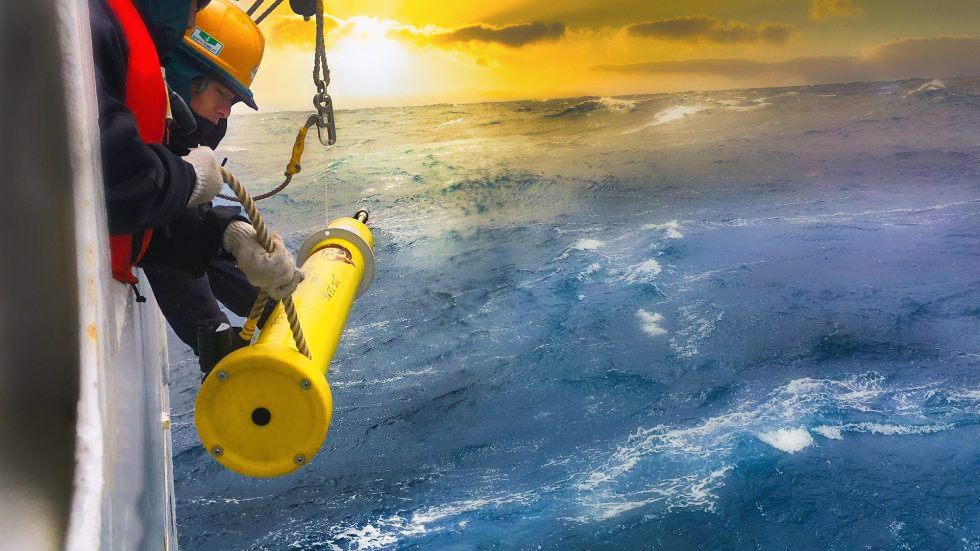
Argo float deployment from a research ship
An Argo float being deployed from a research ship.

Together the Argo and Jason data sets will be assimilated into computer models developed by project GODAE (Global Ocean Data Assimilation Experiment) that will allow a test of our ability to forecast ocean climate. For the first time, the physical state of the upper ocean is being systematically measured and the data assimilated in near real-time into computer models. Argo builds on other upper-ocean ocean observing networks, extending their coverage in space an time, their depth range and accuracy, and enhancing them through the addition of salinity and velocity measurements. Argo is not confined to major shipping routes which can vary with season as the other upper-ocean observing networks are. Instead, the global array of 3,000 floats will be distributed roughly every 3 degrees (300km).

Comprised of three subsystems:

  1. Hydraulics: control buoyancy adjustment via an inflatable external bladder, so the float can surface and dive.
  2. Microprocessors: deal with function control and scheduling.
  3. Data transmission system: controls communication with satellite.

Approx. Weight: 25 Kg
Max. operating depth: 2000m
Crush depth: 2600m

The three float models in use are the PROVOR built by MARTEC in France in close collaboration with IFREMER, the APEX float produced by Webb Research Corporation, USA and the SOLO float designed and built by Scripps Institution of Oceanography, USA.

You can find more details at Argo’s website, here.

Related Seattle Times article, here.

___________________________

This post was written by Richard Rodriguez, Rescue Tug Captain, and US Coast Guard approved instructor for License Training. You can read more of his articles at the BitterEnd of the net.

CommentsTags: · , , , , ,

Perfectly Dangerous - A Waterspout At Sea

February 19th, 2008 · Comments

Waterspout At Sea

Robin Storm points us to this photo of this spectacular waterspout off New Zealand’s Kapiti Coast. Be sure to check out the photo slideshow and article and stay tuned for Robin’s upcoming Severe Weather segment on our podcast.

Here is video via Stuff.nz:

 
icon for podpress  Waterspout - Twister At Sea [1:45m]: Play Now | Play in Popup | Download

CommentsTags: · , , , , , ,

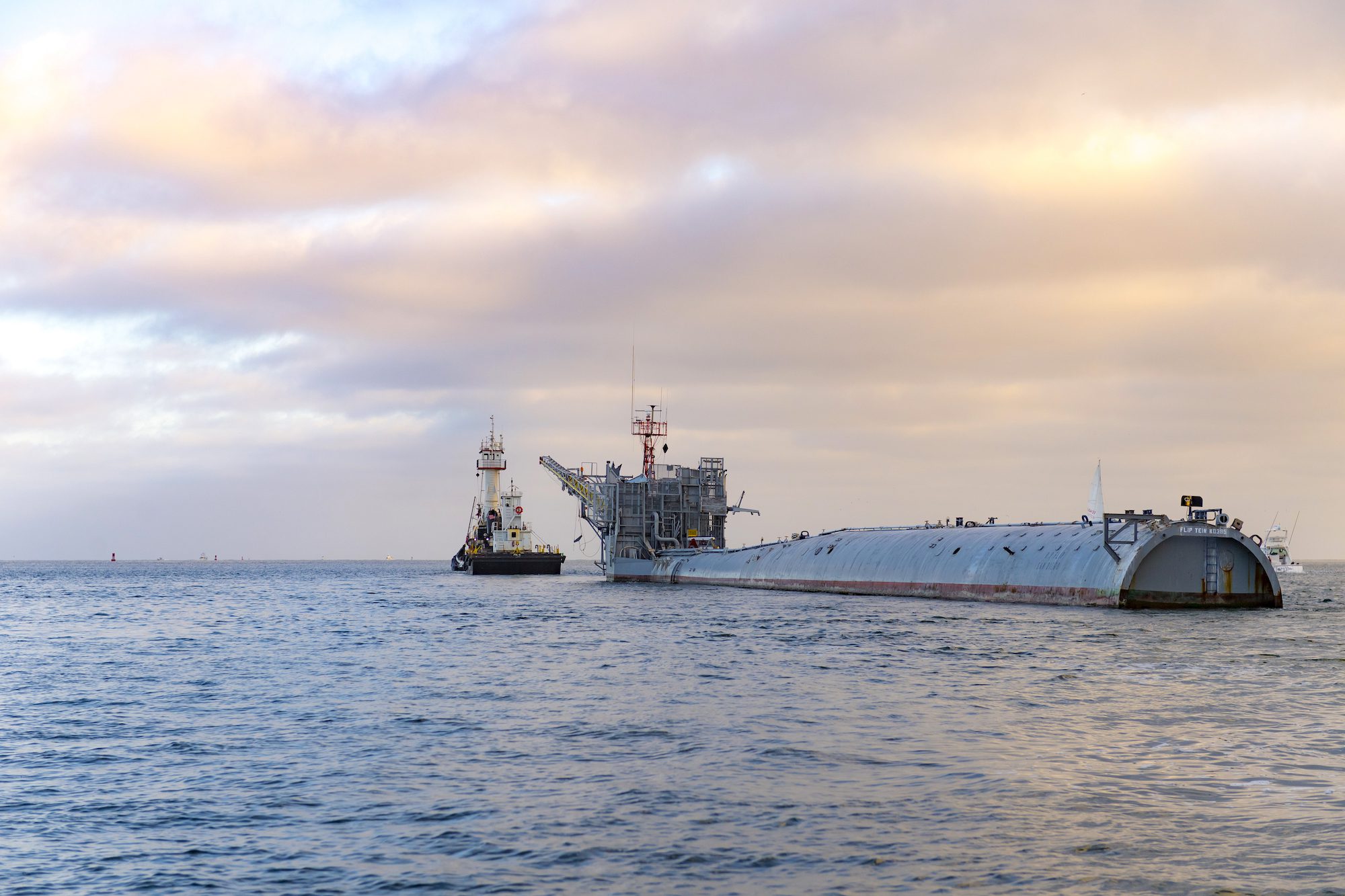
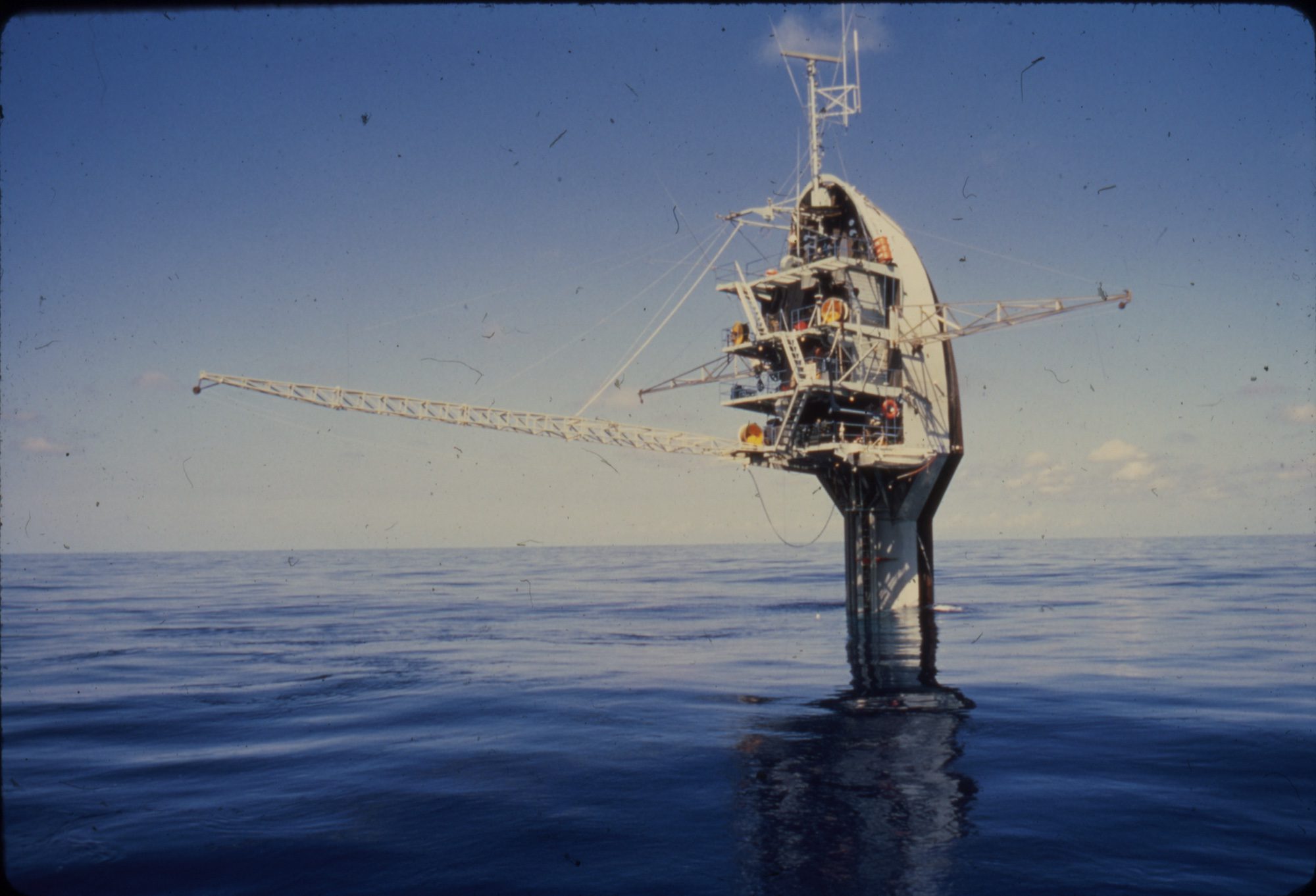
What the Flip is that? A Most Unusual Ship

January 9th, 2008 · Comments

The Flip - Animation

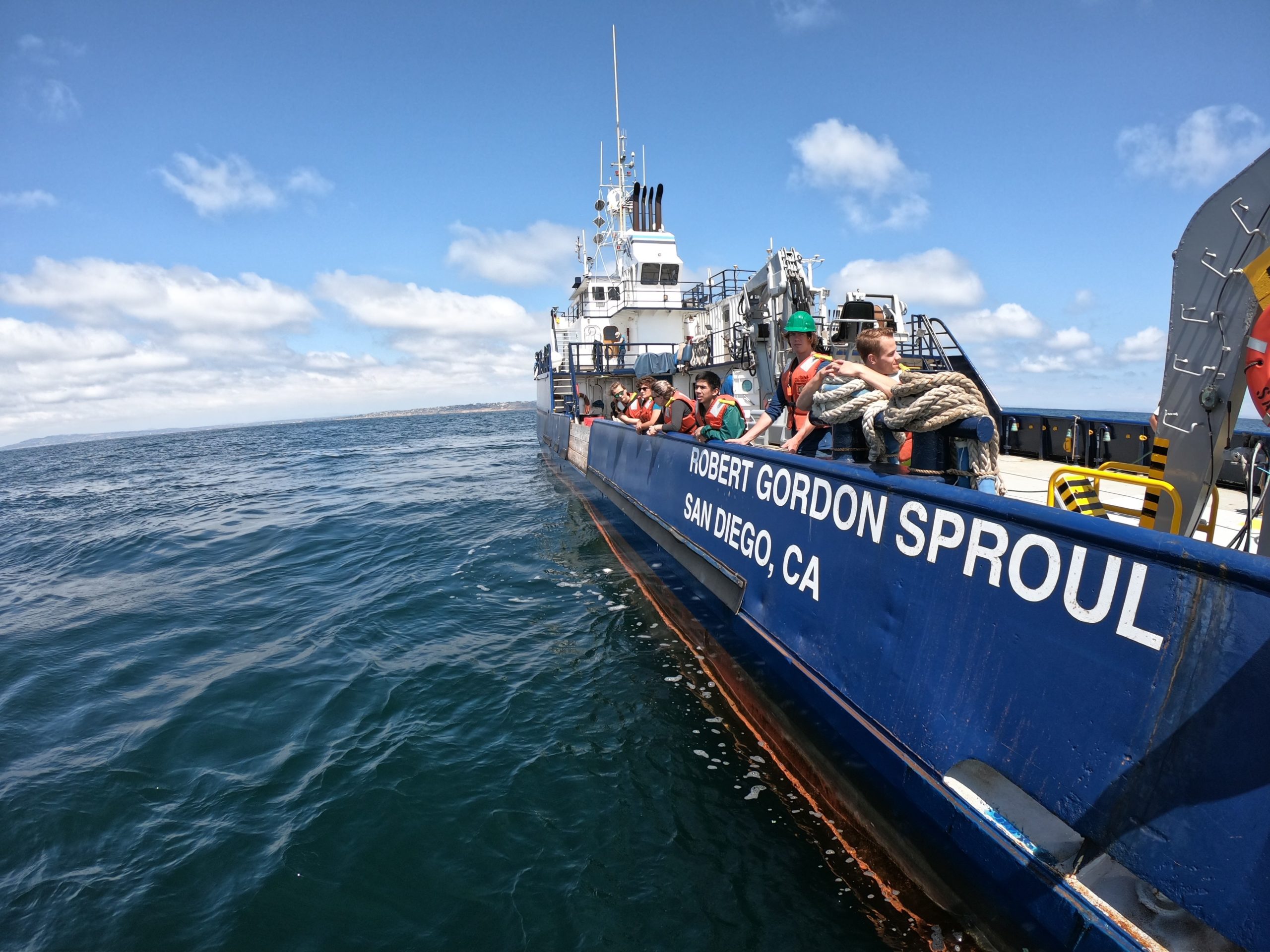
I took a tour of the FLIP back in 2002 when my wife was working aboard the Robert G. Sproul at Scripps and it is one of the most interesting ships I’ve ever seen. The Scripps website tells us alittle about this amazing vessel:

FLIP stands for Floating Instrument Platform: it is actually a huge specialized buoy. One of its creators described it as looking like a 355-foot long ( 108 m) baseball bat. If that isn’t unusual enough, it really flips!

Popular Mechanics is featuring the FLIP in this month’s magazine. Here are some highlights from the story:

Scripps Institute of Oceanography DockShaped like a giant baseball bat, the 700-ton FLIP, or Floating Instrument Platform, is a Navy barge operated by Scripps Institution of Oceanography in San Diego. Once towed to a site, the vessel flips to vertical. “It was built in 1962 to refine acoustic targeting for submarine rockets, but scientists quickly realized that it would be useful for all kinds of research,” says Bill Gaines, FLIP’s program director. “So 45 years later, FLIP still serves the oceanographic community.” And it is still one of a kind.

Stability

FLIP SinksTanks 5, 8 and 9, and parts of tanks 6 and 7, remain filled with air to keep FLIP buoyant. Like the Louisville Slugger that the vessel was modeled from, FLIP increases in diameter from bow to stern — a profile that contributes to its stability when vertical. “A design criterion for FLIP was that it move less than one-tenth of a passing wave’s height,” Gaines says.

Flip Research Vessel

There is more good information at Popular Mechanics site in the story titled:

Open Ocean Lab FLIP Vessel: How it Works

More Links:

 
icon for podpress  FLIP Research Vessel [0:44m]: Play Now | Play in Popup | Download

CommentsTags: · , , , , , ,


Comments


Popular Topics


Sponsors


Maritime and Offshore Recruitment

Spurs

Mariner Taxes Logo

Mariner Taxes

Golden Shellback Logo

Maritime Training


Your Ad Here


Authors


Follow Us


Categories


Recent Posts


Popular

Shipping Archives

Read A Random Story