The World Trade Organization is warning that global trade growth will slow sharply in 2026—and could weaken further if elevated energy prices tied to the Middle East conflict persist.
In its latest Global Trade Outlook and Statistics released March 19, the WTO said world merchandise trade growth is expected to fall to 1.9% in 2026, down from 4.6% in 2025, as last year’s surge in AI-related goods and tariff-driven frontloading fades.
Global trade in goods and services combined is projected to grow 2.7% in 2026, compared to 4.7% in 2025, while global GDP growth is expected to edge down slightly to 2.8%.
But the baseline forecast assumes stable energy markets—and that assumption is increasingly under pressure.
Energy Shock Scenario Hits Trade and Shipping
WTO economists warn that persistently high crude oil and LNG prices could push merchandise trade growth down to just 1.4% in 2026, with global GDP trimmed by 0.3 percentage points.
The impact would be most severe for energy-importing regions, where trade growth could fall by as much as one full percentage point.
Services trade—closely tied to transport and travel—would also weaken, slowing to 4.1% instead of the baseline 4.8%.
WTO Director-General Ngozi Okonjo-Iweala said the outlook remains fragile:
“Sustained increases in energy prices could increase risks for global trade, with potential spillovers for food security and cost pressures on consumers and businesses.”
Strait of Hormuz Disruptions Ripple Across Trade
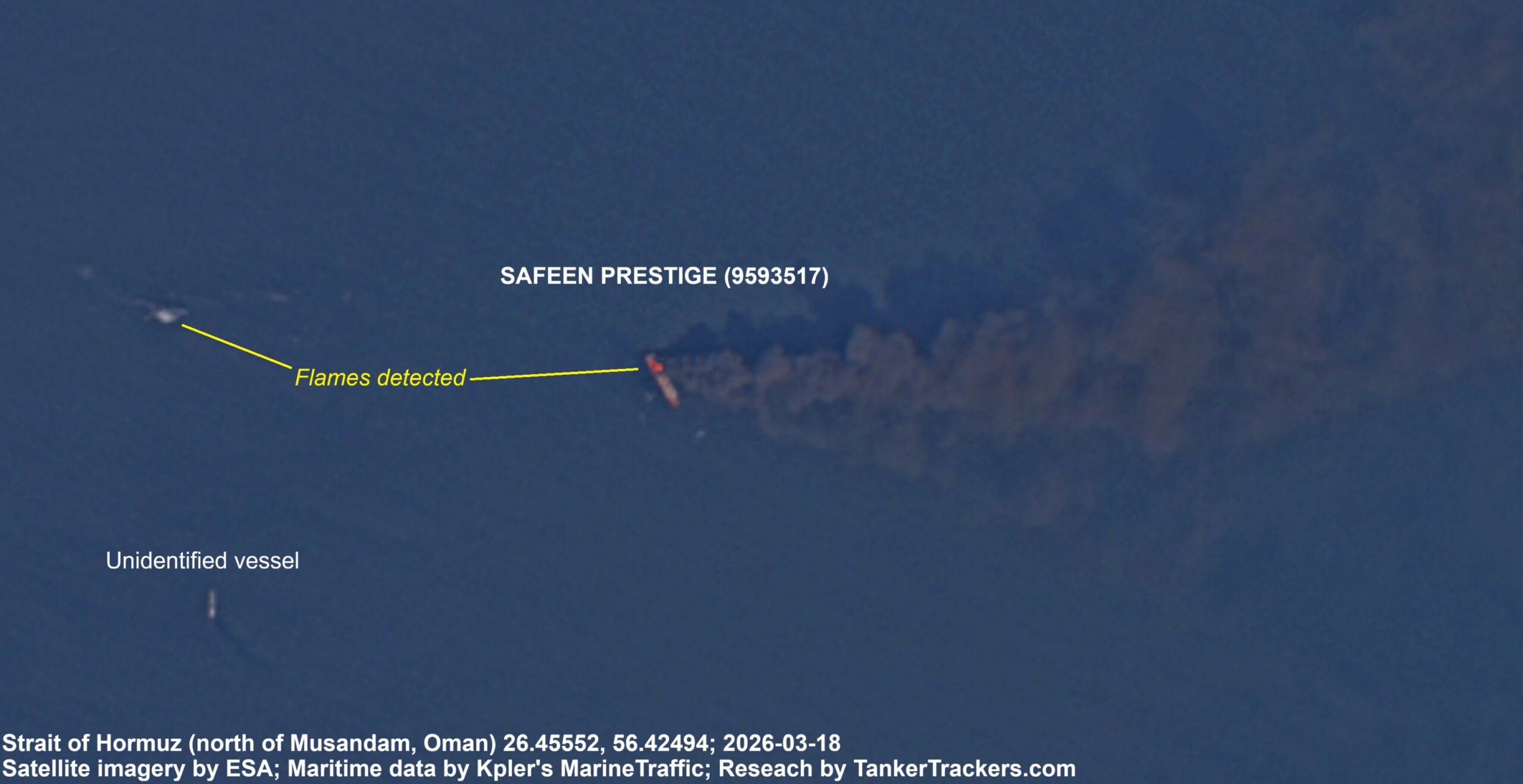
Beyond energy, the WTO flagged mounting supply chain risks tied to disruptions in the Strait of Hormuz, a critical chokepoint for global shipping.
Traffic through the corridor has effectively collapsed—from 138 vessels per day to near zero—as the conflict escalates, hitting one of the world’s most important transport hubs linking Asia, Europe, and Africa.
The disruption is already spilling into global agriculture markets.
Roughly one-third of global fertilizer exports normally transit the waterway, with major importers—including India, Thailand, and Brazil—heavily dependent on Gulf supply. At the same time, Gulf nations themselves face rising food security risks, with import dependency exceeding 90% for key commodities like corn, soybeans, and vegetable oils.
AI Boom Masks Underlying Fragility
The WTO said 2025’s stronger-than-expected trade performance was largely driven by a surge in AI-enabling goods, including semiconductors and data infrastructure.
Trade in these products jumped 21.9% year-over-year, reaching $4.18 trillion and accounting for 42% of total trade growth, despite representing only a fraction of global trade volumes.
That momentum could provide some upside.
If the Middle East conflict de-escalates and AI investment remains strong, merchandise trade growth could rebound to as high as 2.4% in 2026.
A Fragile Balance
WTO economists note that both upside and downside risks could materialize simultaneously—leaving trade growth somewhere near baseline levels despite ongoing geopolitical stress.
For shipping markets, however, the message is clear: energy prices, war-risk premiums, and disrupted trade lanes are once again emerging as the dominant forces shaping global trade flows.
Editorial Standards · Corrections · About gCaptain

 Join The Club