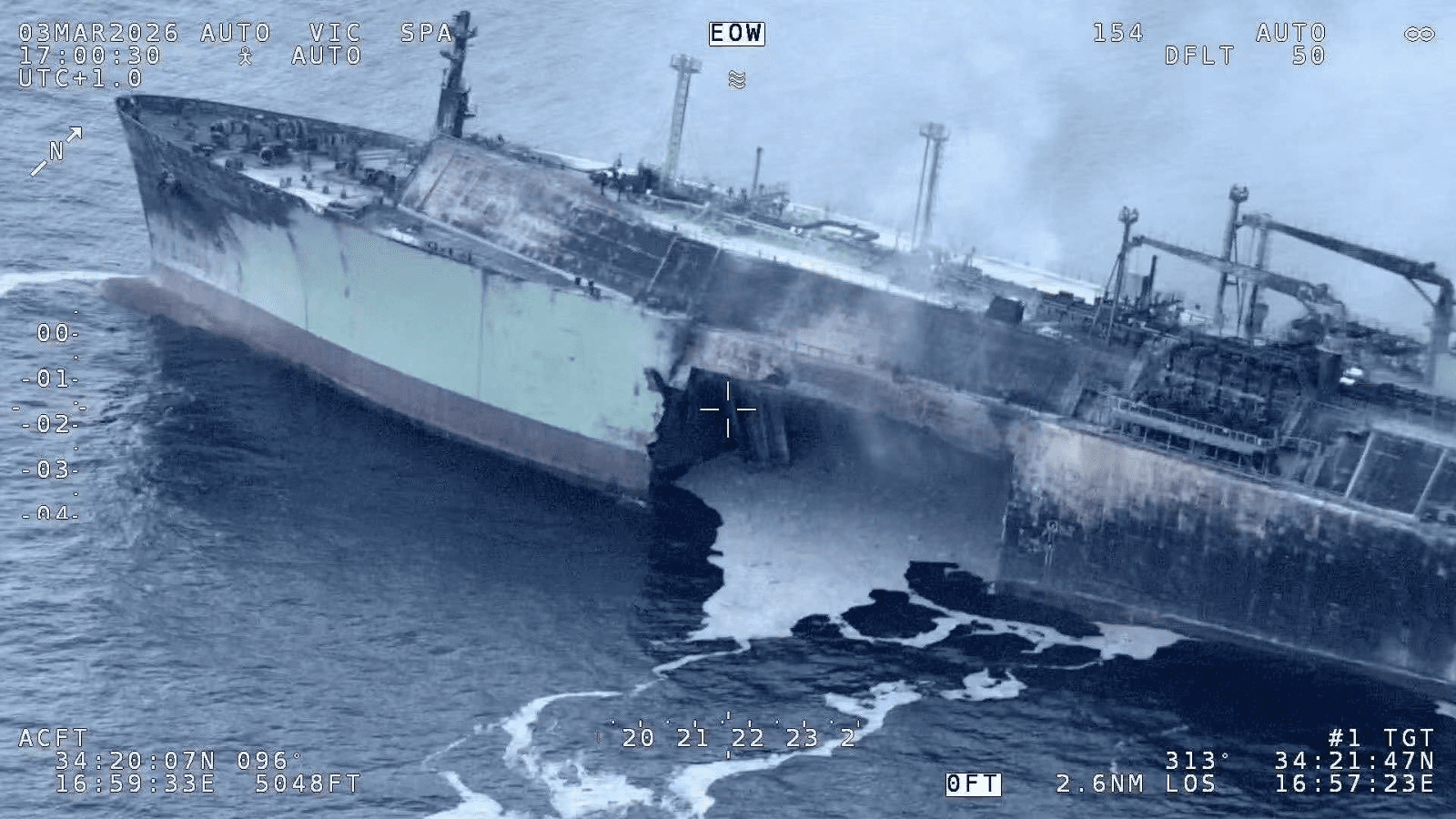
A major maritime incident unfolded in the Kerch Strait over the weekend as the Russian oil tanker Volgoneft 212 broke in half during severe weather conditions, resulting in a significant oil spill between mainland Russia and Crimea.
The aging vessel, constructed in 1969, was carrying approximately 4,300 tonnes of fuel oil when it experienced catastrophic hull failure. Dramatic footage from state media captured the 136-meter vessel’s bow section bobbing in heavy seas surrounded by what appears petroleum product.
Russian officials confirmed the spill though the full extent of environmental impact remains unclear.
Compounding the crisis, a second tanker, the Volgoneft 239, also reported an emergency. The 132-meter vessel, built in 1973, was left drifting after sustaining damage also in Kerch Strait.
Both ships have similar capacities of around 4,200 tonnes of oil products.
Russian authorities have mobilized an emergency response, deploying over 50 personnel, Mi-8 helicopters, and rescue tugboats to address the situation.
The incident raises serious questions about aging ships and environmental safety in the strategically significant Kerch Strait, a vital waterway connecting the Black Sea to the Sea of Azov, in a region that has been under Russian control since the 2014 annexation of Crimea.
Footage of the two incidents can be seen in the video below:
Just nine months before a full European Union ban on Russian liquefied natural gas (LNG) is scheduled to take effect, EU buyers purchased every cargo from Russia’s Yamal LNG project in February, highlighting a stark disconnect between policy intentions and market realities.
Russia’s sanctioned Arctic LNG 2 export network is showing early signs of disruption after an explosion sank one of its shadow fleet carriers in the Mediterranean this week, forcing other tankers to halt or reroute and raising new questions about the security of a key shipping corridor.
New data compiled by the Danish Maritime Authority reveals that EU-sanctioned tankers linked to Russia’s so-called “shadow fleet” made 292 voyages through Danish territorial waters in 2025, underscoring both the strategic importance of the Danish straits as a gateway to the Baltic Sea and growing concerns among European states over maritime sanctions evasion, safety and environmental risks.
February 13, 2026
Total Views: 33639
Get The Industry’s Go-To News
Subscribe to gCaptain Daily and stay informed with the latest global maritime and offshore news
— just like 107,509 professionals
Secure Your Spot
on the gCaptain Crew
Stay informed with the latest maritime and offshore news, delivered daily straight to your inbox
— trusted by our 107,509 members
Your Gateway to the Maritime World!
Essential news coupled with the finest maritime content sourced from across the globe.

 Join The Club