By Soobin Kim
Sep 23, 2026 (Bloomberg) –Donald Trump and South Korean President Lee Jae Myung hailed “significant progress” on implementing the two countries’ long-stalled investment deal, with lawmakers in Seoul saying the first project would be a $22.3 billion gas-fired power development in Texas.
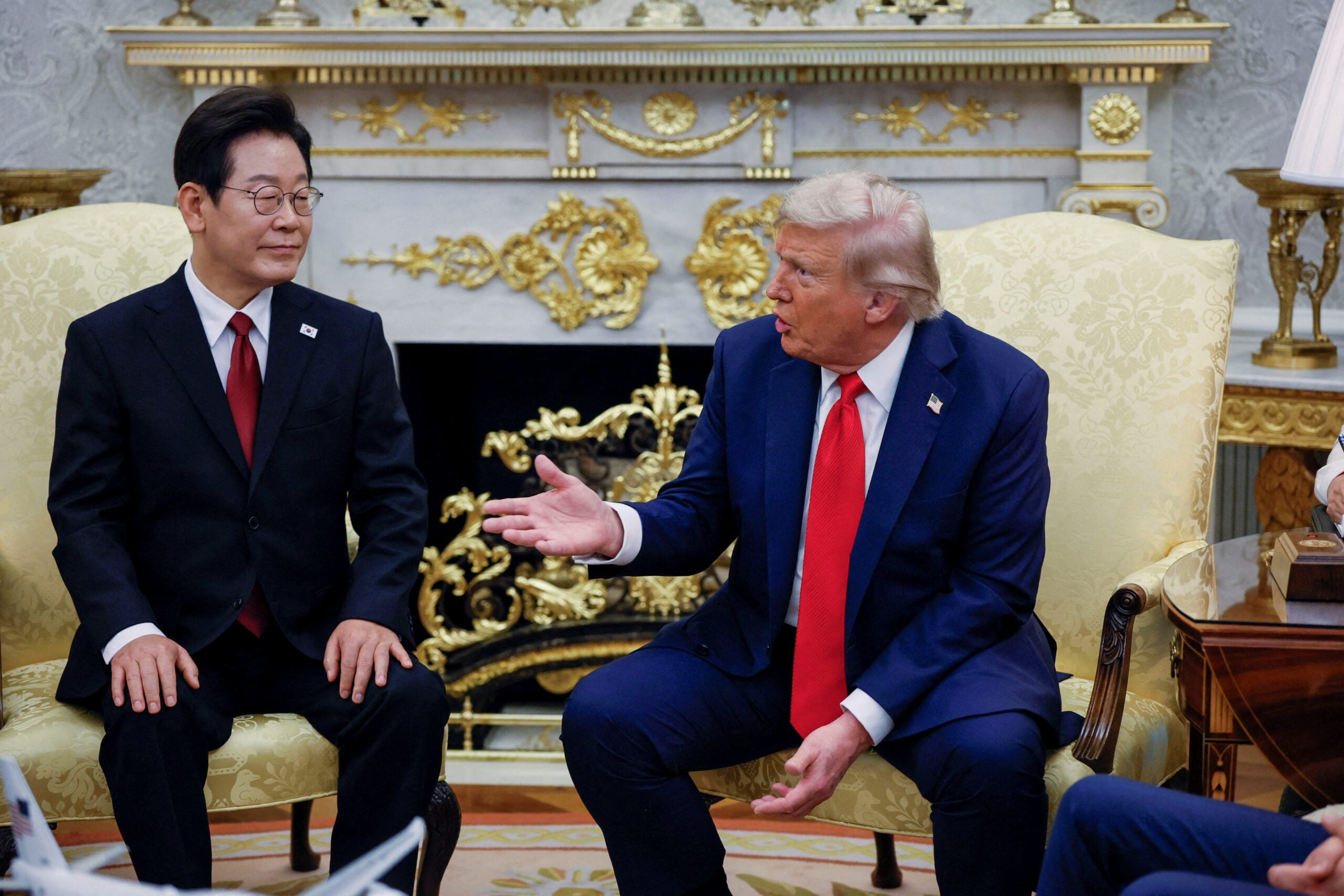
Trump and Lee met for roughly 30 minutes at the United Nations General Assembly in New York, South Korea’s National Security Advisor Wi Sung-lac, said. They “welcomed the significant progress made in discussions regarding strategic investment projects between the two nations,” he added.
Selecting specific projects under a $350 billion pledge South Korea made last year as part of a trade deal with the US had been causing President Lee “sleepless nights,” he said last week, with Seoul insisting any projects must be commercially viable.
Read more: Korea’s Lee Says $350 Billion US Deal Causing ‘Sleepless Nights’
The countries have now selected a gas-fired power development in Texas as the first project, according to South Korean lawmakers who were briefed by the Ministry of Trade, Industry and Resources in a closed-door meeting Tuesday.
The breakthrough comes nearly a year after the two countries struck the deal to head off steep US tariffs. Slow progress had drawn criticism from Trump, who repeatedly pressed Seoul to move faster, warning of fresh tariffs if Seoul failed to do so.
The $22.3 billion development in Encinal, Texas calls for construction and operation of a gas-fired power plant, the lawmakers said. They asked not to be identified because the projects haven’t been formally announced. The first phase is scheduled to begin commercial operations in 2029. The Related Companies. Inc., NextEra Energy Inc. and Lewis Energy Group will participate in the project, one of the lawmakers said.
Two other projects remain under review, the lawmakers added. One is a plan to build as many as eight nuclear reactors and the other is the Alaska liquefied natural gas pipeline, which would carry gas from the state’s North Slope to an LNG export terminal in the south.
Both would still require approval by South Korean lawmakers and need to be commercially viable, a condition Seoul insisted on including in its negotiations with Washington. The nuclear-reactor project is viewed more favorably in terms of commercial viability and is closer to finalization, though the timeline for an official announcement is unclear, one of the lawmakers said.
But for South Korea, commercial viability is just one among many objectives, said Choi Byung-il, a former South Korean trade negotiator. By offering up its technology, experience and an outlay that in total exceeds 10% of its annual GDP, South Korea is angling for “a strategic asset that could give it leverage in negotiating with the US’s future protectionist policy,” added Choi, who now leads the trade strategy team at law firm Bae, Kim & Lee.
Under the investment pledge, annual outflows are capped at $20 billion to avoid putting strain on South Korea’s foreign-currency reserves.
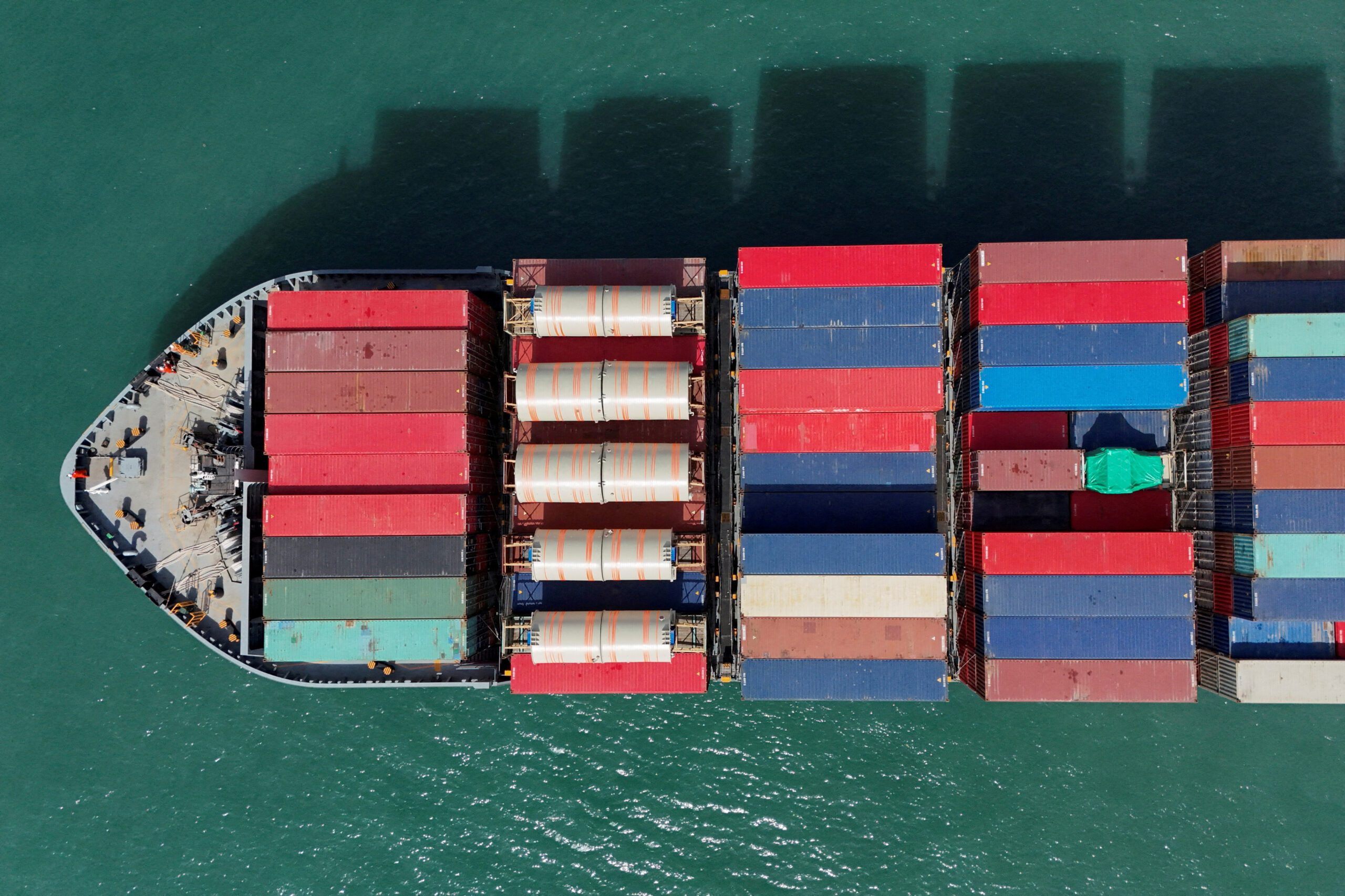
Out of the $350 billion South Korea pledged, $150 billion is earmarked for shipbuilding projects. In July, South Korea set up a shipbuilding cooperation hub in Washington as part of a bid to help revive the US’s shipbuilding sector and counter China’s maritime dominance.
Read more: South Korea Bets $150 Billion on Trump’s Shipbuilding Dream
© 2026 Bloomberg L.P.

 Join The Club