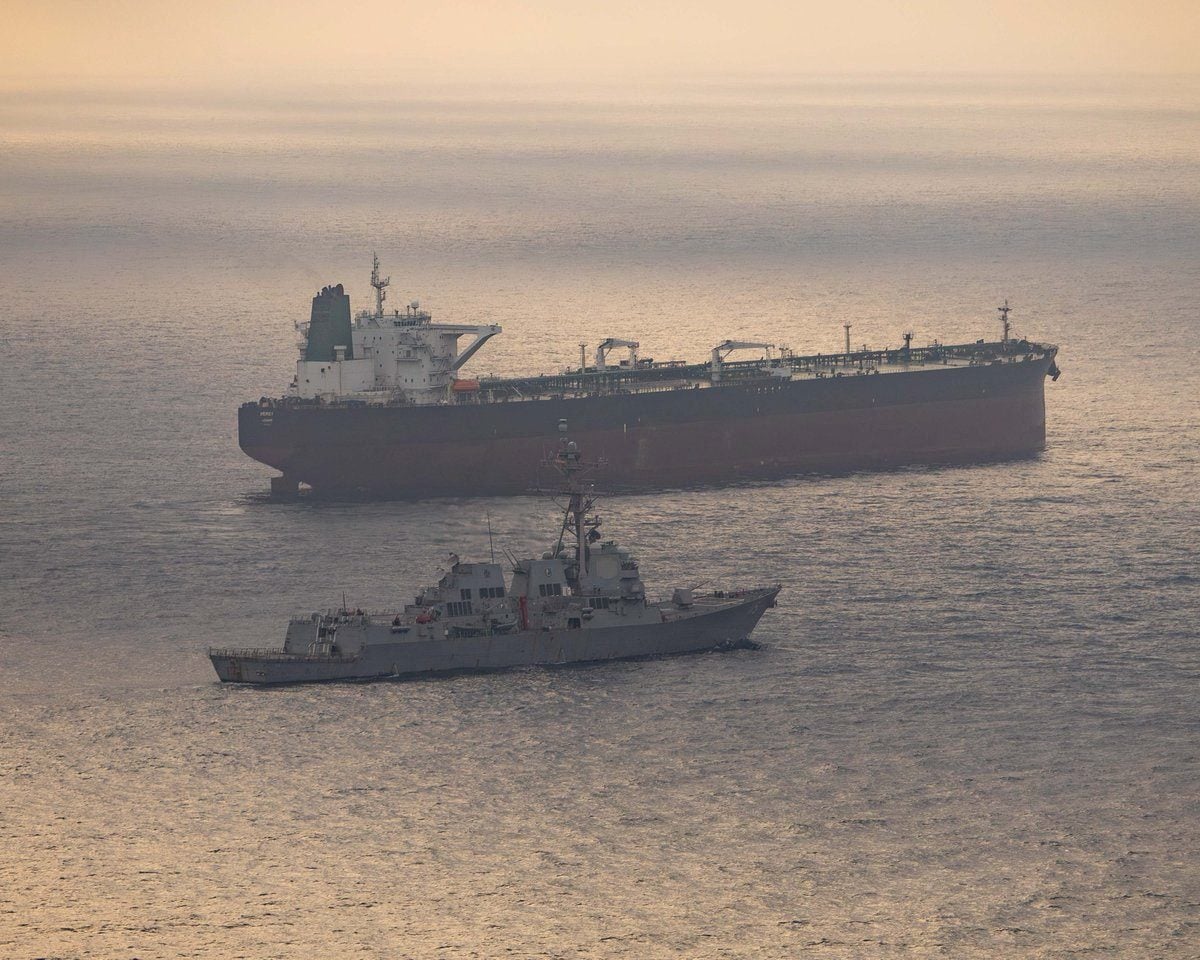
The United States will resume enforcing its maritime blockade of Iran on Monday, restoring restrictions on commercial shipping to and from Iranian ports less than a month after lifting them under a now-defunct ceasefire agreement.
U.S. Central Command (CENTCOM) announced that blockade operations will restart at 4 p.m. ET on July 14 at the direction of President Donald Trump, giving Iran a little over 24 hours to wind down to its exports and imports before U.S. enforcement resumes.
“CENTCOM forces will enforce the blockade against vessels transiting to or from Iranian ports and coastal areas,” the command said in a statement. “The U.S. military continues to support traffic flow through regional waters for all vessels not violating the blockade.”
The move formalizes the Trump administration’s return to its pre-ceasefire strategy after several days of escalating military operations against Iran. Since last week, U.S. forces have carried out four waves of strikes against Iranian military targets following renewed attacks on commercial vessels in the Strait of Hormuz, while the administration has reinstated sanctions on Iranian oil exports and declared the June memorandum of understanding effectively over.
President Trump escalated tensions earlier Monday by announcing the restoration of the blockade, that the United States would become the “Guardian of the Hormuz Strait,” and proposing a 20% fee on cargo transiting the strategic waterway to reimburse the United States for providing maritime security. The White House has not released details on how such a fee would be implemented.
“The process and formation will begin immediately,” Trump wrote on social media.
JMIC Guidance
The operational details of the renewed blockade were outlined in a new advisory issued by the Joint Maritime Information Center (JMIC).
Effective 2000 UTC (4 p.m. ET) on July 14, the blockade applies to all vessels, regardless of flag, entering or departing Iranian ports and coastal areas. JMIC said vessels suspected of violating the blockade are subject to interception, diversion and capture, warning that non-compliant ships “may be legally compelled with force.”
However, the advisory emphasizes that the blockade does not restrict neutral transit through the Strait of Hormuz to non-Iranian destinations, although merchant vessels should expect boarding and inspection to verify they are not carrying contraband or attempting to breach the blockade.
Humanitarian shipments, including food and medical supplies, will continue to be permitted following U.S. Navy vetting and inspection procedures.
Initial Blockade
The blockade being reinstated on Tuesday mirrors the operation first imposed on April 13, when the United States began interdicting vessels entering and leaving Iranian ports as part of its pressure campaign against Tehran.
According to CENTCOM, during the initial blockade, which remained in effect until June 18, U.S. forces redirected more than 140 commercial vessels that complied with blockade orders, disabled nine vessels that attempted to violate the restrictions, and allowed more than 50 humanitarian shipments to transit.
The blockade was lifted on June 18 following the signing of the Islamabad Memorandum between Washington and Tehran, under which the United States halted enforcement operations and declared the Strait of Hormuz open to commercial shipping.
Iran’s Oil Exports
During the 26 days the agreement remained in effect, more than 80 million barrels of Iranian crude oil and refined products, worth an estimated $6 billion, were exported from the region, according to TankerTrackers.com.
The memorandum unraveled after Iran resumed attacks on merchant shipping earlier this month. The latest incident involved the Cyprus-flagged container ship GFS Galaxy, which left one crew member missing and the vessel disabled by an attack while transiting east of Oman.
The resumption of the blockade comes as the international community has reaffirmed the principle of freedom of navigation through the Strait of Hormuz. Last week, the IMO Council adopted a resolution stressing that transit passage through international straits should not be threatened or impeded and reaffirmed that passage through the Strait of Hormuz should remain free of tolls and charges in accordance with international law.
CENTCOM advised mariners operating in the Gulf of Oman and approaches to the Strait of Hormuz to monitor Notices to Mariners and maintain contact with U.S. naval forces on VHF Channel 16. The command said additional operational guidance for commercial shipping will be issued in a formal maritime notice.

 Join The Club