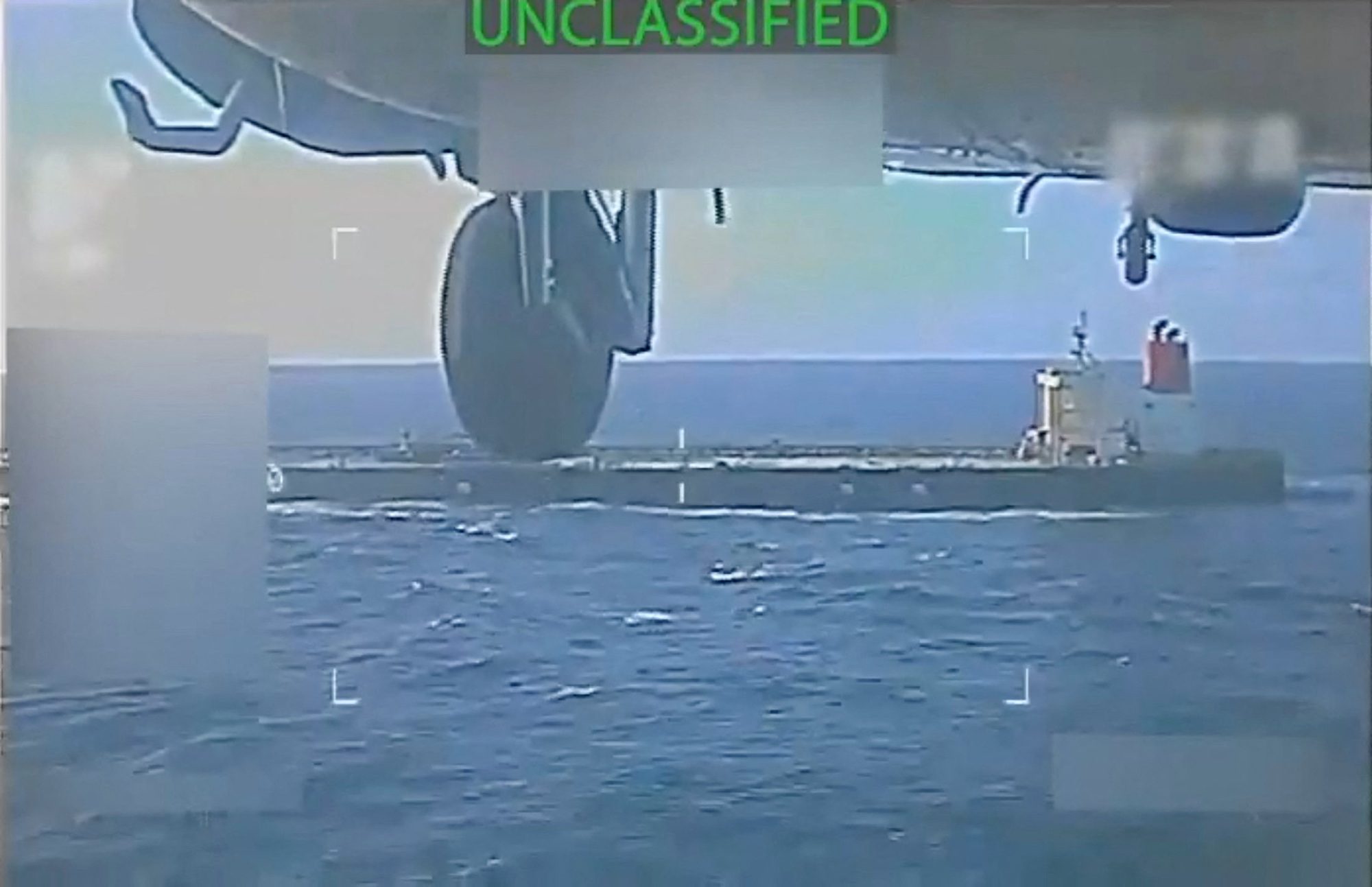
The U.S. Coast Guard seized the very large oil tanker SKIPPER off Venezuela’s coast on Wednesday, culminating a three-year enforcement saga involving Iranian oil smuggling networks and sanctions evasion.
The vessel, originally designated as ADISA when sanctioned by the U.S. Treasury in November 2022, was part of a sprawling international oil smuggling operation that funneled revenue to the Islamic Revolutionary Guard Corps-Qods Force (IRGC-QF) and Hezbollah.
According to Treasury documents, ADISA was controlled by Triton Navigation Corp., a subsidiary of Centrum Maritime, both part of an intricate web of shell companies managed by Ukrainian national Viktor Artemov. The Treasury’s Office of Foreign Assets Control (OFAC) designated the vessel under Executive Order 13224, which targets terrorists and those providing support to terrorist organizations.
“The individuals running this illicit network use a web of shell companies and fraudulent tactics including document falsification to obfuscate the origins of Iranian oil, sell it on the international market, and evade sanctions,” said Under Secretary of the Treasury for Terrorism and Financial Intelligence Brian E. Nelson at the time of the 2022 designations.
Artemov’s network operated through dozens of shell companies registered in jurisdictions including the Marshall Islands, Mauritius, and Singapore. The operation used storage facilities in the Port of Sharjah in the United Arab Emirates to blend Iranian oil with products of Indian origin, then created counterfeit certificates of origin before selling the oil abroad.
ADISA was one of nine vessels specifically identified in the sanctions as being controlled through Artemov’s network. The smuggling network involved several key players: Iranian national Edman Nafrieh oversaw blending and exportation operations, receiving orders from high-ranking Iranian officials to direct profits to Hezbollah and IRGC-QF bank accounts; Rouzbeh Zahedi coordinated oil transport and fund procurement; and Mohamed El Zein, identified as a Hezbollah member, used forged invoices to conceal financial transactions.
The vessels routinely disabled or spoofed their Automatic Identification Systems and were flagged in jurisdictions “less attentive to ship tracking system inactivity to avoid scrutiny from U.S. authorities”.
Recent Operations and Seizure
Built in 2005 and capable of carrying about 2.2 million barrels of cargo, the SKIPPER had been operating in Iranian waters near Kharg Island since late 2024. UANI reported that the vessel last loaded crude oil at Iran’s Kharg Island in February and July 2025, subsequently transferring its cargo to another tanker near Hong Kong, with that Iranian oil eventually delivered to a refinery in Yantai, China.
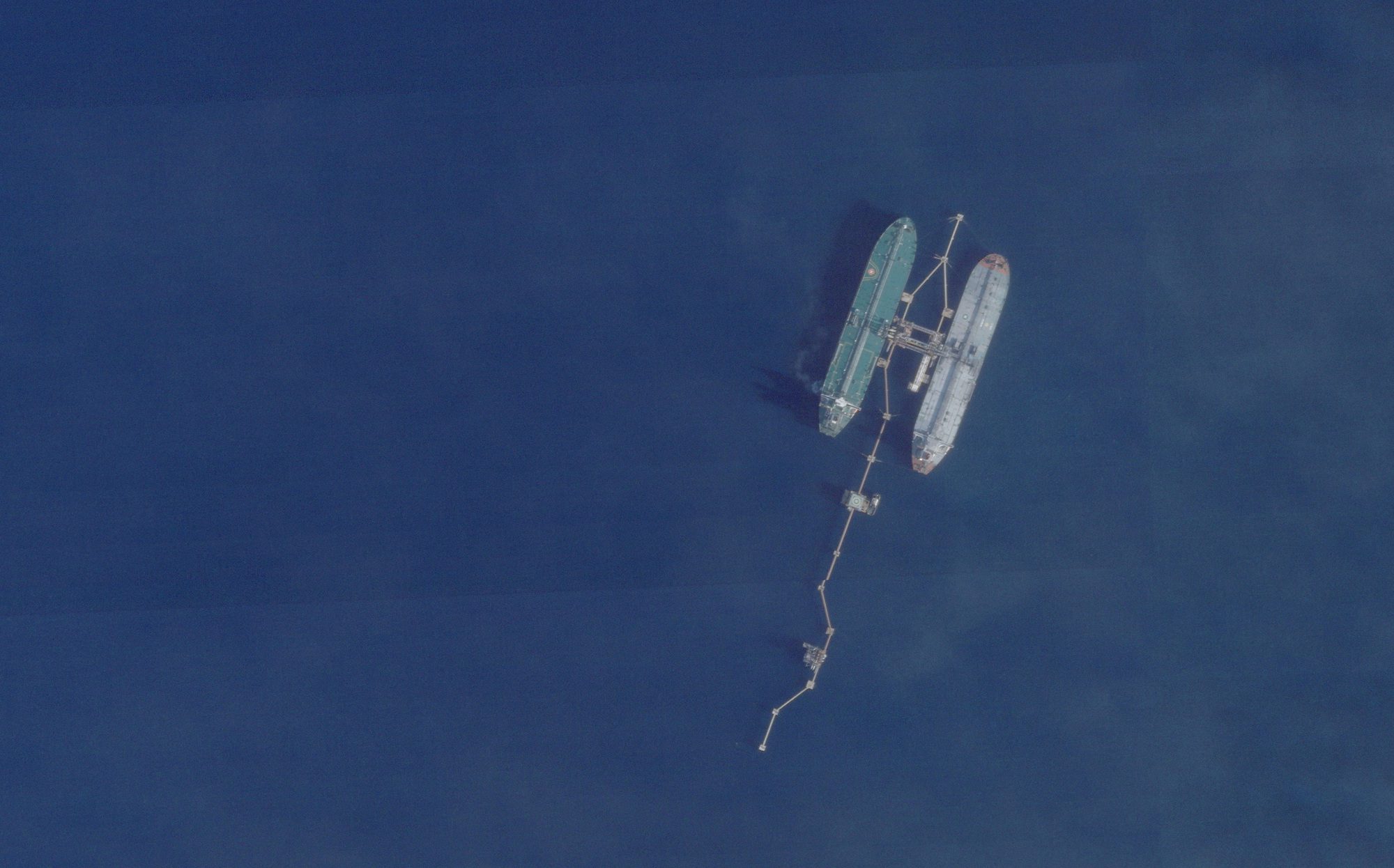
According to maritime intelligence firm Kpler, U.S. forces seized the sanctioned VLCC after satellite imagery confirmed undisclosed loading of Merey crude at Venezuela’s José terminal. The tanker had loaded approximately 1.8 million barrels of Venezuelan heavy crude from the port of Jose between December 4 and 5, transferring about 200,000 barrels to another vessel bound for Cuba before the U.S. interdiction.
Kpler Risk and Compliance had previously rated SKIPPER as high risk based on consistent deceptive practices, including false reflagging, AIS spoofing, and a December 6 ship-to-ship transfer with the vessel Neptune 6—itself identified as one of the highest-risk vessels in Kpler’s tracking system.
Following the 2022 sanctions, United Against Nuclear Iran added ADISA to its “Ghost Armada” list of vessels evading American sanctions on Iran. The advocacy group praised the seizure as a “warning shot” to Iran’s shadow fleet.
“The U.S. seizure deprives the Maduro regime in Venezuela and Tehran of another vessel which keeps these authoritarian governments in power,” said Director of the UANI Tanker Tracking Program Charlie Brown. “President Trump’s bold decision will also send a warning shot to the Iranian regime that his administration is prepared to seize additional Ghost Armada tankers which are evading U.S. sanctions.”
According to the IMO GISIS database, SKIPPER was also falsely flying the Guyana flag and is therefore a stateless vessel. UANI praised Guyana for notifying the International Maritime Organization that it de-listed the ship following the UANI listing and American sanctions. “This is exactly what all flag states should be doing,” the organization stated.
The seizure marks the first of a Venezuelan oil cargo amid U.S. sanctions that have been in force since 2019, and represents the Trump administration’s first known action against a Venezuela-related tanker since ordering a massive military buildup in the region.
The case underscores what Kpler analysts describe as “rising disruption risk for Venezuelan STS flows” and “greater enforcement exposure for high-risk vessels,” with intensified monitoring expected along China-bound trade routes, particularly off the coast of Malaysia.
For the maritime industry, the seizure serves as a stark reminder of the persistent risks associated with shadow fleet operations—and the increasingly sophisticated tracking capabilities available to enforcement agencies.

 Join The Club