Don’t Miss Your Daily Briefing for the Maritime Industry
Join the leading maritime news network
— trusted by our 104,384 members
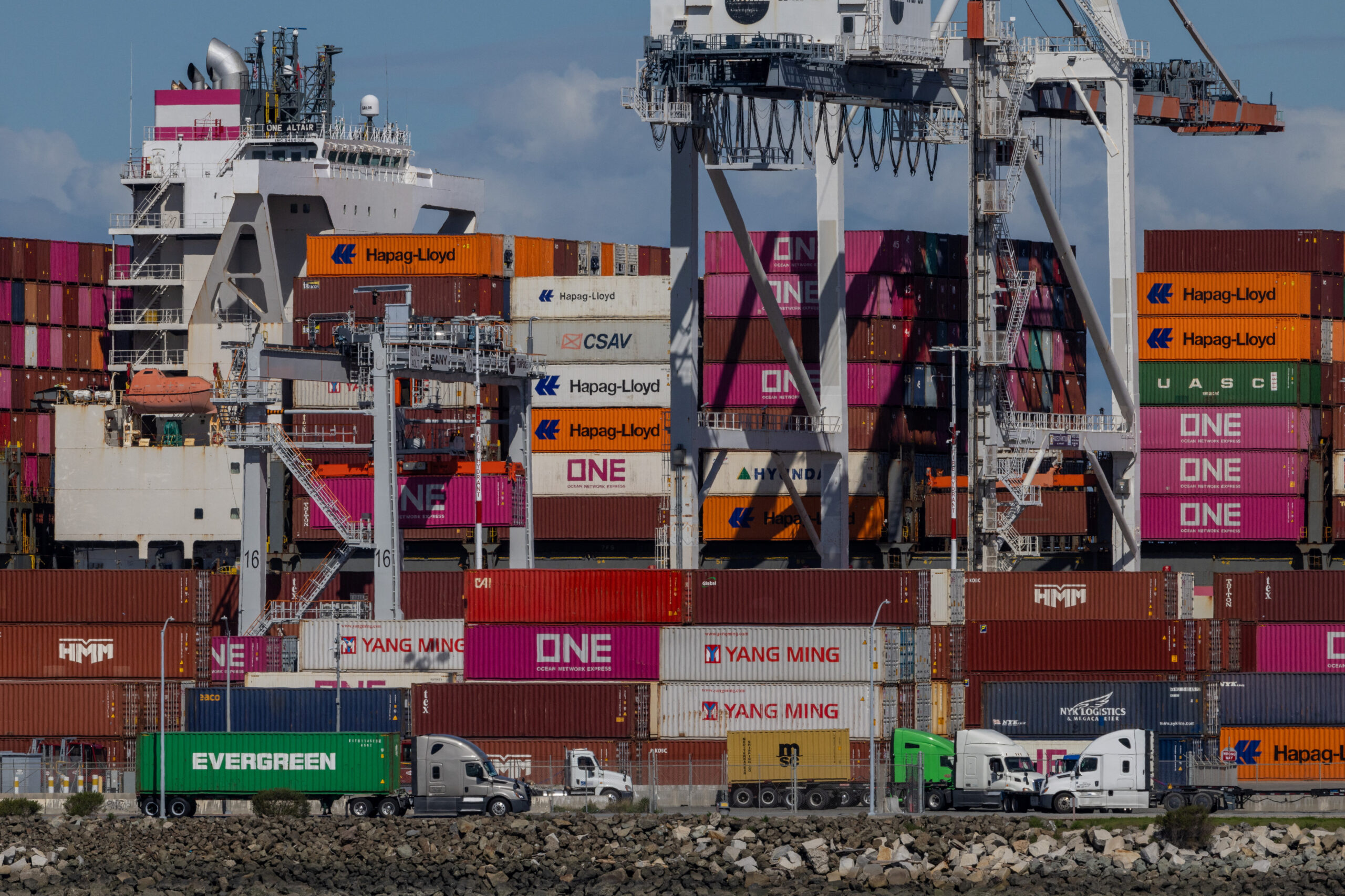
A cargo ship full of shipping containers is seen at the port of Oakland, as trade tensions escalate over U.S. tariffs, in Oakland, California, U.S., March 6, 2025. REUTERS/Carlos Barria
Trump’s Shipbuilding Plan Could Upend Ocean Cargo Industry, Companies Warn
LOS ANGELES, March 7 (Reuters) – President Donald Trump’s plan to revitalize the U.S. shipping industry could heap massive costs on ocean transport operators and spawn a new round of supply chain chaos around the world, executives told Reuters.
Trump’s administration aims to pay for an American shipbuilding comeback with help from potentially hefty port fees on Chinese-built vessels as well as ships from fleets with China-made vessels, according to a draft executive order seen by Reuters on Thursday.
The levies could hit virtually every ship calling at U.S. ports, foist up to $30 billion of annual costs on American consumers and double the cost of shipping U.S. exports, according to the World Shipping Council (WSC), which represents the liner shipping industry.
“Policymakers must reconsider these damaging proposals and seek alternative solutions that support American industries,” WSC CEO Joe Kramek said.
While the stated goal of Trump’s plan is to revive the moribund U.S. shipbuilding industry and weaken China’s global shipping dominance, the dour outlook from industry executives shows how Trump’s pro-U.S. policies can sometimes bring on unintended consequences that run counter to his stated goals.
The plan is a “curve ball” that could be very damaging for ocean carriers and their customers, Jeremy Nixon, CEO of container ship owner Ocean Network Express (ONE) OCEA.O, said at S&P Global’s TPM container shipping conference in Long Beach, California, this week.
In the near term, ship owners could make fewer U.S. port calls to limit fees. A flood of extra cargo could clog up those ports, making it harder to get imports to retailers and manufacturers and exports on ships, executives said.
The Trump plan could also put pressure on companies to redeploy their global ship fleets so that vessels that weren’t built in China are refocused on the United States market – something that could cost time and money, they said.
Such moves could swamp the nation’s biggest ports and freeze out the smaller ones, risking a repeat of early pandemic backups that hobbled global trade flows, executives warned.
“It would be very difficult for us and our partners to absorb it all at once,” Beth Rooney, director of the U.S. East Coast’s largest port of New York and Jersey, said of the potential volume spike.
PUNISHING UNKNOWN PAST MISTAKES
“If a regulation comes, let’s at least make it forward-looking and not penalize us for mistakes we’ve done in the past, which we did not know were mistakes,” MSC’s Toft said, referring to fees tied to China-built ships.
Meanwhile, French container carrier CMA CGM, which has a vessel-sharing alliance with China’s COSCO Shipping 601919.SS and counts retailing giant Walmart WMT.n as a top customer, is expanding its U.S.-flagged American President Lines fleet and exploring having ships made here.
“We are in talks with several shipyards to see how long it would take and at what cost,” CEO Rodolphe Saadé said in an interview published on Friday.
Denmark’s Maersk MAERSKb.CO on Friday told Reuters it was premature to comment on new tariffs or fees, because everything changes so quickly, and nothing is decided.
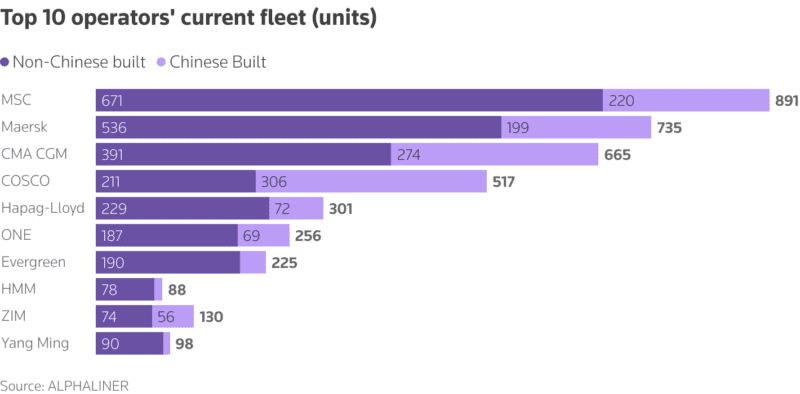
Top 10 operators’ current fleet (units)
(Reporting by Lisa Baertlein in Los Angeles, Jacob Gronholt-Pedersen in Copenhagen, Elke Ahlswede in Hamburg and Renee Maltezou in Athens; Editing by Chizu Nomiyama)
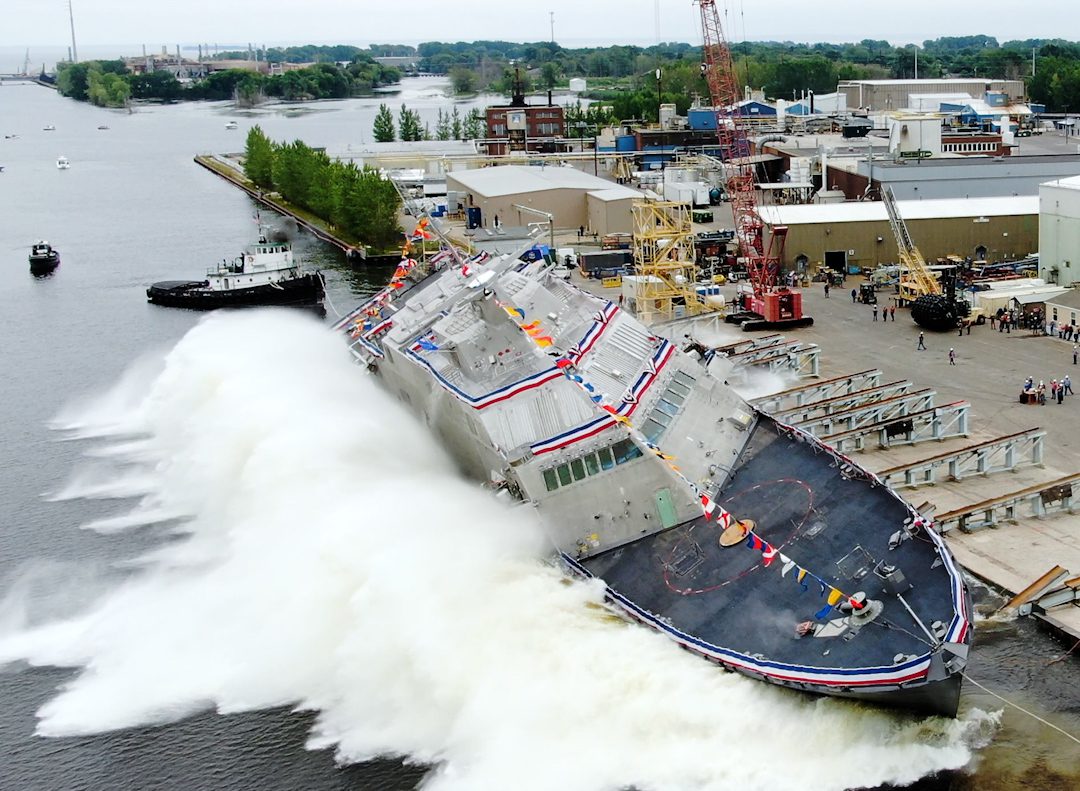
President Donald Trump’s push to open U.S. Navy shipbuilding to foreign yards is running into resistance from American shipbuilders and lawmakers who argue the policy risks sending jobs and critical...
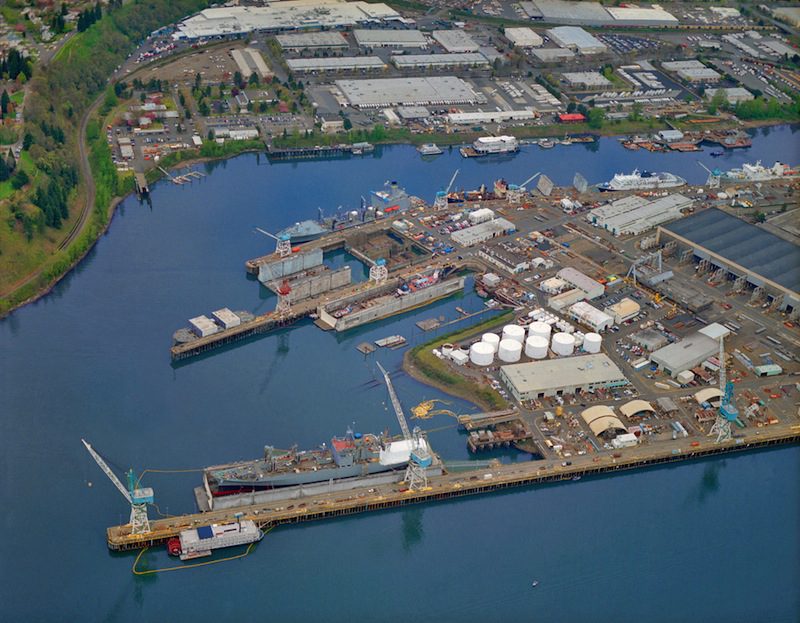
Antin Infrastructure Partners has completed its acquisition of Vigor Marine Group from an affiliate of Lone Star Funds, bringing one of the largest U.S. ship repair and marine services groups...
Shares of South Korea's Hanwha Group and Italy's Fincantieri rose on Friday after President Donald Trump's directive opening U.S. Navy shipbuilding to overseas yards.
August 14, 2026
Total Views: 1406
Get The Industry’s Go-To News
Subscribe to gCaptain Daily and stay informed with the latest global maritime and offshore news
— just like 104,384 professionals
Secure Your Spot
on the gCaptain Crew
Stay informed with the latest maritime and offshore news, delivered daily straight to your inbox
— trusted by our 104,384 members
Your Gateway to the Maritime World!
Essential news coupled with the finest maritime content sourced from across the globe.

 Join The Club