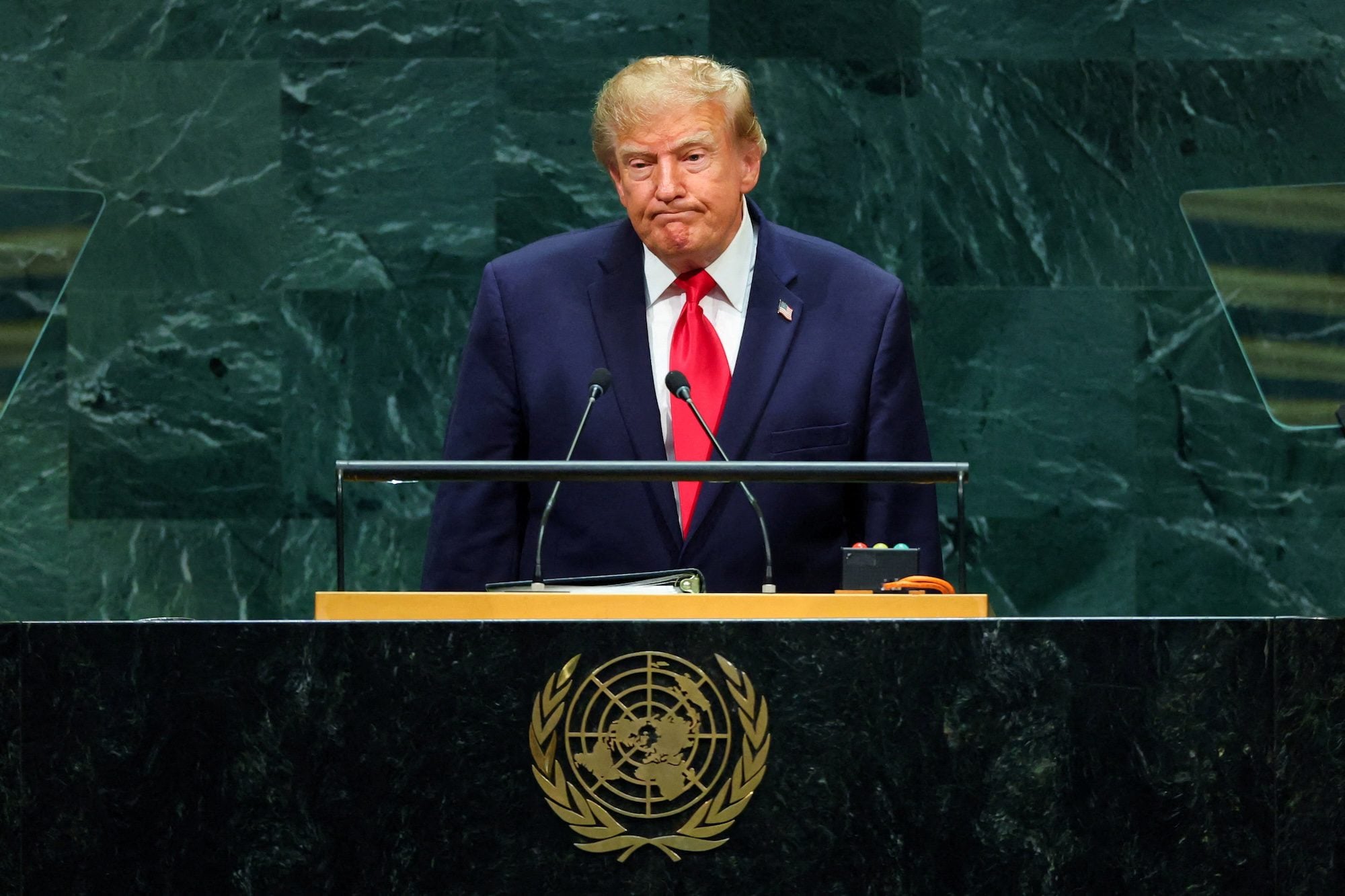
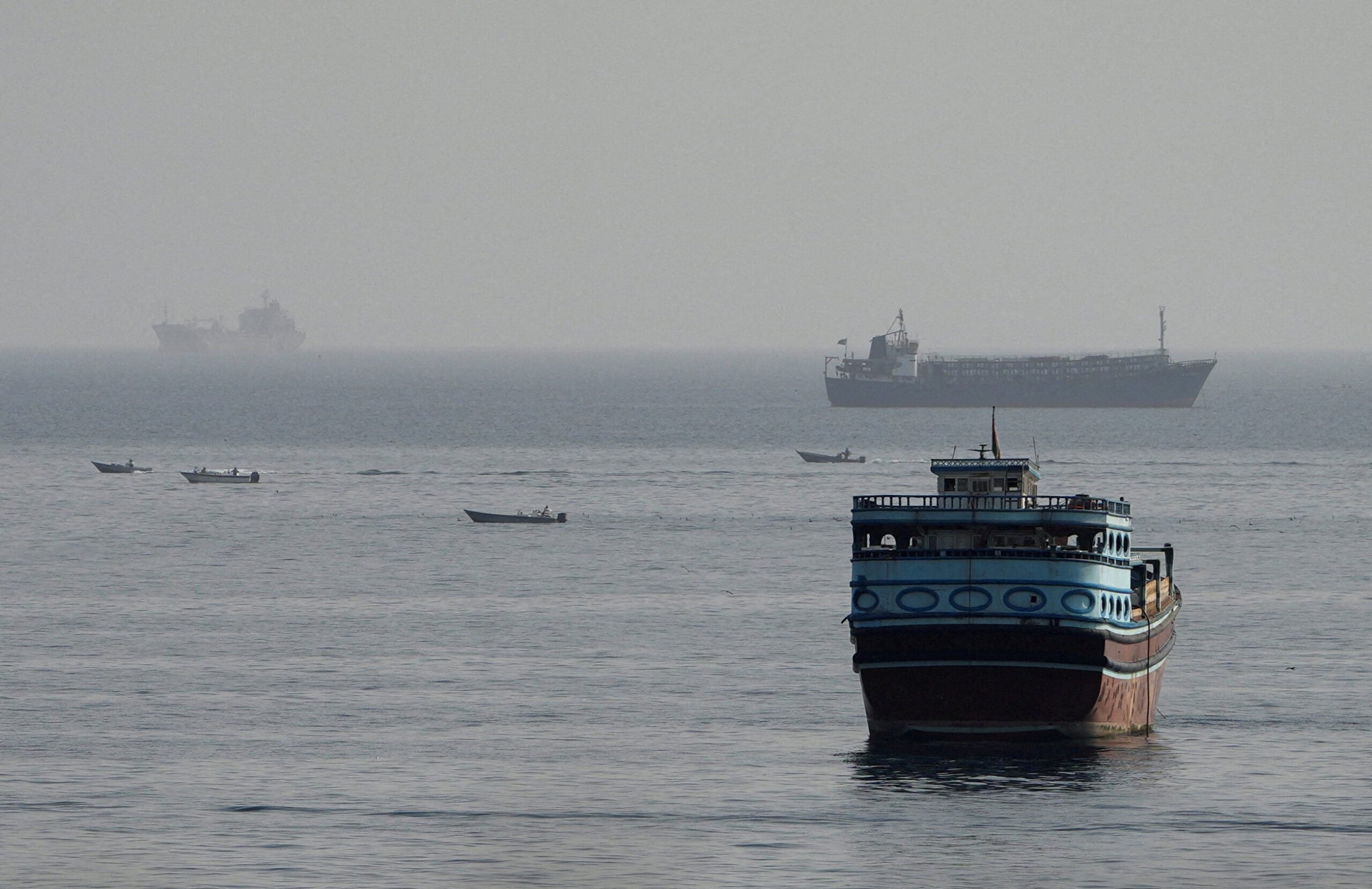
President Donald Trump used his address to the United Nations General Assembly on Tuesday to renew his attack on the International Maritime Organization’s Net-Zero Framework, accusing the UN shipping agency of attempting to impose a global carbon tax that would drive up transportation costs.
“Last year, my administration was forced to intervene to stop an obscure U.N. body, the International Maritime Organization, from secretly establishing a first-ever global carbon tax,” Trump said, claiming the measure would raise international shipping costs by “10 to 20% — and maybe more than that.”
“There is no global government,” Trump added. “And while I’m president, there will be no global taxes.”
The remarks elevate a fight that has been playing out at the IMO for more than a year and come as member states prepare for another attempt to finalize the framework in December.
The Trump administration played a major role in last year’s decision to postpone adoption. Ahead of the vote, U.S. officials threatened countries supporting the framework with measures including tariffs, visa restrictions, port fees and sanctions. The extraordinary Marine Environment Protection Committee session ultimately postponed adoption for one year following a 57-49 vote.
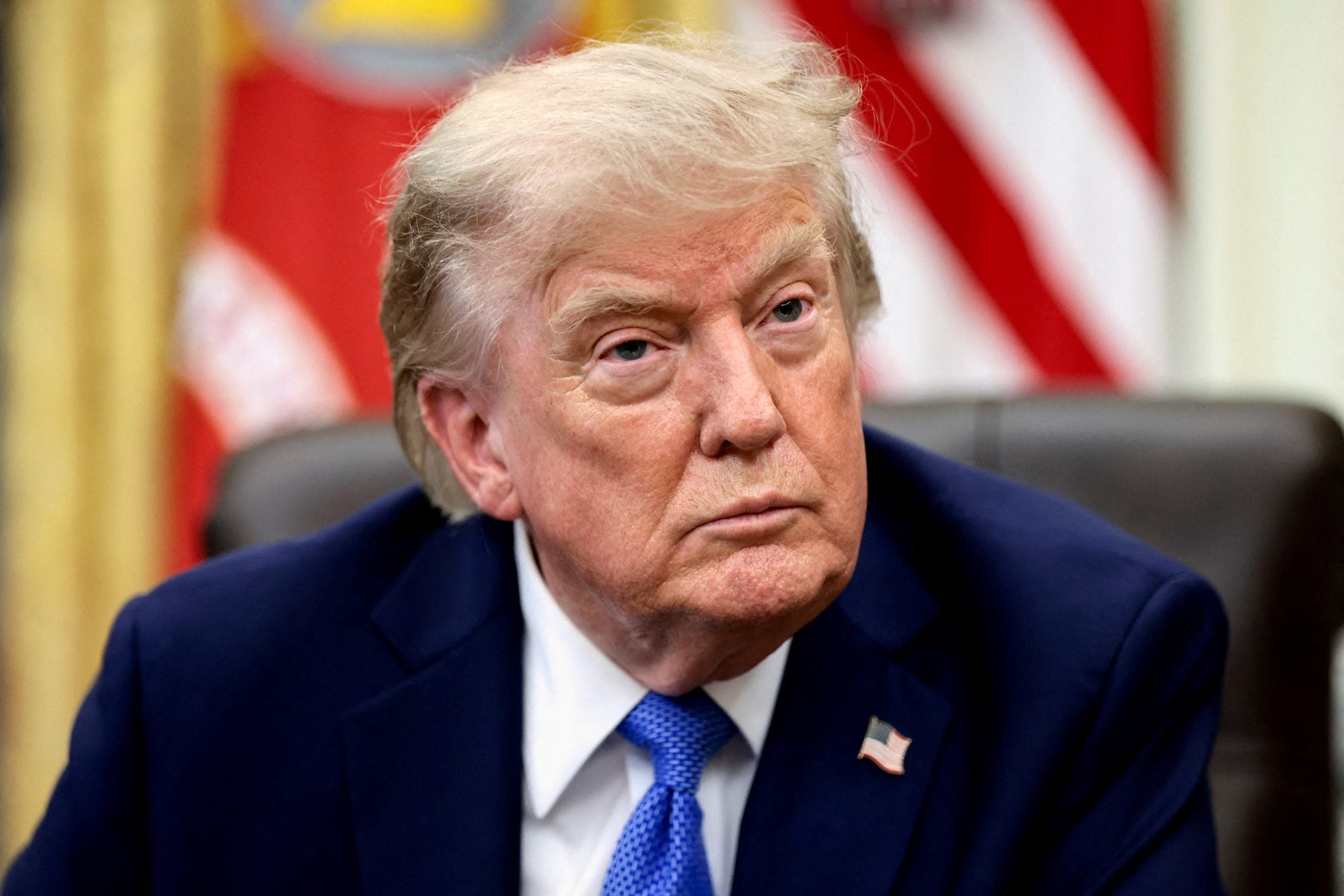
Trump had personally entered the fight a day earlier, declaring he was “outraged” over the proposed shipping carbon charge and calling on IMO member states to “vote NO”. His administration also warned at the time that countries backing the measure could face economic retaliation.
The United States has continued pushing for major changes as negotiations resumed this year.
The IMO Net-Zero Framework would combine progressively tighter greenhouse gas-intensity requirements for marine fuels with an economic mechanism requiring higher-emitting ships to make compliance payments while rewarding vessels using lower-emission fuels.
Trump’s description of the proposal as a “global carbon tax” reflects the language consistently used by his administration. Supporters of the framework describe it instead as a global greenhouse gas pricing mechanism tied to ships’ emissions performance.
Cost remains one of the central issues dividing IMO member states.
As gCaptain reported earlier this month, 38 countries speaking during the IMO’s latest technical negotiations explicitly supported retaining carbon pricing and the associated revenue mechanism, while 17 countries — many of them oil-producing states — opposed it over concerns about transportation costs and economic impacts.
The United States, Saudi Arabia, Liberia and several other countries have pushed for substantial changes or alternatives to parts of the existing framework. European countries, Pacific Island states and others have argued that weakening the pricing mechanism would undermine investment in alternative marine fuels and make the IMO’s long-term emissions targets harder to achieve.
The system is expected to generate roughly $10 billion to $15 billion annually, making both the size of the financial burden and how the money would ultimately be distributed among the most contentious issues still under negotiation.
Despite those divisions, the basic structure survived the IMO’s September negotiating session largely intact.
The debate has increasingly shifted toward whether the final rules will provide enough certainty for shipowners and fuel producers to make long-term investment decisions. The Getting to Zero Coalition warned earlier this month that thousands of new vessels will be ordered in the coming years, potentially locking in fuel and technology choices for decades.
The framework traces back to the IMO’s 2023 greenhouse gas strategy, which calls for international shipping to reach net-zero greenhouse gas emissions by or around 2050.
The next round of technical negotiations is scheduled for November 23-27, followed by the Marine Environment Protection Committee’s MEPC 85 session from November 30 through December 3.
The Net-Zero Framework is then expected to return for possible adoption at an extraordinary MEPC session on December 4.
Trump’s comments at the UN leave little doubt that Washington intends to remain firmly opposed as that vote approaches.

 Join The Club