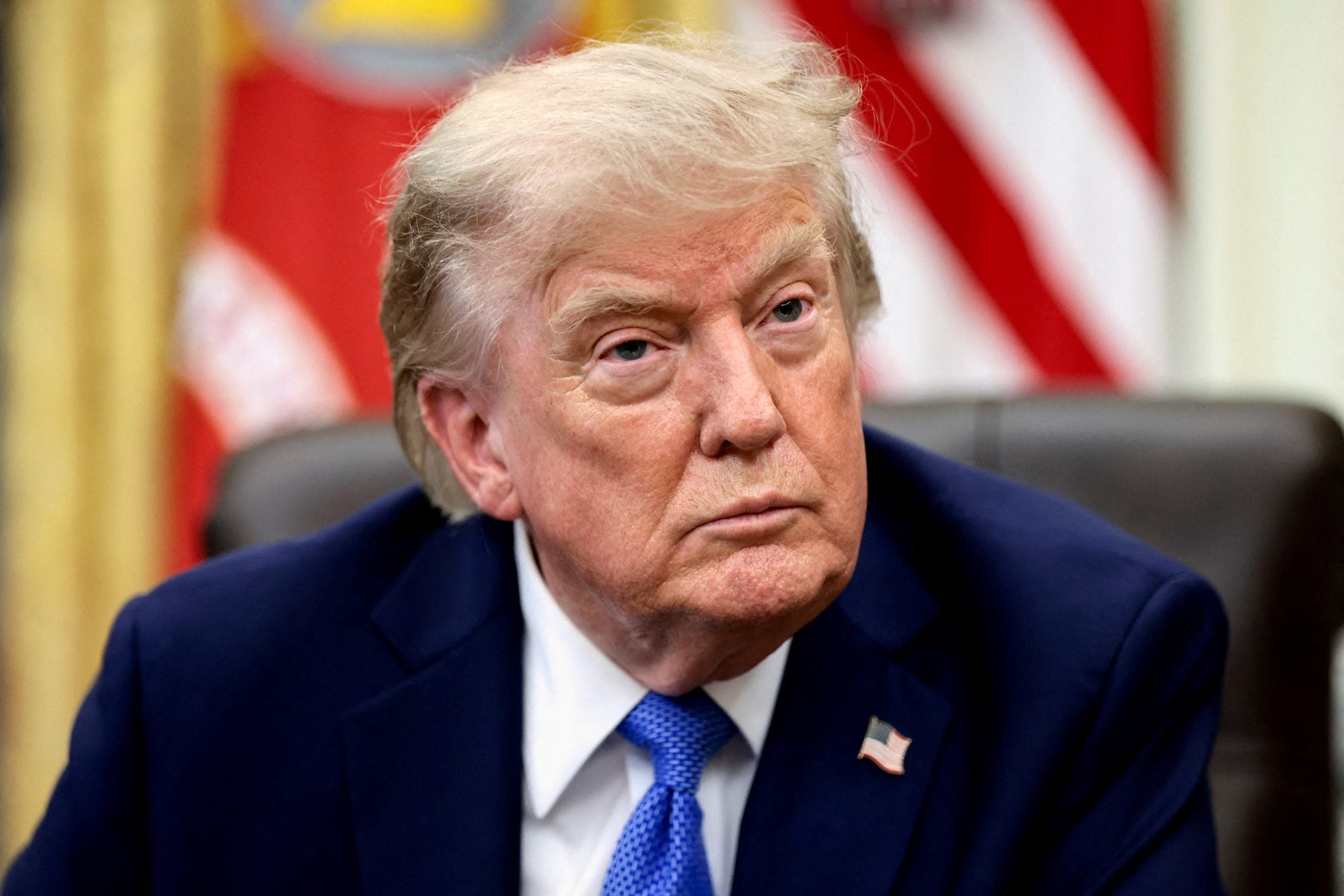
By Josh Wingrove and Jennifer A. Dlouhy (Bloomberg) — President Donald Trump said he’s encouraged his advisers to support a ban on US diesel exports, with wars in Iran and Ukraine driving the fuel’s price to record levels.
The president’s comments on Tuesday nod to American voters’ cost-of-living concerns with November midterm elections just weeks away. Yet energy industry figures staunchly oppose possible export restrictions they say would provide only short-term price relief before ushering in even higher costs.
“I’ve said ‘let’s not send out the diesel,’” Trump said when asked about growing calls from Republican lawmakers to suspend exports. “I’ve called for it within my people. I’ve been talking about it.”
Treasury Secretary Scott Bessent said that officials are “examining whether it’s feasible in terms of the overall refining capacity and whether a full or partial ban would work.”
Trump spoke during a meeting on the sidelines of the UN General Assembly with Ukrainian President Volodymyr Zelenskyy, whom he has urged to curtail attacks on Russian energy infrastructure. Trump said he would address the issue with Zelenskyy, following repeated appeals for Kyiv to halt strikes on Russian refineries that have prompted Moscow to limit its own fuel shipments.
Inside the US, Trump has faced increasing pressure to curtail exports of diesel, a fuel that’s vital to running farm equipment in America’s heartland and to providing electricity in rural Alaska. High fuel prices have weighed heavily on American voters ahead of the midterms, putting Trump’s Republicans at risk of losing their congressional majorities.
US retail diesel prices this week rose above $6.50 per gallon on average to hit a new record, with unleaded gasoline fetching $4.48 per gallon nationwide, according to auto club AAA.
Republican Senators Chuck Grassley of Iowa and Dan Sullivan of Alaska have both encouraged the move. And Senate Majority Leader John Thune, a Republican from South Dakota, last week said he was “open to exploring” some kind of diesel export ban.
Sullivan, an enthusiastic champion of the US oil and gas industry who’s in a tight re-election contest against Democrat Mary Peltola, said he favored limiting diesel exports until the Iran war is over. “American fuel should stay home with Americans,” Sullivan said. “The cost of diesel is just too damn high.”
Oil and gas executives have warned against the move.
An export ban “would likely disrupt supply chains and harm American oil producers, while failing to lower prices at the pump and potentially driving them higher,” said Erik Milito, head of the National Ocean Industries Association, one of several industry groups that have registered opposition.
Initially, costs likely would fall as the US held on to more refined fuel, increasing stockpiles inside the country. But without the ability to export supplies around the world, US oil producers and fuel refiners would cut output, ultimately spurring higher prices, energy analysts say.
“We understand the administration is looking at every option to deliver relief, but restricting U.S. energy exports would only compound the problem — exacerbating refining challenges and ultimately hurting consumers,” Mike Sommers, president of the American Petroleum Institute, said in a statement. “The answer is more supply and more flexibility — not new restrictions that risk making a difficult situation worse.”
Trump’s comments highlight the ongoing debate within the administration over the costs and benefits of new limits. Interior Secretary Doug Burgum and Energy Secretary Chris Wright have warned against an export ban, with Wright emphasizing the US is focused on growing supply rather than curtailing foreign sales.
Any price relief from curbing exports would be temporary, Wright said Thursday at a Daily Caller forum. “Pretty quickly our refineries would have to refine less,” Wright said. “We could fill up storage in two to three weeks and then we’d be producing less gasoline and we’d have more expensive gasoline right away.”
The effects would be felt unevenly across the country. For instance, the prolific US Gulf Coast region — an outpost for significant domestic refining and export capacity — would likely be flooded with diesel as supplies mounted up in storage tanks.
But diesel costs could still remain elevated in the Northeast US and other parts of the country, given constraints in pipeline capacity to ship the fuel and roughly century-old requirements mandating the use of US-built and -operated tankers to carry cargo between domestic ports. While Trump has lifted some of those Jones Act restrictions, decisions are being reviewed on a case-by-case basis.
“If diesel exports are banned, refiners will drop runs,” Bob McNally, president of the consulting firm Rapidan Energy Group, told Bloomberg Television on Monday. If there’s a ban on diesel, gasoline or petroleum product exports, “refiners will say, ‘You know what? This is a great time to shut down and get some much needed repairs going on.’”
Even a limited ban on exports of diesel would likely have knock-on effects for gasoline, which is made in the same refineries. Trump acknowledged that dynamic Tuesday.
“That could have a little bit of an effect on regular automobile gasoline because when you do that, you know it’s a sort of a flow. It’s a balance,” Trump said.
The US’s 2015 reversal of a four-decade moratorium on the export of most US crude has been credited as helping drive domestic oil production. When Congress repealed the crude export ban, it included provisions allowing any US president to restrict foreign sales or impose licensing requirements on exports for up to one year during emergencies or other circumstances.
Trump met with refiners earlier this month to explore ways to swiftly expand their fuelmaking capacity.
© 2026 Bloomberg L.P.

 Join The Club