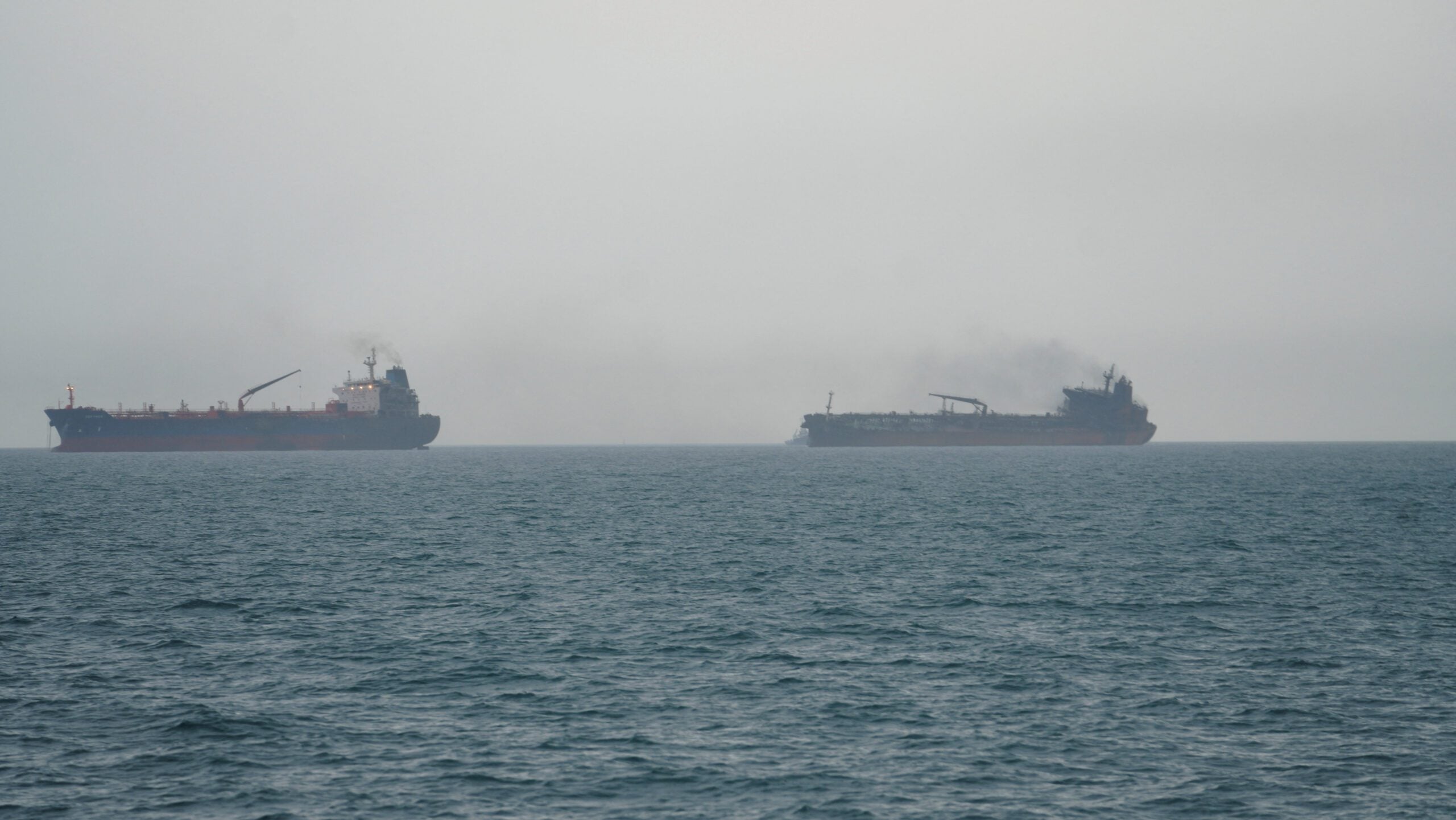
Back in February, one week before American and Israeli warplanes launched a coordinated air campaign against Iran, a vessel called the Hamouna slipped out of Gaolan port on China’s southern coast and set course for the Persian Gulf. It was not alone.
By Paul Morgan (gCaptain) – By the first week of April, at least four more Iranian-operated ships had made the same journey, the Barzin, Shabdis, Rayen, and a fifth vessel, the Zardis, which was still loitering offshore awaiting permission to dock. Their likely cargo, according to Western intelligence sources, defence analysts, and independent shipping data reviewed by multiple outlets: sodium perchlorate, the chemical precursor that Iran uses to manufacture solid rocket propellant for its ballistic missile arsenal.
That fact the shipments were moving at all, through the middle of an active US-Israeli bombing campaign targeting Iran’s military-industrial infrastructure, has drawn sharp criticism from Western governments and arms control experts who say Beijing made a deliberate choice to look the other way.
The chemistry at issue is straightforward, if concerning. Sodium perchlorate, a white crystalline compound, is not itself a controlled substance under Chinese export law, and Beijing has said its trade in the material constitutes “normal commercial activity.” But its primary strategic value lies in what it can become. Through a well-established chemical process, sodium perchlorate is converted into ammonium perchlorate, a powerful oxidiser and the critical ingredient in the solid-fuel propellants that power Iran’s Kheibar Shekan and Haj Qasem ballistic missiles.
While sodium perchlorate has legitimate uses in fireworks, signal flares, and certain industrial applications, Professor Andrea Sella of University College London told CNN there are “very few alternative things” the chemical can be used for at scale beyond rocket propellants.
Gaolan port in Zhuhai, where all five vessels loaded their cargo, is home to some of the largest liquid chemical storage facilities in China, and has featured in previous Iranian procurement cycles. Jeffrey Lewis, director of the East Asia Non-proliferation Program at the Middlebury Institute of International Studies, has noted that China has been “a primary source of sodium perchlorate for Iran’s missile programmes, dating at least to the mid-2000s.”
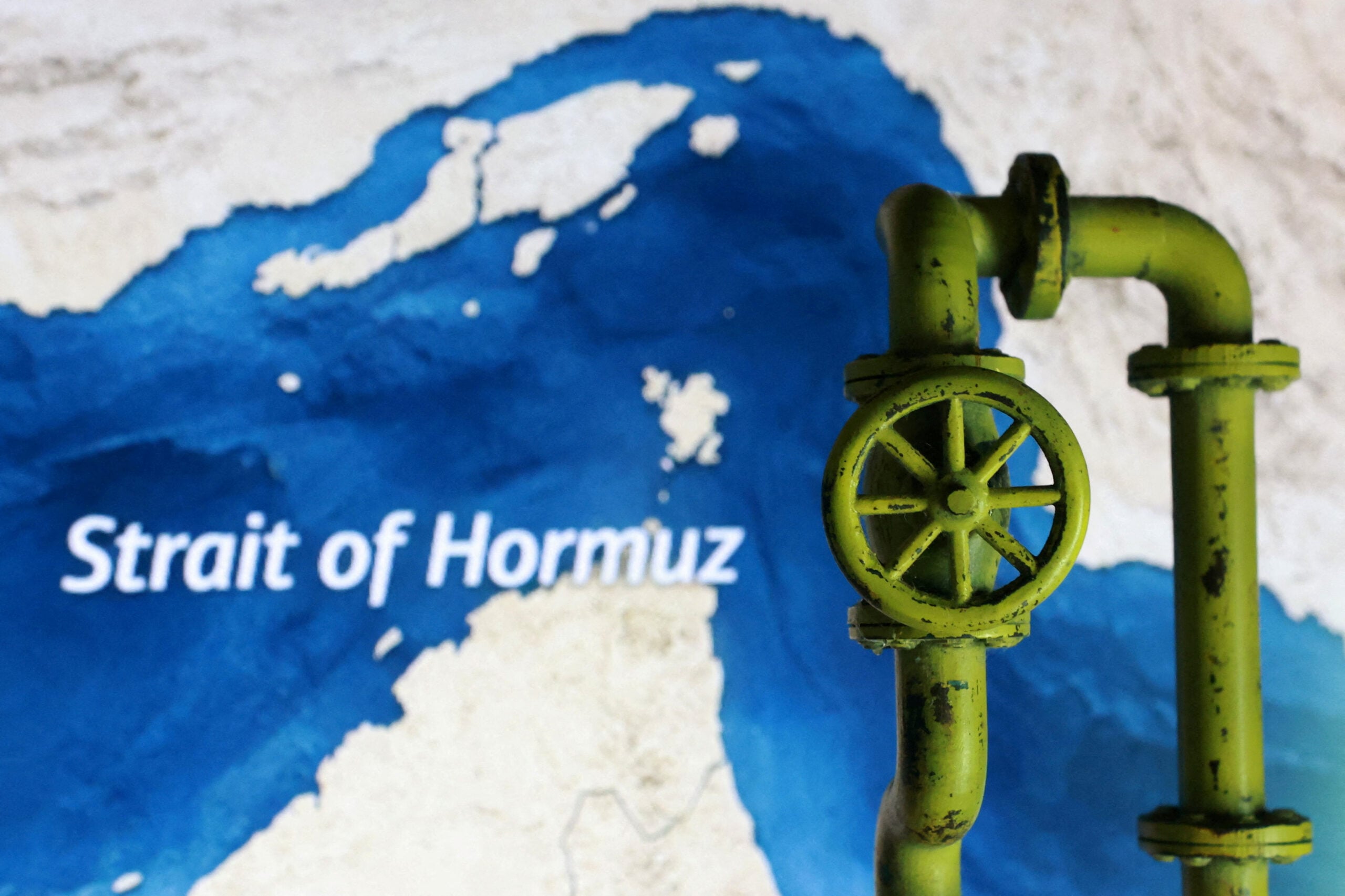
The current shipments are the latest chapter in a procurement story that stretches back through 2025. In January and February of that year, two IRISL vessels, the Golban and Jairan, delivered approximately 1,000 tonnes of sodium perchlorate to Bandar Abbas, Iran’s principal commercial port on the Strait of Hormuz. European intelligence sources assessed that consignment alone was sufficient to produce propellant for between 200 and 260 ballistic missiles. Between September and October 2025, following Iran’s 12-day war with Israel in June, a further 2,000 tonnes arrived from China as Tehran scrambled to replenish a missile stockpile that had been significantly degraded in combat.
The scale of procurement prompted the United States, in April 2025, to impose fresh sanctions on three Chinese companies, Shenzhen Amor Logistics, China Chlorate Tech Co. Ltd., and Yanling Chuanxing Chemical Plant General Partnership, for their roles in the supply network.
Bandar Abbas itself provided a grim illustration of what this material represents. In April 2025, a catastrophic explosion tore through the Port of Shahid Rajaee, killing at least 70 people and injuring more than 1,000. The distinctive reddish smoke that billowed over the port, and a subsequent account from within Iran’s own security establishment reported by the New York Times, pointed to sodium perchlorate as the cause. Three days after the blast, Washington announced its sanctions package.
The five vessels currently tracked in the latest cycle are considerably larger than the Golban and Jairan. Using Professor Lewis’s published estimates of missile yield per tonne of sodium perchlorate as a benchmark, analysts at The Telegraph calculated that the combined cargo of these five ships could, in theory, support the production of approximately 785 additional ballistic missiles, enough, war monitors estimate, to sustain Iranian launch rates of between ten and thirty missiles per day for a further month.
Those projections come with significant caveats. They assume the material reaches Iranian processing facilities intact, that production infrastructure remains functional despite sustained allied strikes, and that the entire consignment is allocated to missile production rather than civilian industry. Whether Iran’s manufacturing capability has survived the current bombing campaign well enough to capitalise on the new supply is an open question. Lewis himself has noted that “production facilities may be destroyed by the time the chemicals are delivered.”
What is not in question is Beijing’s awareness of the situation. Isaac Kardon, a senior fellow at the Carnegie Endowment for International Peace, was blunt in his assessment: “China could have held these vessels at port, imposed an administrative delay, invented a customs hold, any number of bureaucratic tools, but didn’t. That’s a deliberate policy choice.” China’s foreign ministry has maintained that it “opposes illegal unilateral sanctions” and that sodium perchlorate exports constitute normal trade, a position Washington and London emphatically reject.
The episode exposes a persistent faultline in the international non-proliferation framework. Dual-use chemicals, materials with both civilian and military applications, are structurally difficult to regulate without disrupting legitimate commerce, and Iran’s procurement networks have long exploited that ambiguity. Several of the vessels in the current cycle transmitted false destination data, identifying Vietnam as their port of call while tracking data placed them firmly in Iranian waters.
For now, the Zardis sits offshore awaiting clearance. Whatever it carries, the pattern it represents has been years in the making, and shows no sign of breaking.
Editorial Standards · Corrections · About gCaptain

 Join The Club