Don’t Miss Your Daily Briefing for the Maritime Industry
Join the leading maritime news network
— trusted by our 107,722 members
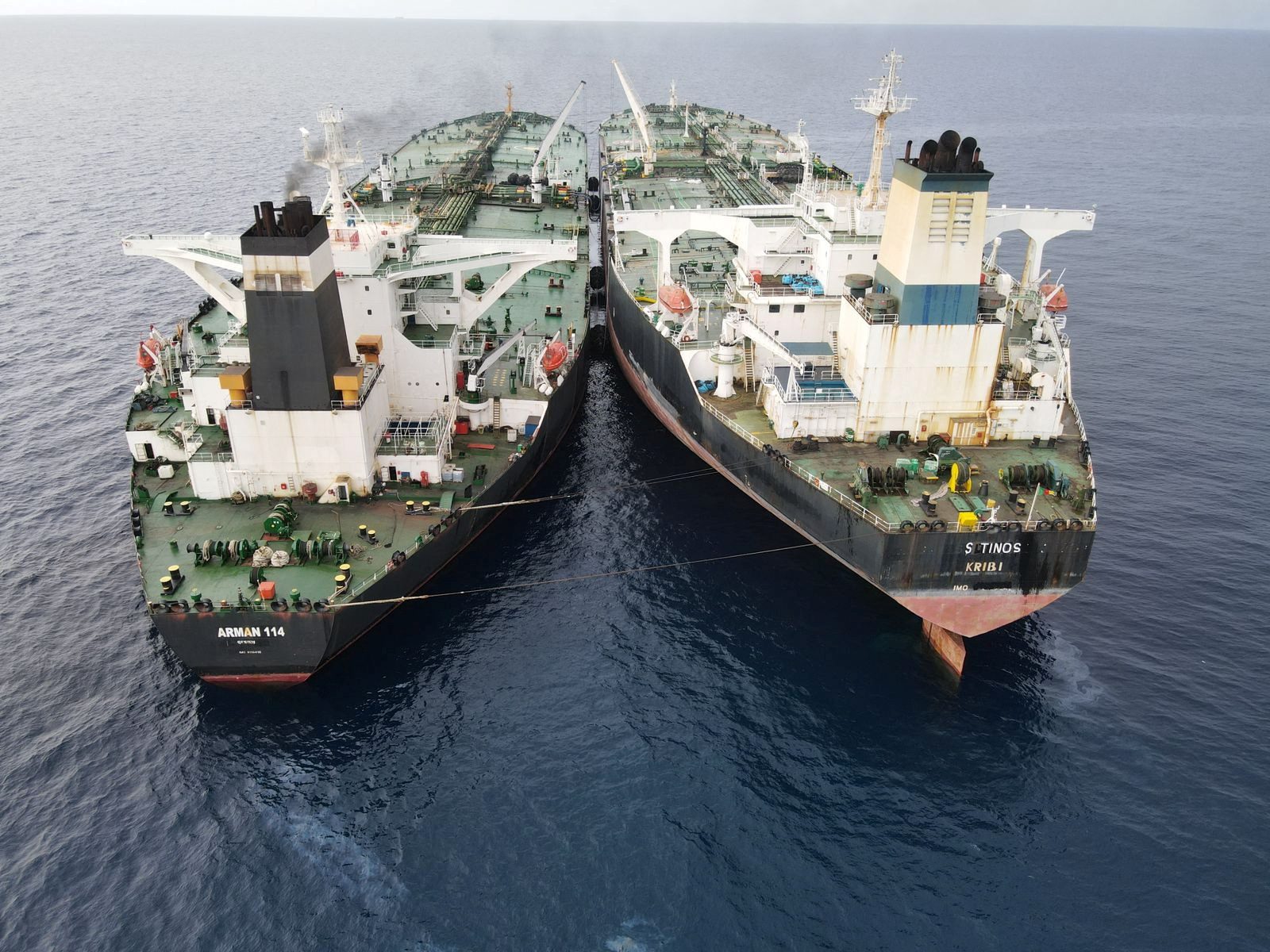
The Iranian-flagged Very Large Crude Carrier (VLCC), MT Arman 114, and the Cameroon-flagged MT S Tinos, are seen as they were spotted conducting a ship-to-ship oil transfer without a permit, according to Indonesia's Maritime Security Agency (Bakamla), near Indonesia's North Natuna Sea, Indonesia, July 7, 2023 in this handout picture released July 11, 2023. Indonesia's Maritime Security Agency (Bakamla) / Handout via REUTERS
Supertankers Racing Empty to Lift Oil Highlight Vessel Shortage
Dec 11, 2025 (Bloomberg) –A shortage of oil tankers is becoming so acute that newly built vessels, which usually carry refined fuels on their maiden voyages, are instead racing empty to pick up crude as soon as possible.
Six supertankers that were delivered this year have traveled without cargoes from East Asia to load crude in the Middle East, Africa or the Americas, ship-tracking and fixtures data reviewed by Bloomberg and Signal Ocean show. That compares with just one such journey last year.
Tanker owners about to receive new ships almost always use them to carry fuels like gasoline on their maiden voyages to pick up crude. This makes both economic and geographical sense, given that oil products are cleaner than crude and the vessels won’t need to be washed after carrying them, and also because many of the ships are built in East Asia, which imports a lot of unprocessed oil and exports refined fuels.
A severe shortage of tankers is now upending that logic. Oil producers — both within and outside OPEC — have ramped up output this year. Western sanctions on Russia and the risk of traveling through the Red Sea, meanwhile, have disrupted traditional routes, resulting in longer voyages and more ships being used.
Smaller product tankers have also been drawn into the oil trade, while some traders have had to break up cargoes due to the lack of larger vessels, pushing up transport costs even further. The Baltic Dirty Tanker Index, which tracks rates to carry crude oil on 12 major routes, has jumped 50% since the end of July.
“When very large crude carriers earn $100,000 per day, and Suezmaxes at $80,000, to transport crude, people would rather just rush to lock those levels in, in case they go away,” said Georgios Sakellariou, a chartering analyst at Signal Maritime, a vessel-pool management company in the same group as Signal Ocean.
The Aliakmon I was the first such observed supertanker to make an empty maiden voyage this year. It left a shipyard in northeastern China without a cargo in late June, then headed to Kuwait to pick up nearly 2 million barrels of oil. The ship, owned by Japanese trading house Mitsui & Co., then delivered the crude to South Korea in late November.
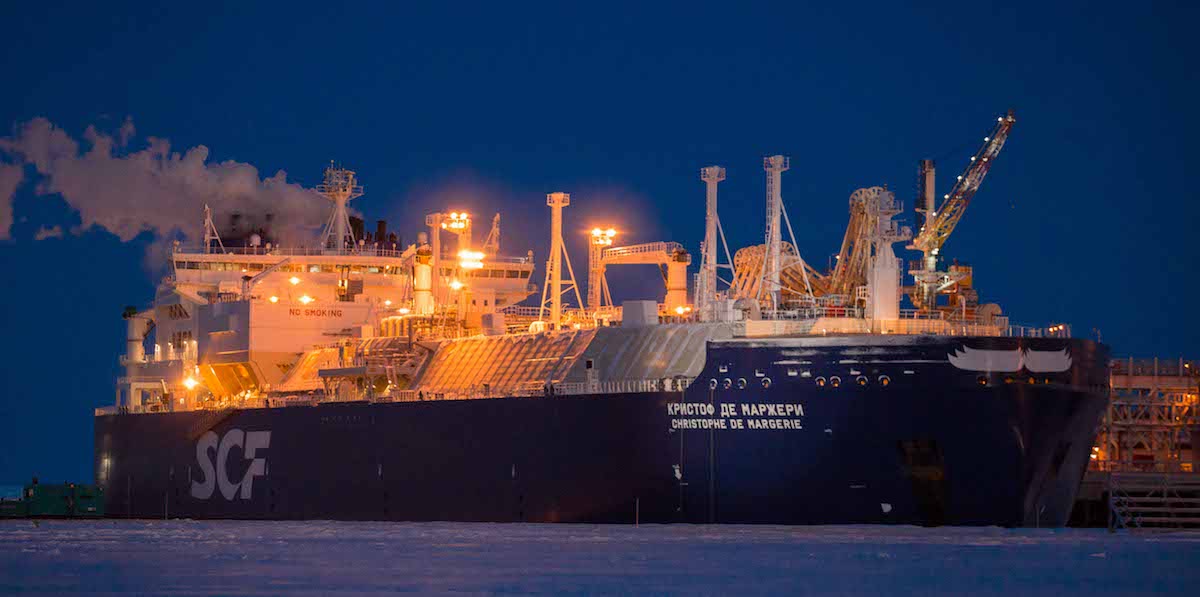
An Arc7 ice-class liquefied natural gas (LNG) carrier has completed the first-ever winter pickup of LNG from Russia’s Arctic LNG 2 plant, a milestone for the project as its majority owner Novatek may seek to keep limited production running through the harsh Arctic winter.
In a watershed moment for maritime telecommunications regulation, Chinese authorities have penalized a foreign vessel for illegally operating SpaceX's Starlink internet service within territorial waters — the first enforcement action of its kind that signals Beijing's determination to control satellite communications in its maritime jurisdiction.
A sanctioned oil tanker has for the first time established a direct geographic link between Russia’s Arctic “shadow fleet” and oil product exports to Venezuela, connecting two of the world’s most sensitive energy and sanctions flashpoints, according to ship-tracking and trade data.
December 22, 2025
Total Views: 10906
Get The Industry’s Go-To News
Subscribe to gCaptain Daily and stay informed with the latest global maritime and offshore news
— just like 107,722 professionals
Secure Your Spot
on the gCaptain Crew
Stay informed with the latest maritime and offshore news, delivered daily straight to your inbox
— trusted by our 107,722 members
Your Gateway to the Maritime World!
Essential news coupled with the finest maritime content sourced from across the globe.

 Join The Club