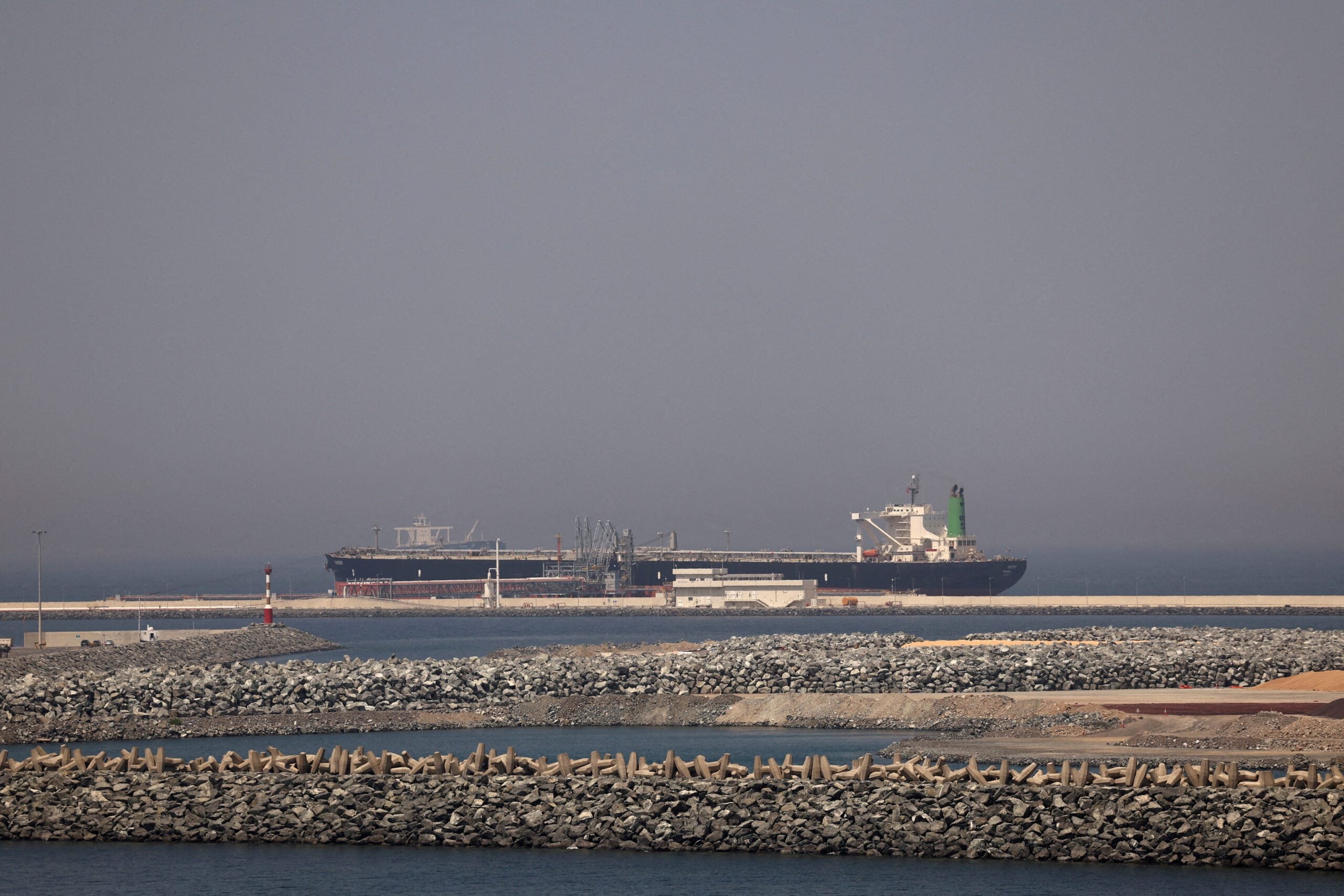
SINGAPORE, Sept 16 (Reuters) – Vessel transits through the Strait of Hormuz remained in the single digits at four on Tuesday, down from seven a day earlier, preliminary shipping data showed on Wednesday, falling well short of the 10-day average of 18.
The drop in traffic through the waterway that handled one-fifth of the world’s oil and liquefied natural gas supply before the Iran war comes after attacks in the region intensified.
Of the total on Tuesday, two ships were exiting and two were entering, according to the data.
No very large crude carriers or liquefied natural gas tankers were involved.
Some ships may be sailing through the waterway with their transponders turned off and they are therefore not counted.
One very large gas carrier, Salute, carrying around 470,000 barrels of liquefied petroleum gas exited via the Iranian route, while Panamax-sized tanker Nautilus, carrying around 510,000 barrels of naphtha, exited via an unknown dark route.
The two ships that entered were both laden, with one being a short-range dirty products tanker and the other a dry bulk carrier. Both entered via the Iranian route.
Meanwhile, the number of ships sailing through the Bab el-Mandeb Strait was at 22, little changed on Tuesday compared with a day ago at 24.
(Reporting by Trixie Yap; Editing by Thomas Derpinghaus and Sonali Paul)
(c) Copyright Thomson Reuters 2026.

 Join The Club