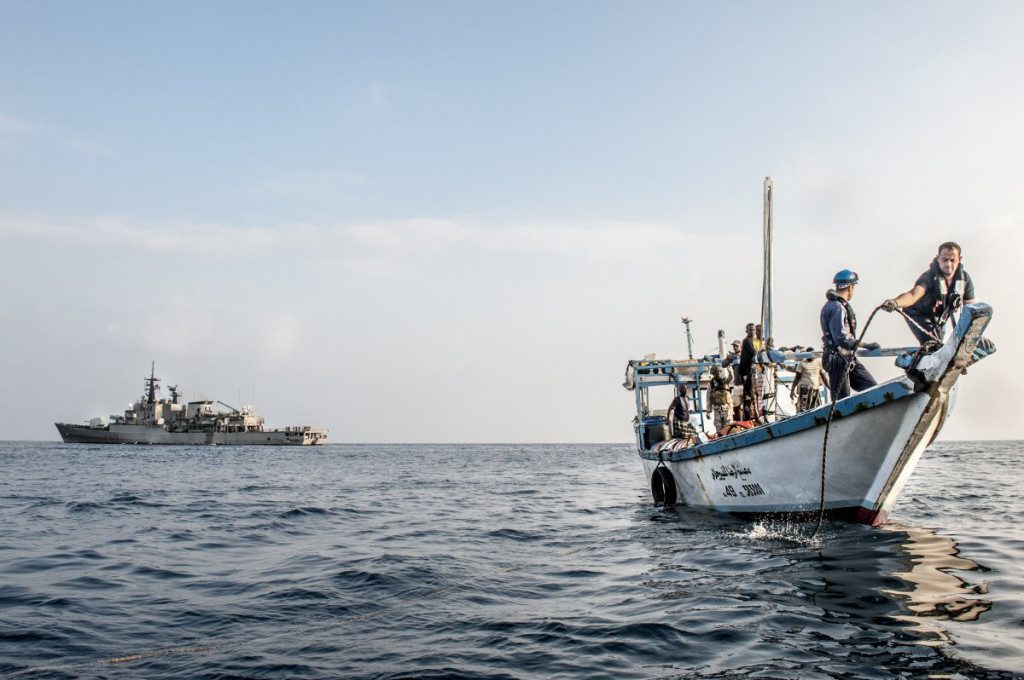
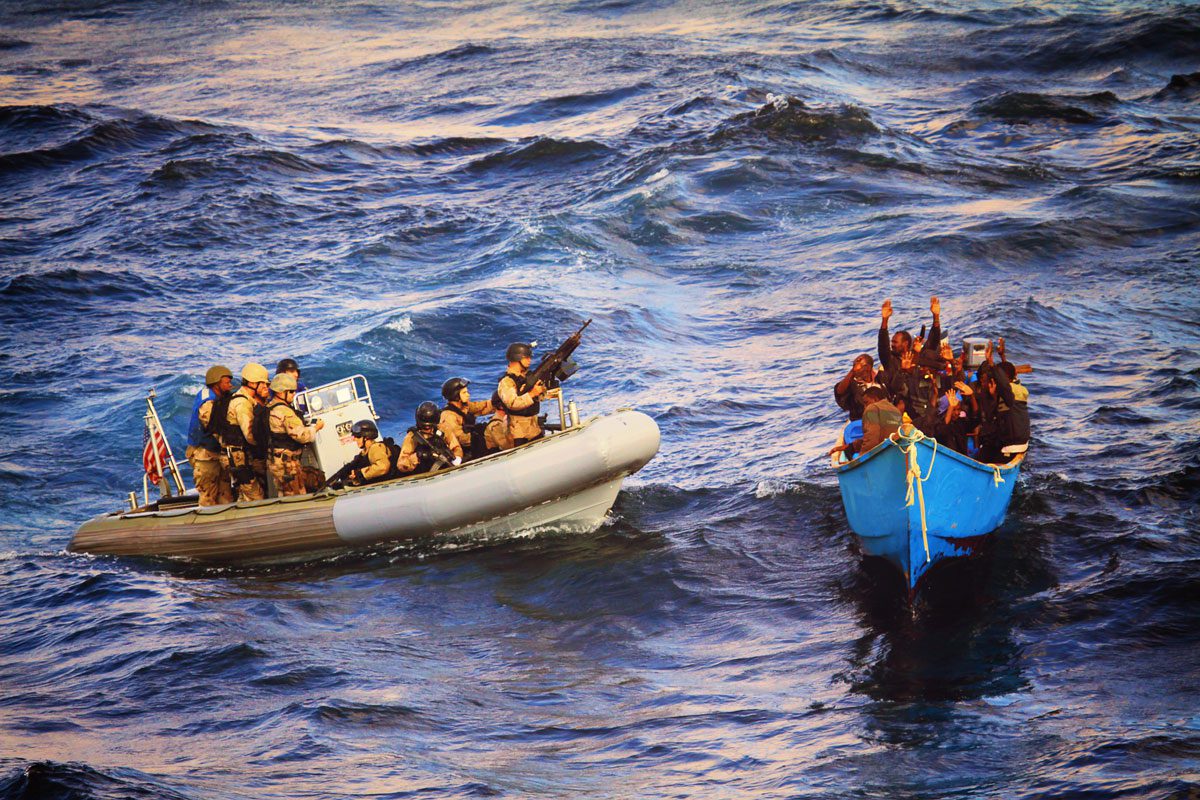
The EU Naval Force (EU NAVFOR) Somalia Operation Atalanta warship ITS Libeccio, assisting a Yemeni dhow that was adrift 100 nautical miles from the shore.
The hijacking of a tanker off Somalia’s coast shows the threat pirates still pose to one of the world’s busiest shipping lanes, a risk that may also hamper the Horn of African country’s efforts to explore for offshore oil and gas, a United Nations official said.
The tanker was the first commercial ship seized off the eastern African seaboard in five years. Hijackings in the region caused havoc for international shipping from about 2001 to 2012, peaking with 176 attacks in 2011. They declined in part because of actions by the European Union’s anti-piracy mission.
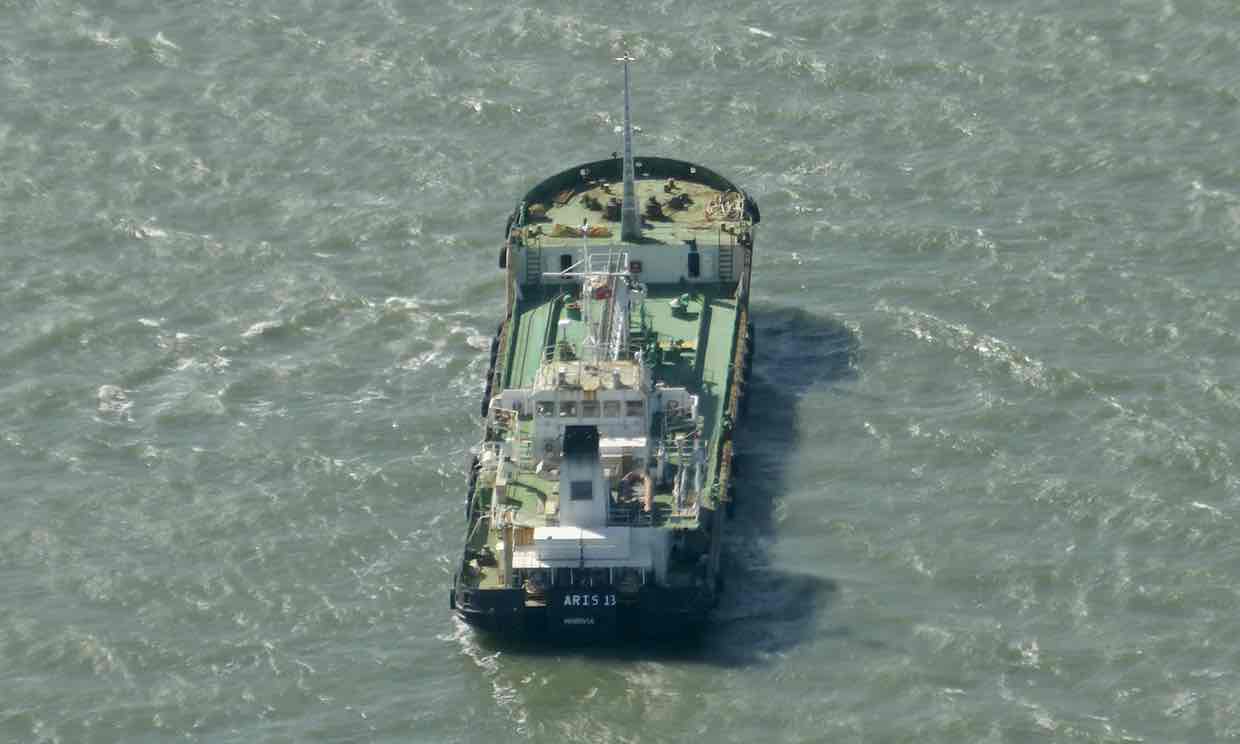
The Aris 13 was released by the assailants late Thursday, with the Puntland Maritime Police Force now in control of the vessel, Mohamed Jama Hersi, a PMPF officer, said by phone. He declined to comment on whether a ransom that the hijackers demanded had been paid.
Somalia, which chose a new president last month and is trying to emerge from decades of civil war and defeat al-Qaeda-linked militants, is seeking to encourage foreign companies to explore for oil and gas in its waters. Piracy represents a “setback” in the government’s efforts, Cole said in a phone interview from Nairobi, the capital of neighboring Kenya.
Probable Deposits
Somalia’s government is keen for companies such as Royal Dutch Shell Plc, Exxon Mobil Corp. and BP Plc to return and resume exploration for what it says are probable offshore hydrocarbon deposits. The state has held talks with those companies about reactivating dormant contracts.
IHS Inc the Englewood, Colorado-based risk adviser, in January 2016 said there was an increased risk from Somali pirates and that the majority of commercial shipping in the area no longer carried privately contracted armed security due to costs and perceptions there was no significant danger. Somalia’s government has also warned that illegal fishing by foreign vessels is threatening the livelihood of citizens, potentially leading some into piracy.
Somalia’s waters are remote and difficult to police, with no EU navy patrols in the area where the tanker was seized, according to Cole. The vessel may have traveled too close to shore and not fast enough, he said.
“Those parts of Somalia are still very dangerous,” Cole said. “Vessels need to take measures to protect themselves.”
Pirates are still “very much around” and, for them, “there is nothing else to do to make yourself rich other than criminal activities,” he said.
by Katharine Houreld (Reuters) – Somali pirates have released three Iranian hostages held for five years, a maritime security official said on Thursday, as conflicting reports emerged whether another ship...
(Reuters) Somali pirates who seized a Comoros-flagged oil tanker have released the ship and its eight Sri Lankan crew, bringing the first hijacking since 2012 to an unusually swift conclusion...
By Abdiqani Hassan (Reuters) A volatile buildup of weapons and resentment along the northern Somali coast culminated in the hijack of an oil freighter this week, the first such seizure...
March 16, 2017
Total Views: 211
Get The Industry’s Go-To News
Subscribe to gCaptain Daily and stay informed with the latest global maritime and offshore news
— just like 106,633 professionals
Secure Your Spot
on the gCaptain Crew
Stay informed with the latest maritime and offshore news, delivered daily straight to your inbox
— trusted by our 106,633 members
Your Gateway to the Maritime World!
Essential news coupled with the finest maritime content sourced from across the globe.

 Join The Club