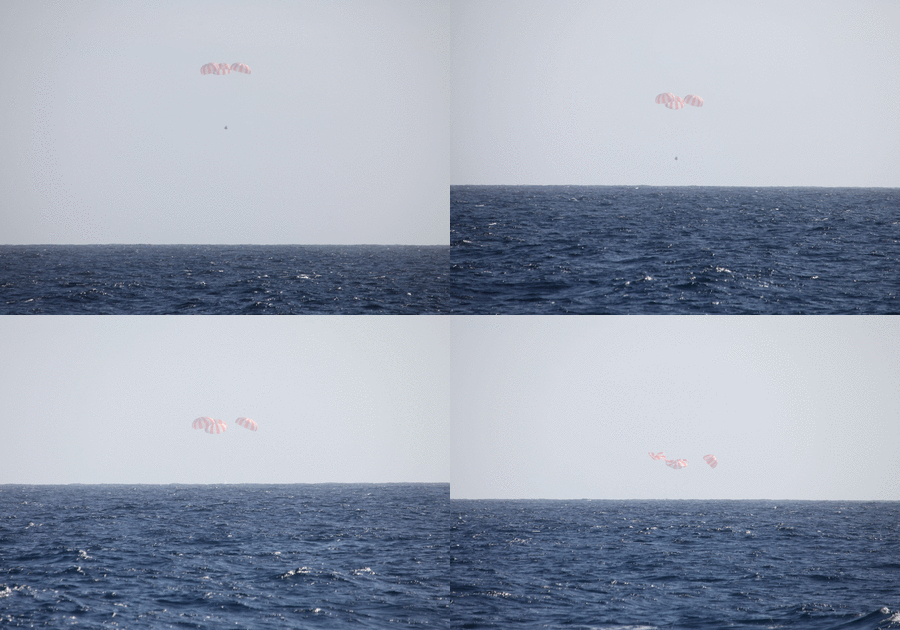
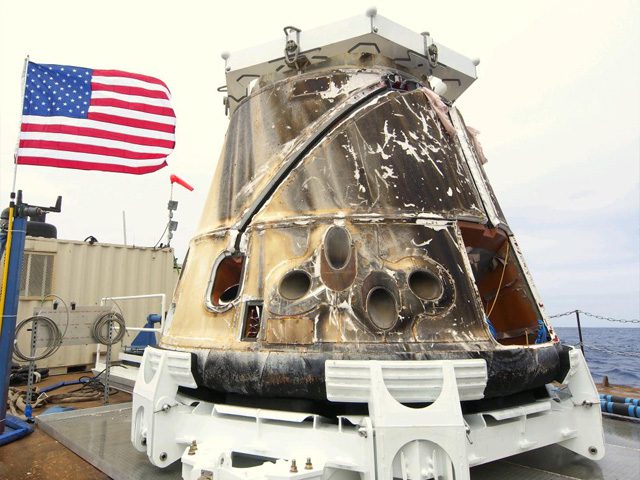
On Tuesday, SpaceX’s Dragon capsule detached from the International Space Station at 3:56am PT and splashed down safely almost 6 hours later about 200 miles off the coast of southern California. Shortly afterwards, the Dragon was picked up by a recovery ship and secured on deck, all cargo intact. The capsule was carrying about 3,000 lbs of cargo and packaging from the ISS, according to SpaceX.
Dragon is a free-flying, reusable spacecraft developed privately by SpaceX under NASA’s Commercial Orbital Transportation Services (COTS) program. Initiated by SpaceX in 2005, the Dragon spacecraft is made up of a pressurized capsule and unpressurized trunk used for Earth to LEO transport of pressurized cargo, unpressurized cargo, and/or crew members.
In May 2012, SpaceX made history when its Dragon spacecraft became the first commercial vehicle in history to successfully attach to the International Space Station. Previously only four governments — the United States, Russia, Japan, and the European Space Agency — had achieved this challenging technical feat.
Today’s safe landing marked the completion of the Dragon’s second mission, known as CRS-2, under NASA’s $1.6 billion Commercial Resupply Services (CRS) contract. The contract includes a minimum of 12 flights, with an option for additional missions.
Dragon Splashdown (CRS-2):
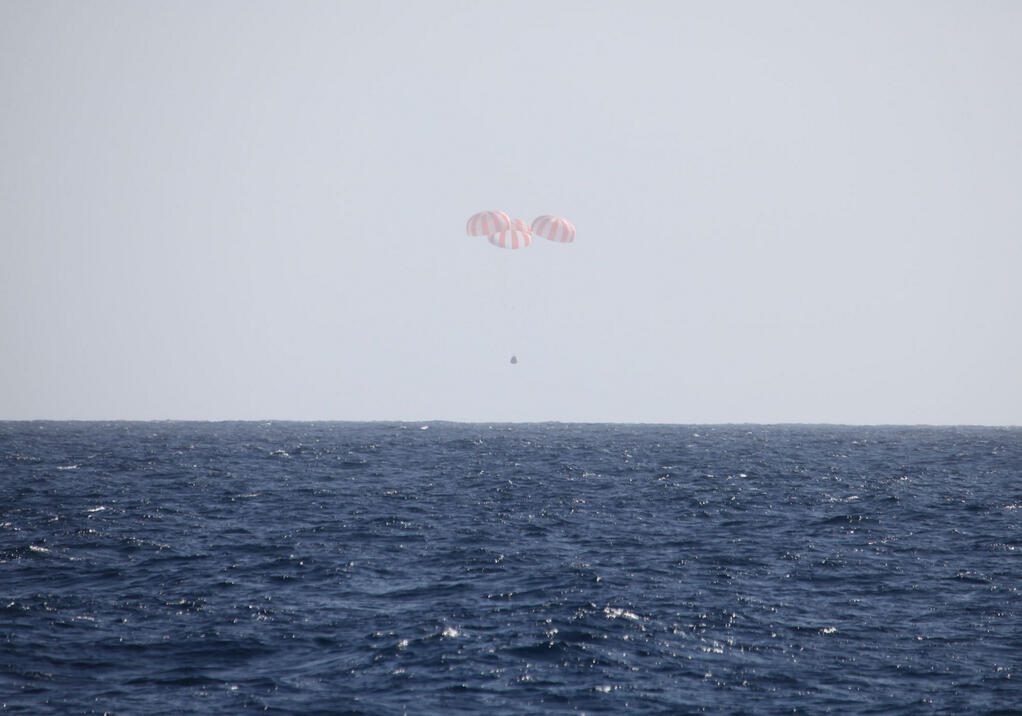
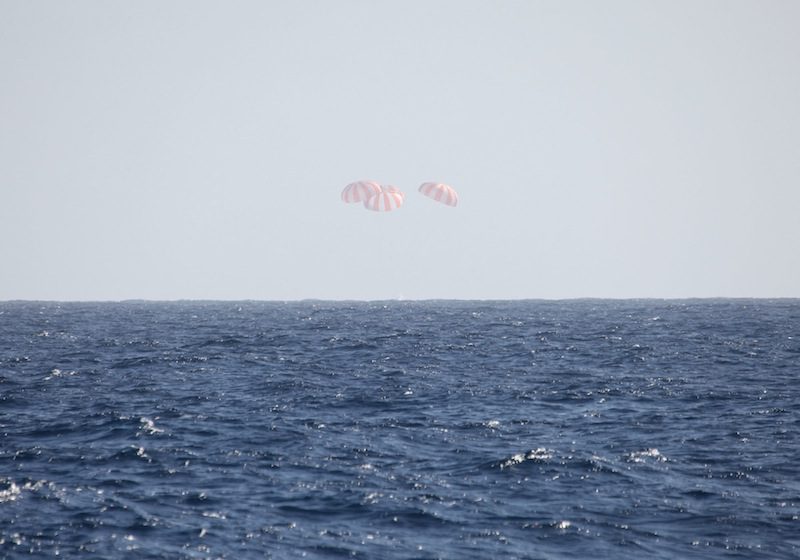
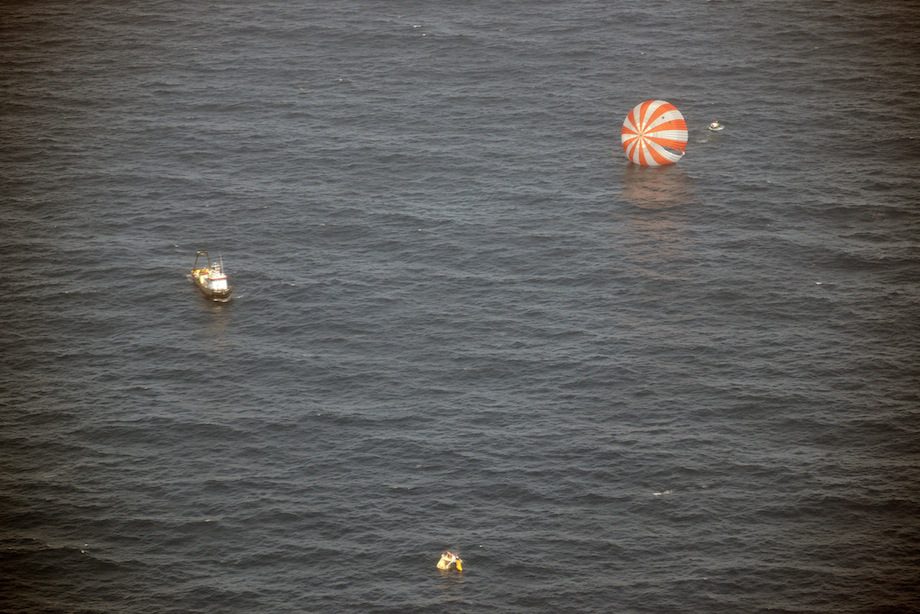
Dragon’s return to Earth. Photo: SpaceXSplash down at 9:35 PT. Photo: SpaceXRecovery boats approach Dragon after splashdown into the Pacific Ocean. Photo: SpaceX
GIF Sequence:
Dragon Retrieval (from CRS-1):
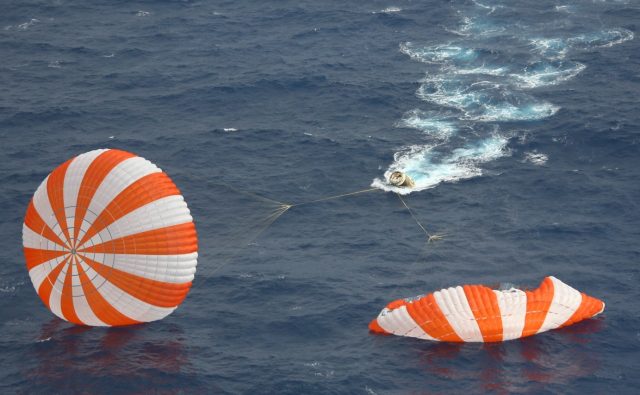
Dragon capsule and two of the three main parachutes shortly after splashdown on May 31, 2012. Courtesy NASASpaceX’s Dragon capsule on a barge after being retrieved from the Pacific Ocean after splashdown on May 31, 2012. Photo: SpaceX
In a quiet corner of the Pacific last August, a vessel unlike any other was making what many thought was its final voyage. R/P FLIP (Floating Instrument Platform), the U.S....
In 2012, reddit user kepleronlyknows posted a map claiming to show the longest straight line a vessel could theoretically sail on earth without hitting land. The map showed a route...
In August 2017 the “Great American Eclipse” crossed the Pacific Ocean and the continental United States. Most Americans witnessed a spectacular view but MIT a few scientists witnessed much more. MIT researchers found...
January 30, 2018
Total Views: 61
Get The Industry’s Go-To News
Subscribe to gCaptain Daily and stay informed with the latest global maritime and offshore news
— just like 107,366 professionals
Secure Your Spot
on the gCaptain Crew
Stay informed with the latest maritime and offshore news, delivered daily straight to your inbox
— trusted by our 107,366 members
Your Gateway to the Maritime World!
Essential news coupled with the finest maritime content sourced from across the globe.

 Join The Club