Satellite images taken on August 7 confirm Pioneer’s location to the northwest of Norway steaming in a southwesterly direction.
For about a week the vessel effectively went dark by sending out a false AIS signature.
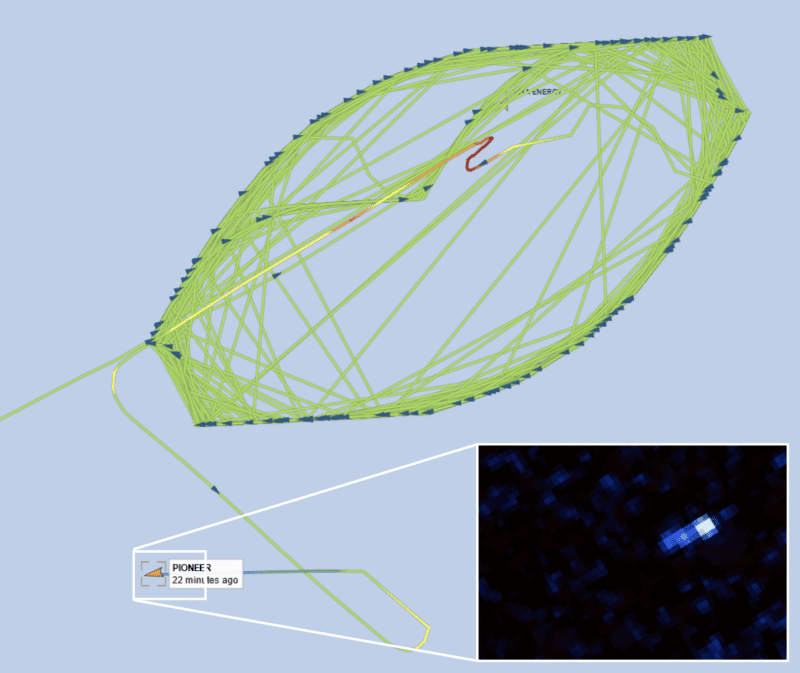
While vessel tracking sites previously showed it holding in an elliptical pattern between Norway and the islands of Svalbard and Novaya Zemlya, it appeared at the Arctic LNG 2 project 1,000 nm away several days later. The perfect symmetrical nature of its AIS track suggested it was a computer generated spoof.
A senior analyst at a global commodity tracking firm told gCaptain: “They buy a $25 device from Alibaba and stick it on the ship to perform signal spoofing.”
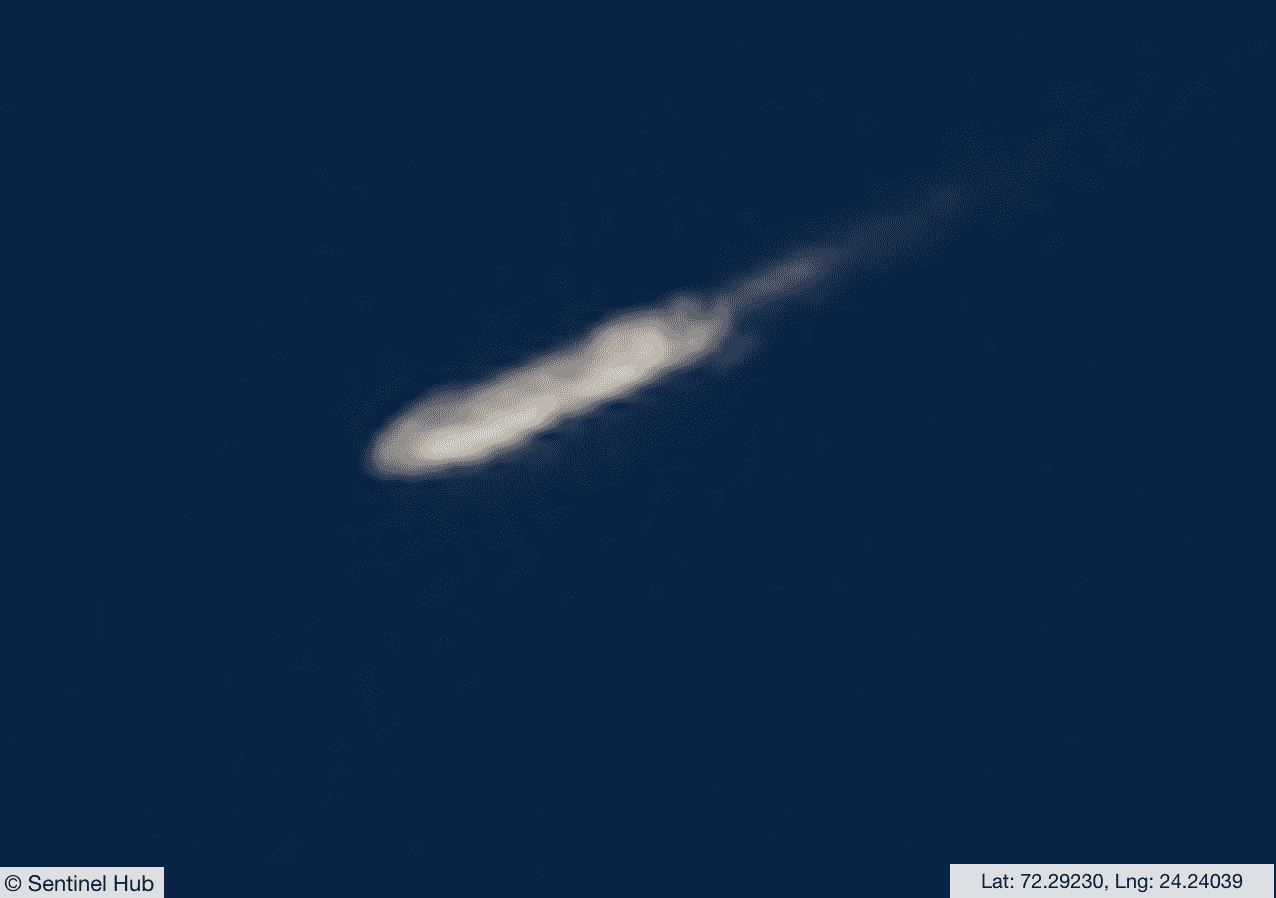
Images taken by the Sentinel network of satellites using Synthetic Aperture Radar (SAR) able to penetrate cloud-covered skies suggest Pioneer departed from Arctic LNG 2 on August 3. It had arrived at the project two days prior.
Arctic LNG 2 plant on August 3 indicating the departure of LNGC Pioneer earlier in the day. (Source: Sentinel Hub)
The duration of its port call suggests it would have been able to take on a full load of LNG. Vessels at the neighboring Yamal LNG project routinely spend 12-24 hours in port.
Pioneer returned to the position of its spoofed AIS track at some point during August 6 and began transmitting a live signal. It exited from the circular track that evening as it began steaming south. Sentinel SAR images confirmed the presence of a vessel at the corresponding coordinates late on August 6.
LNGC Pioneer’s spoofed AIS track and reemergence on August 6. Sentinel SAR inset confirms presence of a vessel. (Source: Vesselfinder and Sentinel Hub)
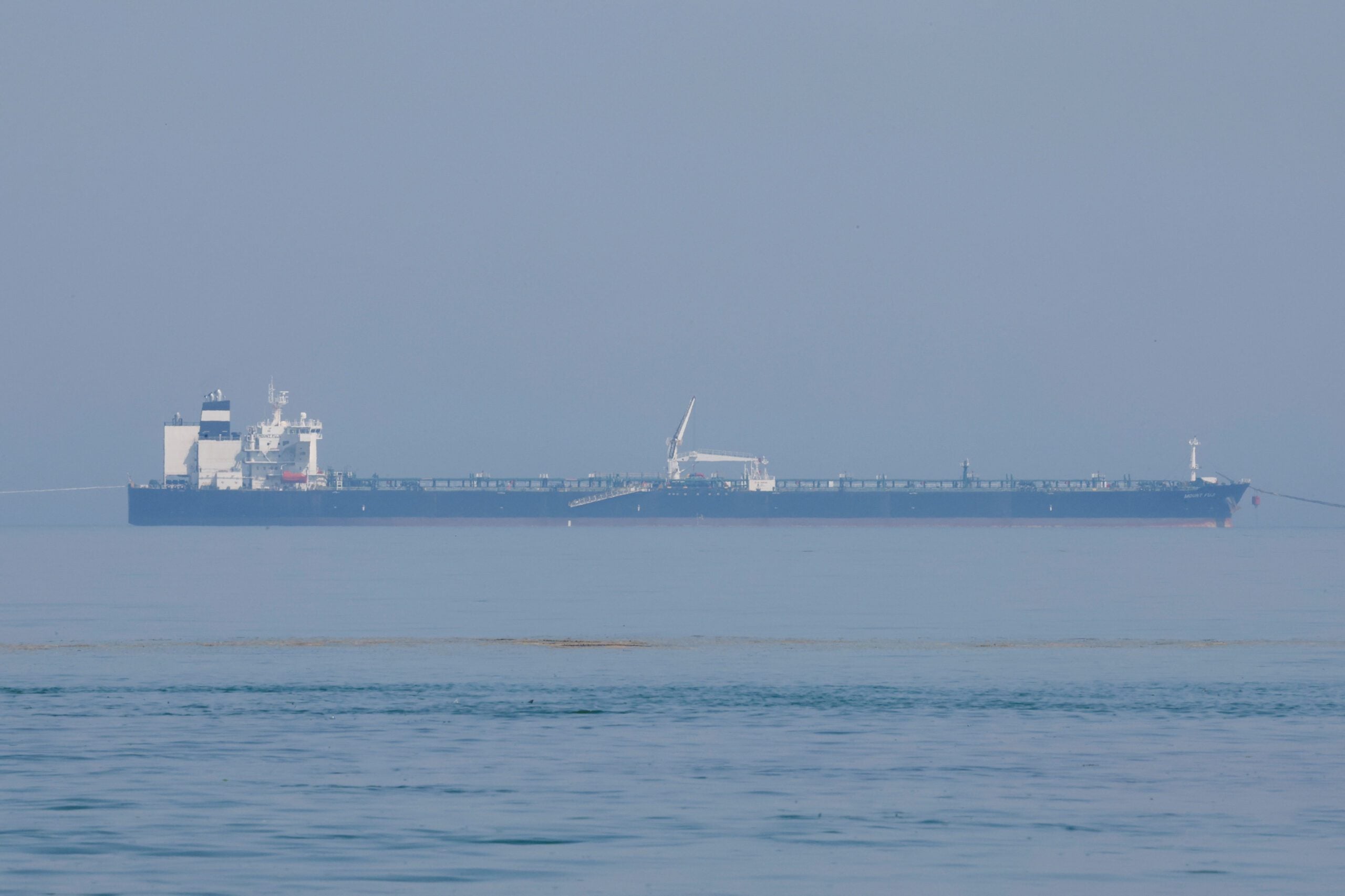
Less than 24 hours later it had emerged from the persistent Arctic cloud layer enabling visual identification via satellite imagery.
It is unclear if Pioneer met up with another LNGC between August 3-6 to conduct a ship-to-ship transfer of its cargo to further obfuscate the origin of the LNG. Several LNGCs remain in holding patterns in proximity to Pioneer’s path, including Asya Energy which is operated by the same vessel manager, Ocean Speedstar Solutions, according to Equasis, a global shipping database.
However, the timeline between departing Arctic LNG 2 and reappearing in Norway’s Barents Sea does not allow for sufficient time for a transfer. The transfer of LNG routinely takes around 48 hours based on hundreds of STS operations Russia has conducted in the region since 2018.
The vessel’s destination remains currently unknown with AIS information displaying a “for order” status.
Given the vessel manager and owner are India-based it could be headed east via the southern tip of Africa or the Suez Canal. Industry insiders, including Flex LNG CEO’s Oeystein Kalleklev, think Russia will be able to find buyers for its sanctioned LNG.
“Some non-U.S. associated second-tier buyers might be interested to buy spot at discount,” an LNG analyst told gCaptain.
Four recently reflagged liquefied natural gas (LNG) carriers linked to new Turkish-controlled entities are heading north in the Atlantic, in what analysts say could mark a new push in Russia’s effort to expand its constrained export fleet.
A Russian-flagged supertanker passed through the Strait of Hormuz into the Persian Gulf, marking a rare passage for one of the nation’s ships as traders scrutinize every transit through the war-hit waterway.
By Bloomberg News Apr 4, 2026 (Bloomberg) –Russia said drone debris struck a cargo vessel in a bay of the Azov Sea overnight while Moscow’s forces targeted several Ukrainian regions, including...
April 4, 2026
Total Views: 812
Get The Industry’s Go-To News
Subscribe to gCaptain Daily and stay informed with the latest global maritime and offshore news
— just like 106,149 professionals
Secure Your Spot
on the gCaptain Crew
Stay informed with the latest maritime and offshore news, delivered daily straight to your inbox
— trusted by our 106,149 members
Your Gateway to the Maritime World!
Essential news coupled with the finest maritime content sourced from across the globe.

 Join The Club