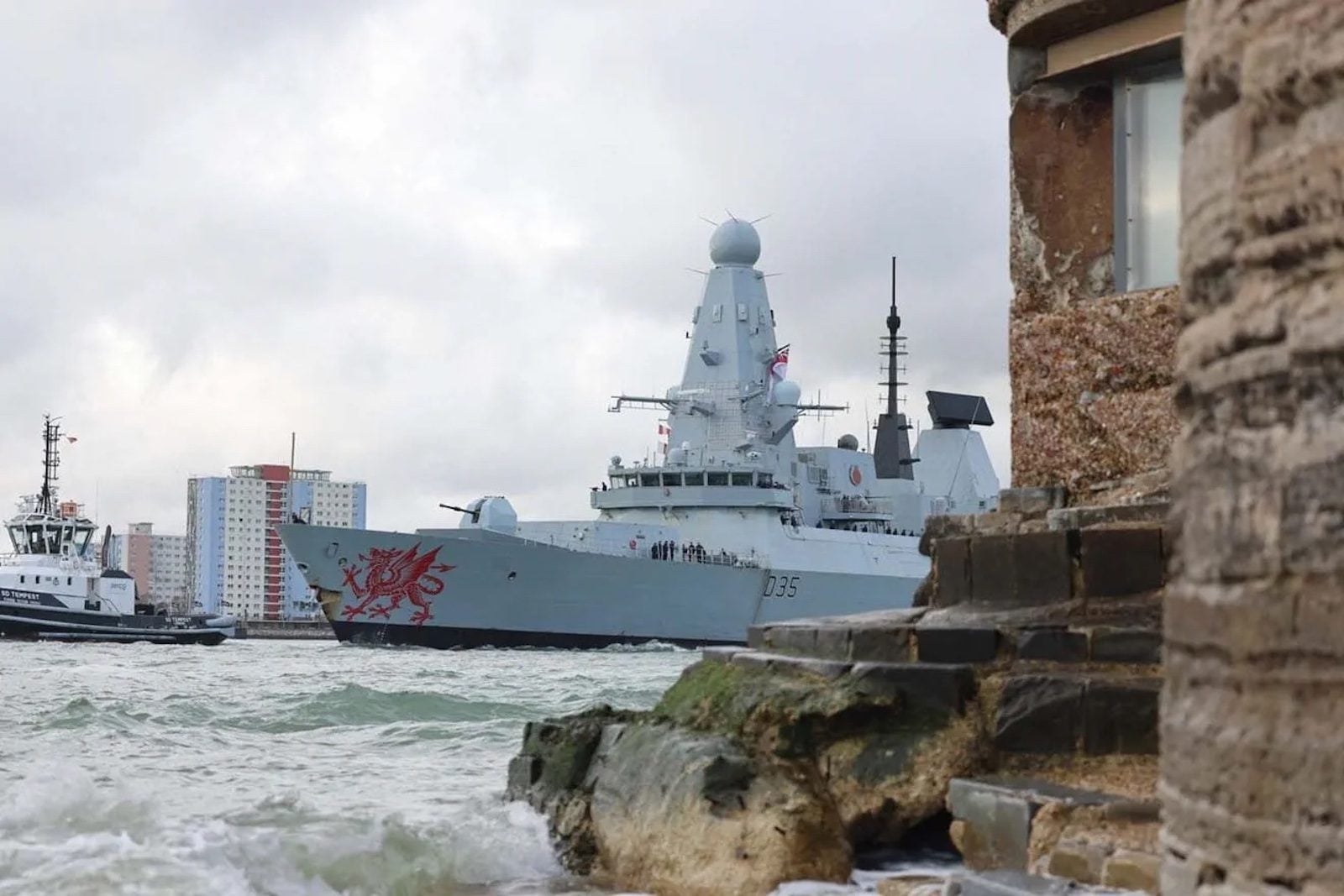
The HMS Dragon departed the Royal Navy’s base in Portsmouth, England on Tuesday bound for the Eastern Mediterranean as the United Kingdom bolsters its military presence in response to escalating tensions in the region and threats to British interests.
Crowds of well-wishers lined the seawall as the Portsmouth-based air-defence destroyer slipped out of harbor, beginning a deployment that will see the warship help protect UK assets and allies in the region. The move comes as Iranian attacks continue to target Western interests across the Middle East in response to U.S. and Israeli strikes.
The deployment will see Dragon’s advanced Sea Viper air-defence system positioned to counter aerial threats, including drones, aircraft, and missiles. The system allows the Type 45 destroyer to track hundreds of targets simultaneously and engage multiple threats at once, launching missiles capable of reaching speeds of up to four times the speed of sound.
Royal Navy officials say the ship will be supported by additional aviation assets already forward deployed in the region. 815 Naval Air Squadron Wildcat attack helicopters equipped with Martlet missiles have already been transported to Cyprus, while a Merlin Mk2 airborne surveillance helicopter from 820 Naval Air Squadron has arrived to provide early warning of incoming aerial threats.
Fleet Commander Vice Admiral Steve Moorhouse said the rapid deployment reflects the readiness of the Royal Navy to respond to emerging threats. “I am proud that our highly professional personnel have responded in a short time to ensure HMS Dragon and the Wildcats from 815 Naval Air Squadron are fully prepared for their mission,” Moorhouse said.
The UK Ministry of Defence said the decision to deploy additional naval and aviation assets builds on an expanded defensive posture already underway in the region. In recent weeks the UK has also deployed radar systems, air-defense units, and F?35 Lightning II fighter jets conducting air defense patrols.
Dragon’s commanding officer, Commander Iain Giffin, said the ship’s crew had been preparing intensively for the mission.
“My ship’s company have worked tirelessly to ensure we are ready for our mission to the Eastern Mediterranean,” he said. “We are trained for this, we are ready for this, we have the equipment and people.”
The Type 45 destroyers—each carrying a crew of roughly 200 sailors—serve as the Royal Navy’s primary air-defense platforms.
The Sea Viper system’s capabilities were demonstrated during recent operations in the Red Sea, where sister ship HMS Diamond intercepted multiple drones. The Diamond is also credited with shooting down a Houthi anti-ship ballistic missile targeting a merchant vessel in the Gulf of Aden, marking the first time a Royal Navy warship has intercepted a missile in combat since 1991.
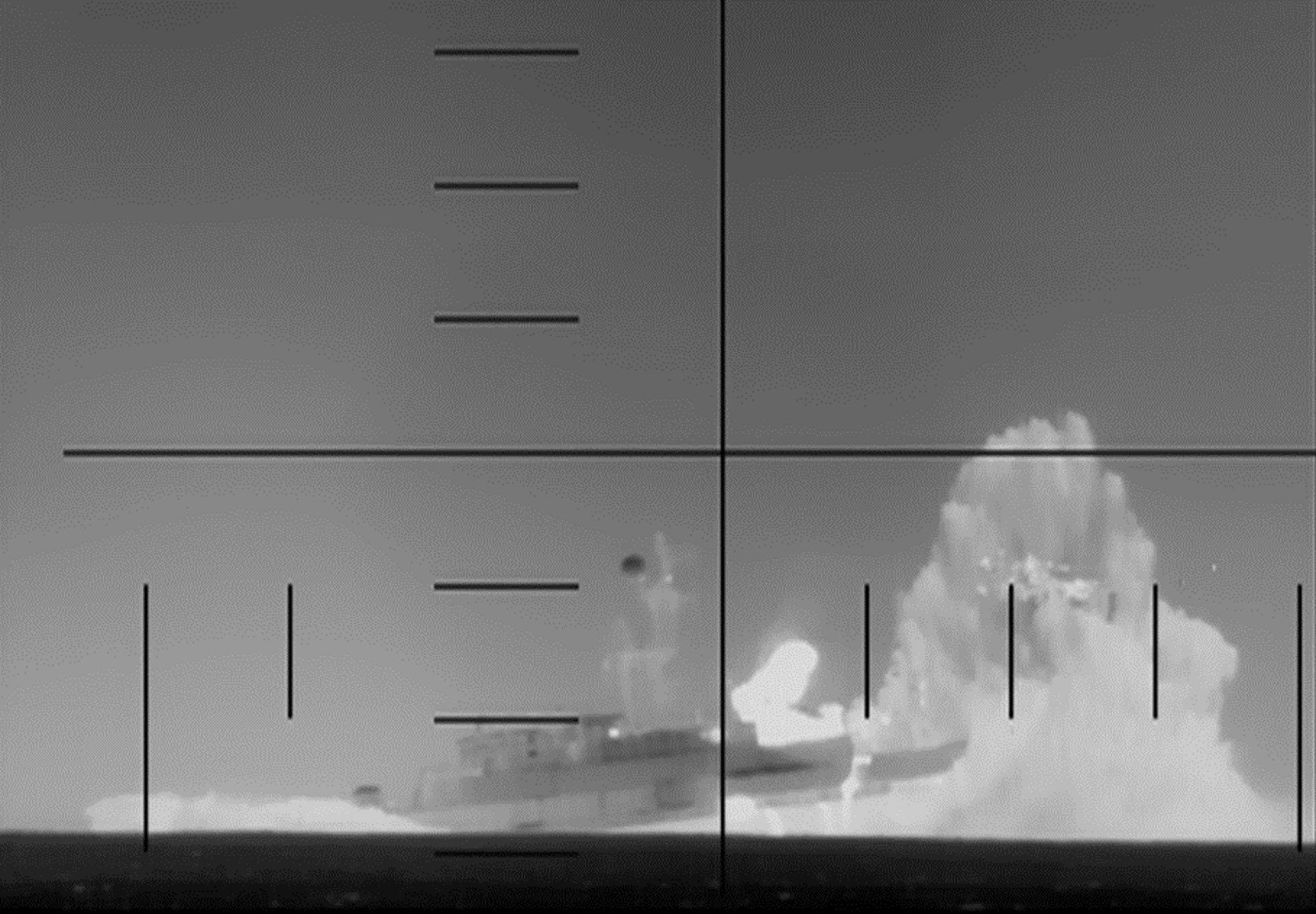
Dragon herself also demonstrated the system’s effectiveness during an international exercise off Scotland last year, becoming the first British warship to destroy a supersonic missile target using the Sea Viper system.
UK Defence Secretary John Healey praised the rapid preparation of the deployment, noting that what normally takes six weeks of preparation was completed in just six days.
Editorial Standards · Corrections · About gCaptain

 Join The Club