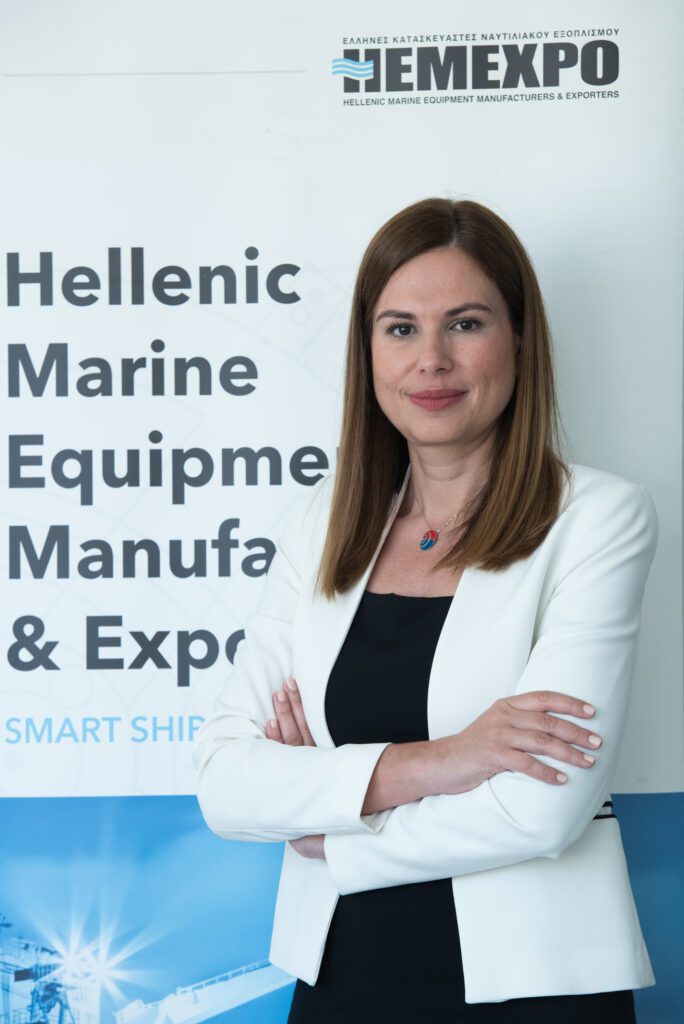
The reopening of Greek shipyards will help the European maritime technology sector to strengthen its position on the global market, says HEMEXPO President, Eleni Polychronopoulou.
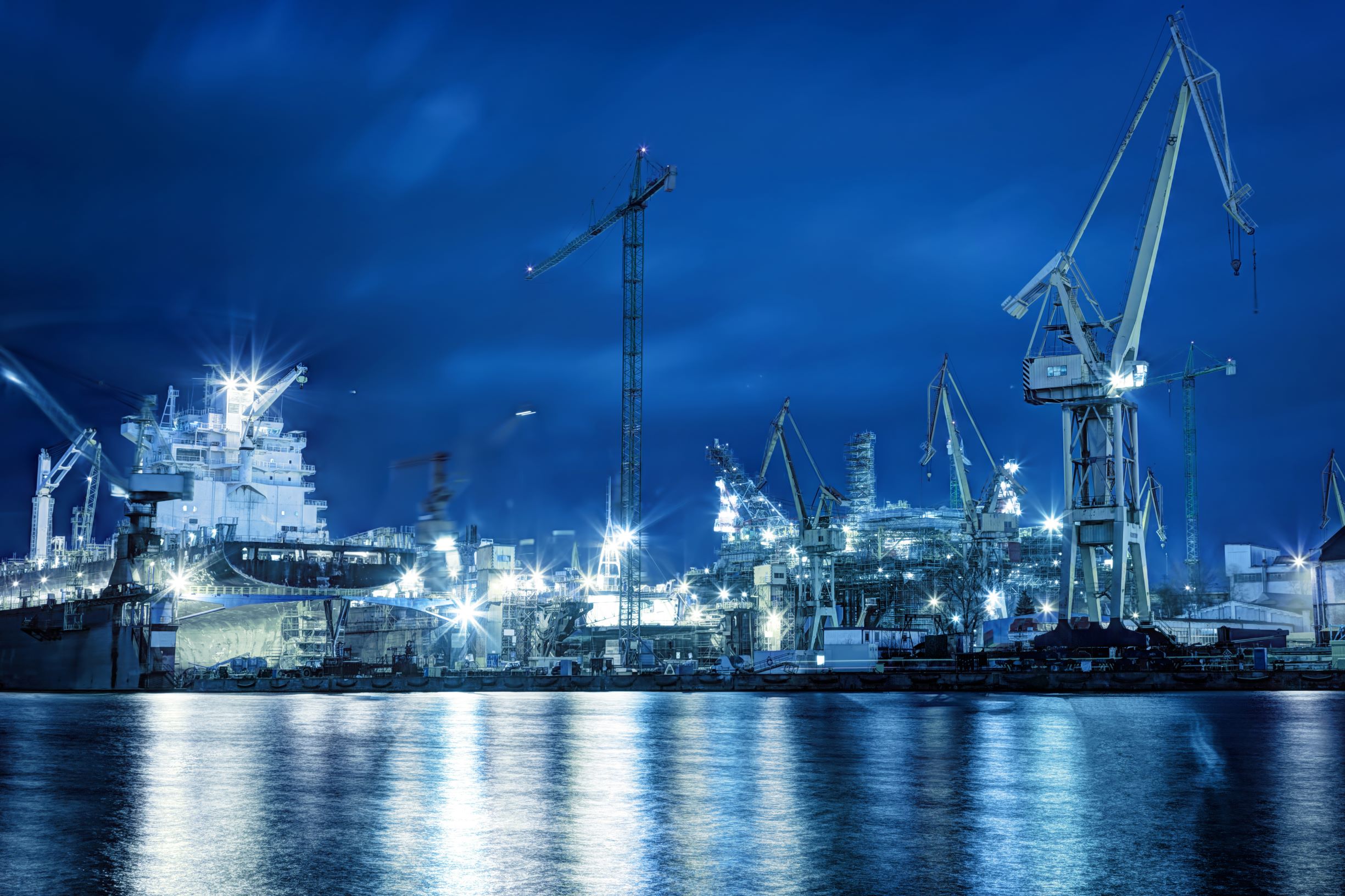
Asia’s decades-long dominance of the shipbuilding industry is well documented, with South Korea and China in particular having long since established themselves as global shipbuilding powerhouses. Nevertheless, European shipyards remain strong, with an annual production value of around €43 billion and a collective civil and naval orderbook value surpassing that of their Asian counterparts.
Where Europe truly outcompetes Asia – and every other world region – is in marine equipment manufacture and supply. Europe is home to around 22,000 manufacturers and suppliers of marine equipment that together employ over 320,000 people, have an annual production value of approximately €70 billion and represent 50% of the global market share.
With the imminent reopening of two major shipyards in Greece, Skaramanga and Elefsina, Europe’s maritime technology industry is set for a further boost, says Eleni Polychronopoulou, President of HEMEXPO – Hellenic Marine Equipment Manufacturers and Exporters: “The shipbuilding sector in Greece is in a period of revival, and this creates new opportunities for equipment manufacturers not only in Greece but throughout Europe to work with major players in international shipping. Shipowners, in turn, benefit from access to the innovative, high-quality and cost-effective solutions that Greek manufacturers – and HEMEXPO members especially – are renowned for.”
Representing manufacturers in the world’s leading ship owning nation and working closely with operators, shipyards, classification societies and the entire maritime supply chain, HEMEXPO is uniquely positioned to provide technical solutions that address the industry’s most urgent challenges. The soon-to-reopen Greek shipyards of Skaramanga and Elefsina will perform repair and refit works, along with specific New Building with a particular focus on equipping vessels for more sustainable operations – and this, Polychronopoulou says, is an area in which HEMEXPO companies excel.
“The range of products and applications in which our members specialise is broad, but today there is a special emphasis on sustainability,” she explains. “Examples include friction-reducing hull coatings, energy-efficient lighting, sensors that monitor operations and provide recommendations to boost efficiency, shore connection technology for emissions-free port stays and carbon capture systems that promise significant reductions in vessel emissions.”
HEMEXPO members have further solutions in the pipeline, Polychronopoulou adds, but their high cost in terms of research and development as well as production will require external financing, for which the association has turned to the European Union’s Innovation Fund. “The recovery of energy from the operation of the vessel with different technologies is one avenue we are exploring,” she says. “Another is working with DNV to create a framework that will allow our members to classify the products they manufacture as ‘environmentally sustainable’ and ‘energy saving’.”
Polychronopoulou is a strong advocate for the adoption and deployment of novel technology in decarbonising the shipping industry. In February 2022, the Cruise Lines International Association and SEA Europe, where Polychronopoulou serves as Vice Chair, issued a joint call for the maritime technology industry to be recognised as an integral part of the European Commission’s Green Deal Industrial Plan. The Green Deal promotes the “scaling-up of the EU’s manufacturing capacity for the net-zero technologies and products required to meet Europe’s ambitious climate targets”.
SEA Europe, the Shipyards’ and Maritime Equipment Association of Europe is dedicated to promoting the interests of the European maritime technology sector at the highest level. In addition to calling for the industry’s inclusion in the Green Deal, the association has developed proposals for several policies that it hopes will establish more favourable operating conditions for the sector – and create the kind of conditions that have helped China and South Korea to thrive as shipbuilding hubs.
“Among these proposals,” says Polychronopoulou, “are tax breaks for shipyards and marine equipment manufacturers, flexibility in the application of the OECD Guidelines on financing ship exports, the strengthening of the EU regulation on maritime cabotage and the drafting of guidelines on state aid in maritime transport.”
Greater support will also be needed in addressing the maritime workforce shortage – a particularly apparent issue in Greece, where, according to Polychronopoulou, “a large percentage of young people are choosing other sectors, leaving us lacking in specialised personnel.”
To tackle this issue, HEMEXPO plans to develop a programme to attract new recruits – primarily technicians, automation electricians and sales engineers – by combining educational opportunities with compensation and bonus-based incentives for staying in the industry. However, given the scale of the challenge, Polychronopoulou acknowledges that attracting and equipping professionals with the necessary skills will require organised moves from governing bodies.
“Nevertheless, the revival of Greek shipbuilding is a promising development, and if the maritime technology sector can secure the financial and regulatory backing it needs, the outlook for the wider European market will be overwhelmingly positive,” she concludes.
New Agreement with KRISO, KOSHIPA and KUSPC Establishes Framework for Workforce Development, Technical Certification and Naval MRO Readiness ABS signed a memorandum of understanding (MOU) with leading Korean shipbuilding and...
Ports sometimes have requirements for the number of mooring ropes a vessel calling must have on board. John Southam and Vicky Dolka, of NorthStandard*, examine who is responsible when the requirement exceeds the number normally carried. The number of mooring lines...
As governments push to protect the world’s oceans, regions that have already adopted stringent environmental regulations could serve as templates for sustained change, Thordon Bearings observes. After years of negotiation,...
June 30, 2026
Total Views: 2727
Get The Industry’s Go-To News
Subscribe to gCaptain Daily and stay informed with the latest global maritime and offshore news
— just like 104,523 professionals
Secure Your Spot
on the gCaptain Crew
Stay informed with the latest maritime and offshore news, delivered daily straight to your inbox
— trusted by our 104,523 members
Your Gateway to the Maritime World!
Essential news coupled with the finest maritime content sourced from across the globe.

 Join The Club