Don’t Miss Your Daily Briefing for the Maritime Industry
Join the leading maritime news network
— trusted by our 106,509 members
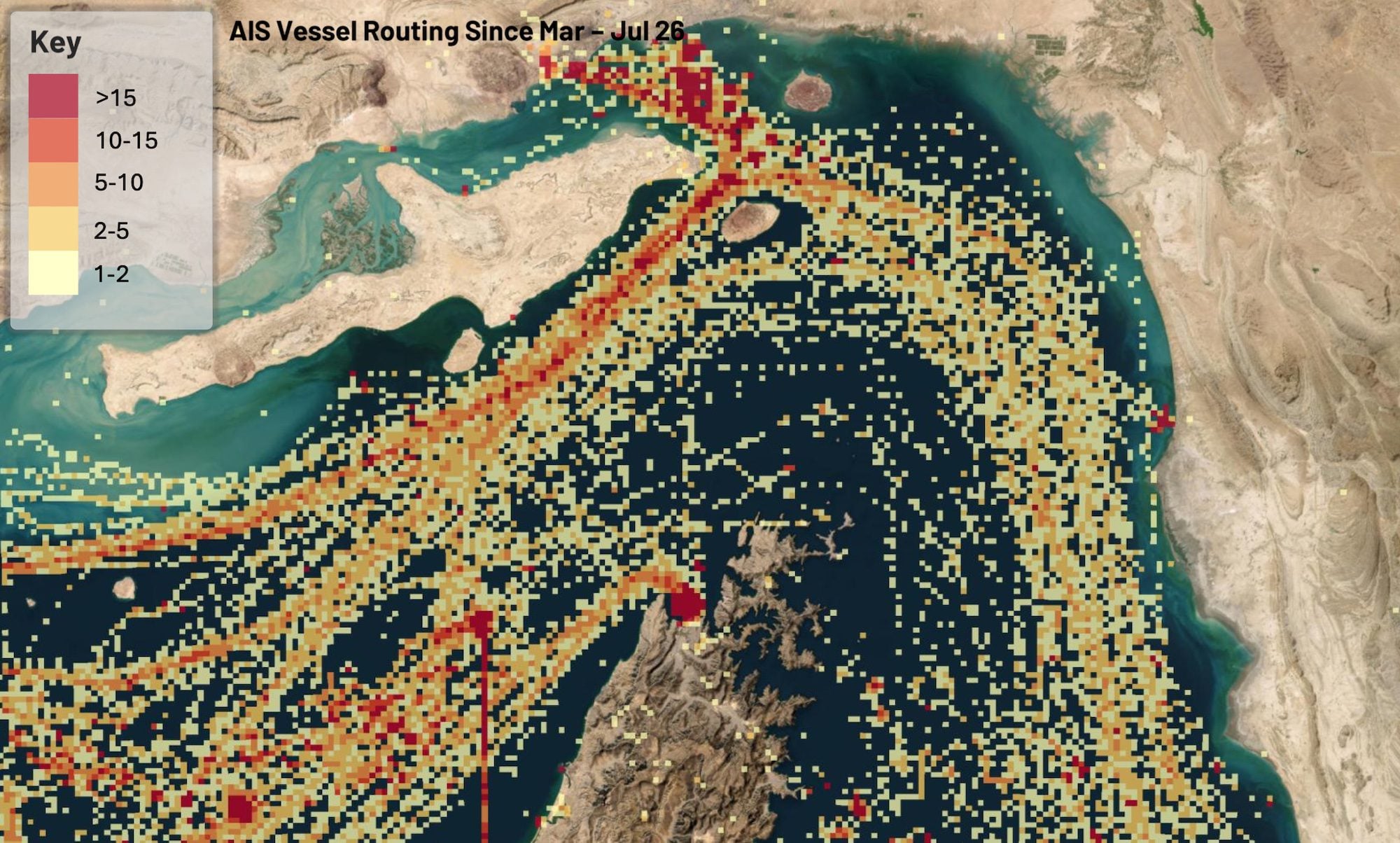
AIS-derived vessel traffic through the Strait of Hormuz (1 Mar to 31 Jul 2026). Heatmap density is based on over 100,000 AIS position reports aggregated into 1 km grid cells. Darker colours indicate higher traffic density. EMCOM silent transits are not captured.
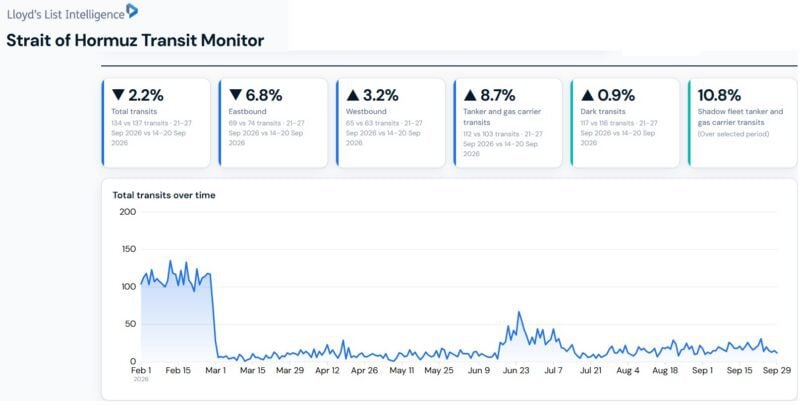
By Lori-Ann LaRocco – Strait of Hormuz transit data for the month of September reveals how the oil and container markets are tactically adjusting to the U.S./Israel war on Iran.
In its latest weekly webinar, Lloyd’s list editor in chief Richard Meade cautioned not to take the transit numbers at face value.
“September is on track to be the busiest month for Middle East Gulf exports since the conflict began,” said Meade. “On the surface, that looks like evidence of Iran’s ability to disrupt flows through the Straits of Hormuz is fading. I would argue that the reality is much more complicated. The oil market is not becoming more secure; it is becoming more efficient at operating under sustained insecurity.”
The Strait of Hormuz is just one of the many maritime chokepoints created by man and Mother Nature. This global chokepoint chart from Marsh maps out the risk.
The alternatives ship owners are taking to avoid these chokepoints don’t reduce the risk. In fact, it can increase in other ways.
“Diverting via Cape Horn or the Cape of Good Hope throws additional issues at the industry,” said Marcus Baker, Global Head Marine, Cargo, and Logistics. “Cape Horn is a particularly challenging option, exposing ships and cargoes to very heavy weather conditions, heavy seas, strong currents, and requires the need for very qualified pilots when trying to traverse the Drake Passage and the Straits of Magellan.”
Baker explained the impact on machinery damage on vessels traversing this waterway accounts for around 50% of ships’ claims every year and the claims can be substantial. The stress the weather has on vessels, the impact the cold weather can have on the crew, and on fuel heating systems can also be significant. Cargo can also be damaged or delayed.
But for trade to continue to flow these calculated risks need to be taken. Tankers, traders, refineries and containerships are finding new ways to adapt and work around these disruptions.
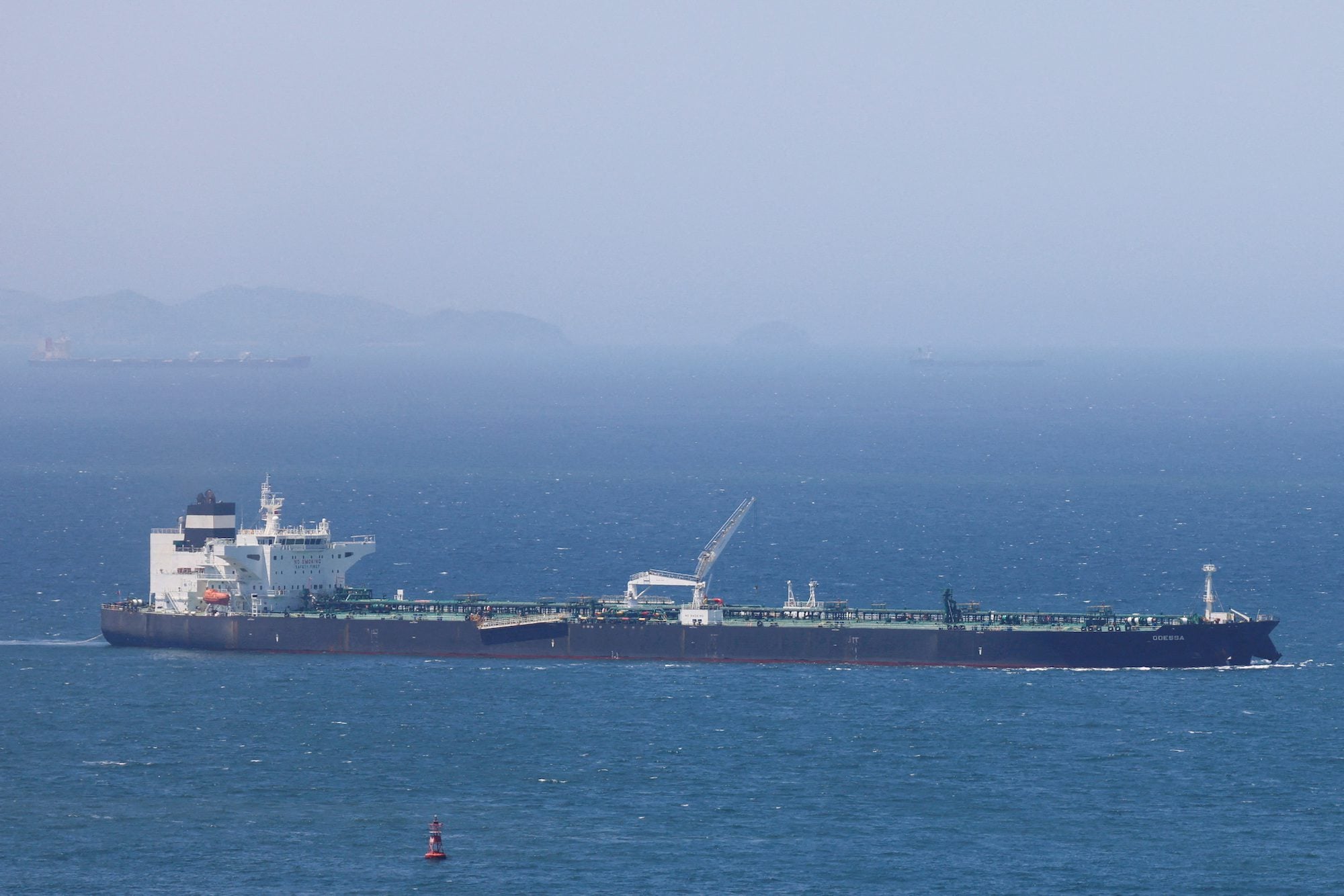
An example is a story Lloyd’s list broke earlier this week of Indian oil refiners hiring tankers to sail through the Strait of Hormuz to pick up crude from within the Persian Gulf and direct to Indian refiners.
“This is interesting because after months of relying on ship-to-ship transfers outside of Hormuz, charterers and ship owners are now starting to bypass what is increasingly congested transfer hub in the Gulf of Amman,” said Meade. “There is a danger is assuming, that resilience equals security. It doesn’t.”
The risk associated with these transits has unfortunately become a footnote or not even acknowledged in the mainstream press. UKMTO reported three attacks on tankers in that region Wednesday. Crude prices did move up 1.31% to $97,82 a barrel on the reports.
“Oil flows have recovered because the market participants have accepted greater operational complexity and higher costs,” said Meade. “The underlying threat remains.”
Container trade is also adapting. Feeder connections and land bridges are keeping the boxes moving in that region. These longer complex routes for non-Iranian trade have increased the price of that freight substantially.
“If you look at the rates before the crisis, from China specifically, you were looking at about $850 to $900, per loaded 40-foot box. Today you’re looking north of 6,000,” said Linton Nightingale, Deputy Editor Lloyds List. “I think you can see this new trend as a tactical adjustment rather than any sort of recovery or pickup in dedicated services.”
The pivoting strategy and deployment of extra capacity expands beyond the above-board ocean carriers and tankers. Russia’s fleet is also increasing in size to capture more opportunity.
“There is a notable spike in the number of ships that are flagging to Russia that previously weren’t,” said Meade.
Lloyd’s List has characterized “a hemorrhaging” from the registers of Cameroon, Sierra Leone, Equatorial Guinea into the Russian National Register.
Clarkson’s data through September 1 shows the Russian registry up 38.2% this year, which makes it the world’s 16th-largest flag. That growth comes on top of CREA’s figure of 36% growth from January 2025 to June 2026.
This is not the first time Russia has expanded its fleet during times of crisis.
Five tankers once flagged by Venezuela were reflagged to the Russian flag between December 2025 and January 2026. All five were under U.S. sanctions. The attacks on the country’s oil infrastructure by Ukraine has impacted exports but Russia continues to transport its black gold albeit at lower volumes.
Chinese teapot refineries need crude and they are running out of options for cheap oil due to the U.S. blockade of Iranian crude. This is why we see Russia beefing up its fleet anticipating the increase in cheap oil demand.
The U.S. blockade is impeding the replenishment of Iranian crude out of the Strait of Hormuz and the impact of this will eventually filter down to the ship-to-ship transfers outside of Malayasia.
“This means for that region we could see a short-term decline in activities taking place,” said Matthew Rajendra,Senior Reporter, for Lloyd’s List. “Everything is starting to slowly merge in terms of the different geopolitical flashpoints. So, it’s harder to even predict what could happen next or give a clear outlook ahead.”
This war has proven to be a long-game strategy for all involved. The ocean trade routes connect us globally. The chokepoints created by man only highlight our need for the Freedom of Navigation to be restored.
Tags:
Subscribe for Daily Maritime Insights
Sign up for gCaptain’s newsletter and never miss an update
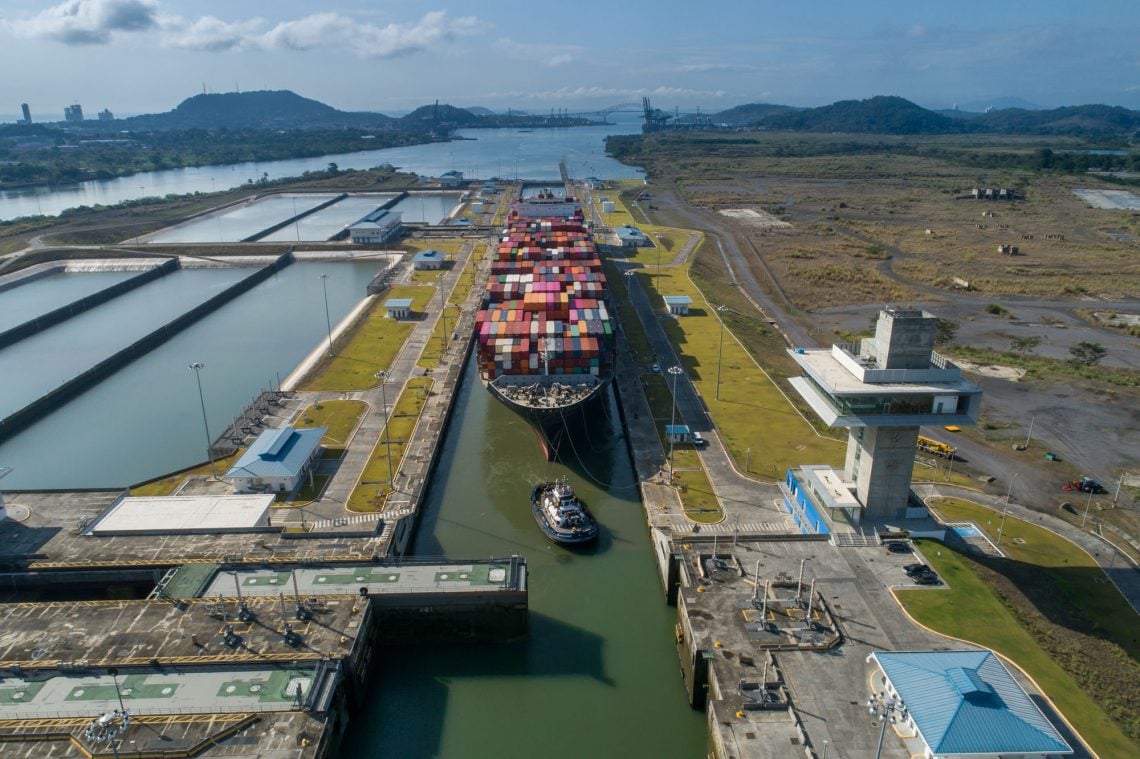
The Panama Canal reported growth in vessel traffic, tonnage and revenue in fiscal year 2026, as stronger demand from energy carriers and containerships helped lift volumes despite ongoing concerns over...
The United States has imposed a new round of sanctions targeting a law firm, shipping agents and nine vessels accused of helping Iran move oil and other commodities through international...
The cost of shipping crude oil from the Middle East Gulf to Asia has surged to more than $37 per barrel, over five times prewar levels, as an increasingly complex...
9 hours ago
Total Views: 214
Get The Industry’s Go-To News
Subscribe to gCaptain Daily and stay informed with the latest global maritime and offshore news
— just like 106,509 professionals
Secure Your Spot
on the gCaptain Crew
Stay informed with the latest maritime and offshore news, delivered daily straight to your inbox
— trusted by our 106,509 members
Your Gateway to the Maritime World!
Essential news coupled with the finest maritime content sourced from across the globe.

 Join The Club