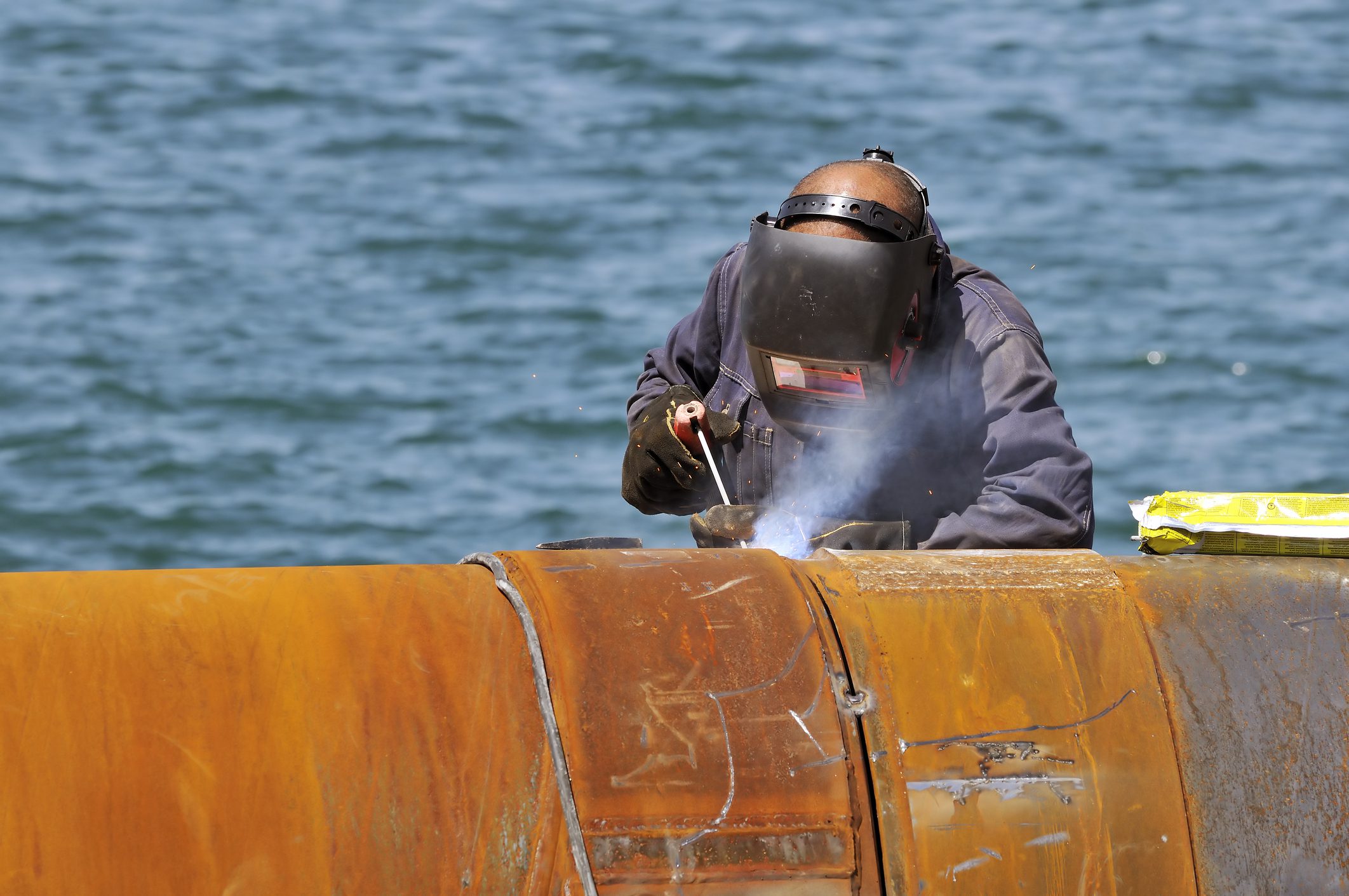
In-water hull cleaning is often treated as a necessary operational response to heavy fouling. However, when cleaning is performed reactively (after macrofouling is established), it typically requires aggressive mechanical force. The result is not just fouling removal, but coating damage, increased roughness, higher fuel consumption, and long-term economic and environmental consequences.
This page explains:
- Why reactive cleaning causes coating degradation
- How abrasive methods increase hydrodynamic roughness
- The measurable fuel and emissions penalties
- Why proactive grooming is fundamentally different
Reactive Cleaning: Why It Becomes Abrasive
Biofouling develops in stages:
- Biofilm (slime) formation
- Microfouling
- Macrofouling (barnacles, tubeworms, mussels, calcareous growth)
Once calcareous macrofouling is established, removal requires high mechanical force. According to Swain et al. (2022), reactive in-water cleaning is typically performed “once fouling has reached significant levels” and requires “powerful machinery which damages the coatings” .
The key problem:
Removing hard fouling requires forces high enough to exceed the cohesive or adhesive strength of the coating surface.
This can lead to:
- Ablative layer removal
- Silicone fouling-release surface scarring
- Increased surface roughness
- Premature coating depletion
- Increased biocide release (in copper systems)
Coating Damage and Increased Surface Roughness
Hull coatings are engineered systems:
- Self-Polishing Copolymer (SPC)/Ablative AF coatings rely on controlled surface erosion.
- Fouling Release Coatings (FRCs) depend on ultra-smooth, low-surface-energy finishes.
Abrasive cleaning disrupts both systems.
Swain et al. (2022) document that reactive cleaning results in:
- “Excessive discharges of paint and biofouling”
- Coating damage
- Increased environmental release .
When coating surface integrity is compromised, hydrodynamic roughness increases. Even small increases in equivalent sand-grain roughness (ks) significantly increase frictional resistance.
The IMO GloFouling report (2022) clearly connects hull roughness to increased hydrodynamic drag, fuel consumption, and GHG emissions .
Why Roughness Matters
Resistance increase is not linear. As surface roughness increases:
- Frictional resistance rises
- Required shaft power increases
- Fuel consumption increases
- CO? emissions increase
Even light slime can cause measurable efficiency penalties. Macrofouling and coating roughness increase the penalty substantially .
The Economic Consequences of Roughness
The economic impact of biofouling has been rigorously quantified.
Schultz et al. (2011) analyzed the cost impact of hull fouling on a U.S. Navy destroyer and found:
- The primary cost driver associated with fouling is increased fuel consumption.
- Cleaning and painting costs are small compared to fuel penalties.
- For the DDG-51 class, fouling-related fuel costs were estimated at $56M per year (class-wide) .
The implication is critical:
Any cleaning method that increases long-term hull roughness increases lifetime fuel cost.
Abrasive reactive cleaning may remove fouling—but if it increases coating roughness, it embeds an ongoing fuel penalty. EverClean is an approved hull grooming solution for use with GIT Coatings and Chugoku Marine Paints.
Abrasive Cleaning and Coating Life Reduction
Reactive cleaning can also shorten coating service life.
Swain et al. (2022) highlight that cleaning after calcareous fouling develops requires “fairly high forces that may damage the coating” .
This damage can result in:
- Accelerated coating depletion
- Premature drydock
- Increased lifecycle coating cost
- Increased paint discharge to the environment
In contrast, proactive grooming was defined as:
“Gentle, habitual and frequent mechanical maintenance… with minimal impact to the coating”.
The distinction is force threshold and frequency. The EverClean hull performance service is provided in ports throughout Florida, Texas, and the Caribbean. Through a manageable monthly subscription, EverClean’s unique robots-as-a-service business model has been designed specially to target slime and early protein layers of fouling, disturbing the process of long-term foul build-up. For vessels outside of the EverClean service area, a self-hosted solution is available.
Environmental Impacts of Reactive Cleaning
Reactive abrasive cleaning has several environmental consequences:
1. Paint Particle Discharge
Damaged coatings can release:
- Copper (in biocidal systems)
- Polymer fragments
- Microplastics
Swain et al. (2022) note that reactive cleaning can produce excessive discharge requiring capture and disposal in some jurisdictions .
2. Increased GHG Emissions
Roughened surfaces increase fuel burn. The IMO GloFouling analysis shows that unmanaged biofouling can increase GHG emissions significantly depending on severity .
3. Invasive Species Risk
Waiting until macrofouling establishes increases the risk of species transport between regions .
Reactive vs. Proactive: The Force Threshold Problem
Research at the Naval Postgraduate School (Royster, 2022) evaluated proactive grooming frequencies across temperature and biome conditions. The study found that:
- Grooming is effective when performed at appropriate frequency.
- Properly executed grooming controls fouling without coating degradation.
- Frequency should be tailored to local fouling pressure and temperature .
The key technical insight:
There is a narrow “grooming zone” where fouling can be removed without exceeding coating damage thresholds.
Reactive cleaning operates outside this zone. Proactive grooming, such as EverClean, operates within it.
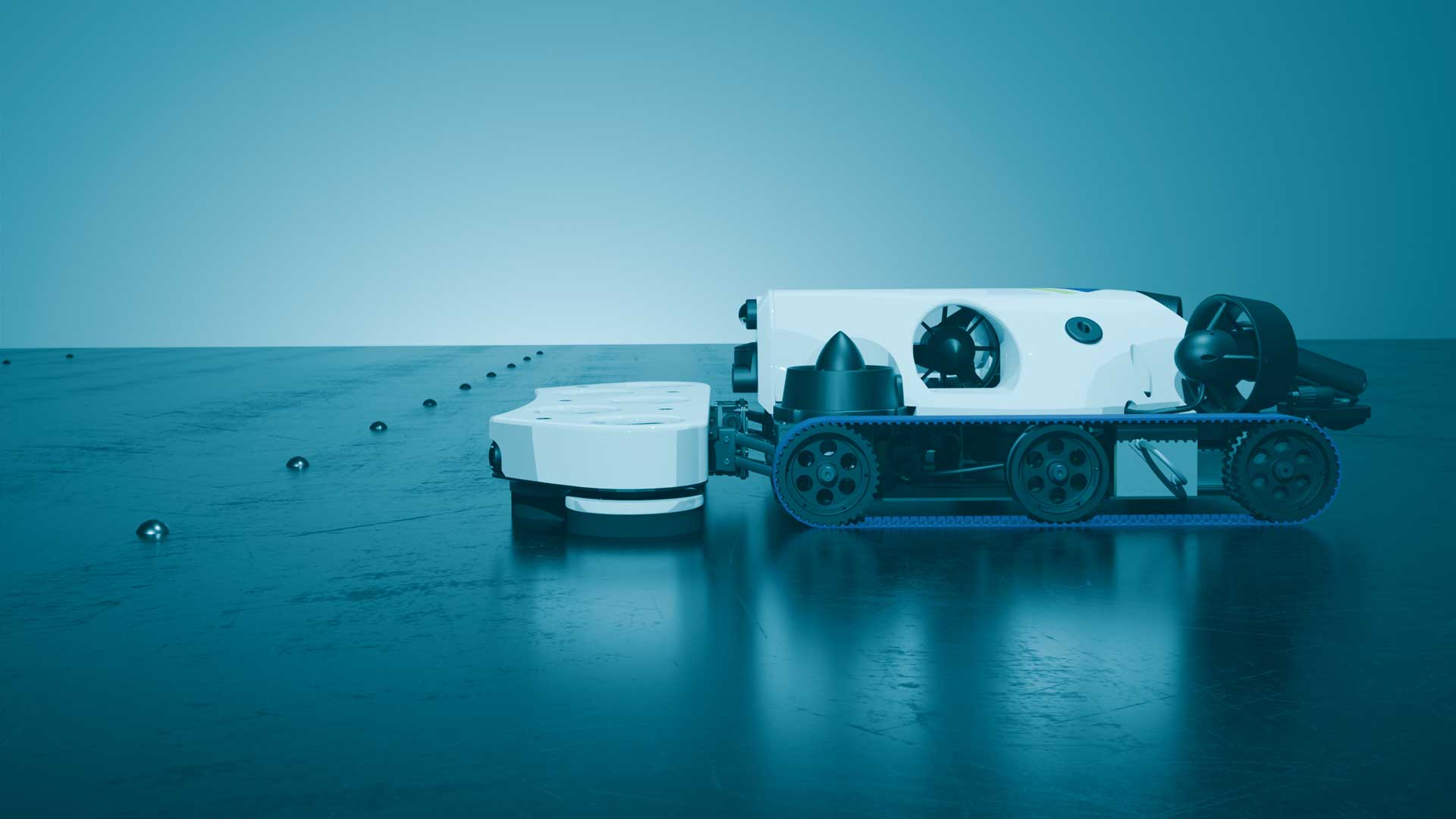
Proactive Hull Grooming in Action (EverClean)
Translating proactive maintenance principles into operational practice requires more than simply cleaning earlier or more frequently. It requires systems designed to maintain hulls at a fresh out of dry dock, while minimizing coating degradation and environmental impact.
Modern robotic hull grooming solutions are built around this principle. Rather than relying on abrasive, high-force cleaning after significant fouling has accumulated, these systems use gentle, frequent intervention to remove biofilm and early-stage growth. By preventing the formation of heavy fouling layers, operators can preserve coatings, maintain a clean hull, and avoid the fuel penalties associated with increased drag.
A prime example of this is EverClean, a robotic in-water inspection and grooming system designed for continuous hull performance management. The system combines precision grooming tools with high-resolution inspection capabilities, enabling operators to monitor coating conditions while maintaining peak performance.
This shift from reactive cleaning to intelligent hull management represents a structural change in how fleets approach performance and compliance. Instead of waiting for the inevitable impact on fuel consumption and emissions, proactive systems enable operators to maintain performance and make informed decisions over time.
For more information or to speak to a hull performance expert, visit GreenseaIQ.com/EverClean-for-Maritime/
Real-World Examples: Severe Fouling and Coating Condition
Service reports from reactive cleanings frequently document:
- Heavy barnacle coverage
- Severe coating wear and detachment
- Inability to inspect due to calcareous fouling
For example, a 2022 hull cleaning report documented paint in “POOR condition showing severe worn out and detachment” in areas heavily fouled .
When macrofouling must be mechanically removed from an already degraded coating, coating life is further compromised.
The Technical Conclusion
Reactive, abrasive hull cleaning creates a cascade of consequences:
Fouling allowed to reach macro stage -> High force removal required
High-force cleaning -> Coating damage
Coating damage -> Increased roughness & coating wear
Increased roughness -> Higher fuel consumption
Higher fuel consumption -> Increased OPEX and emissions
Coating wear -> Shortened service life
In contrast, proactive, low-force grooming:
- Removes slime before macrofouling establishes
- Maintains hydrodynamic smoothness
- Preserves coating integrity
- Minimizes discharge
- Reduces fuel penalties
References
Tags:
Editorial Standards · Corrections · About gCaptain

 Join The Club