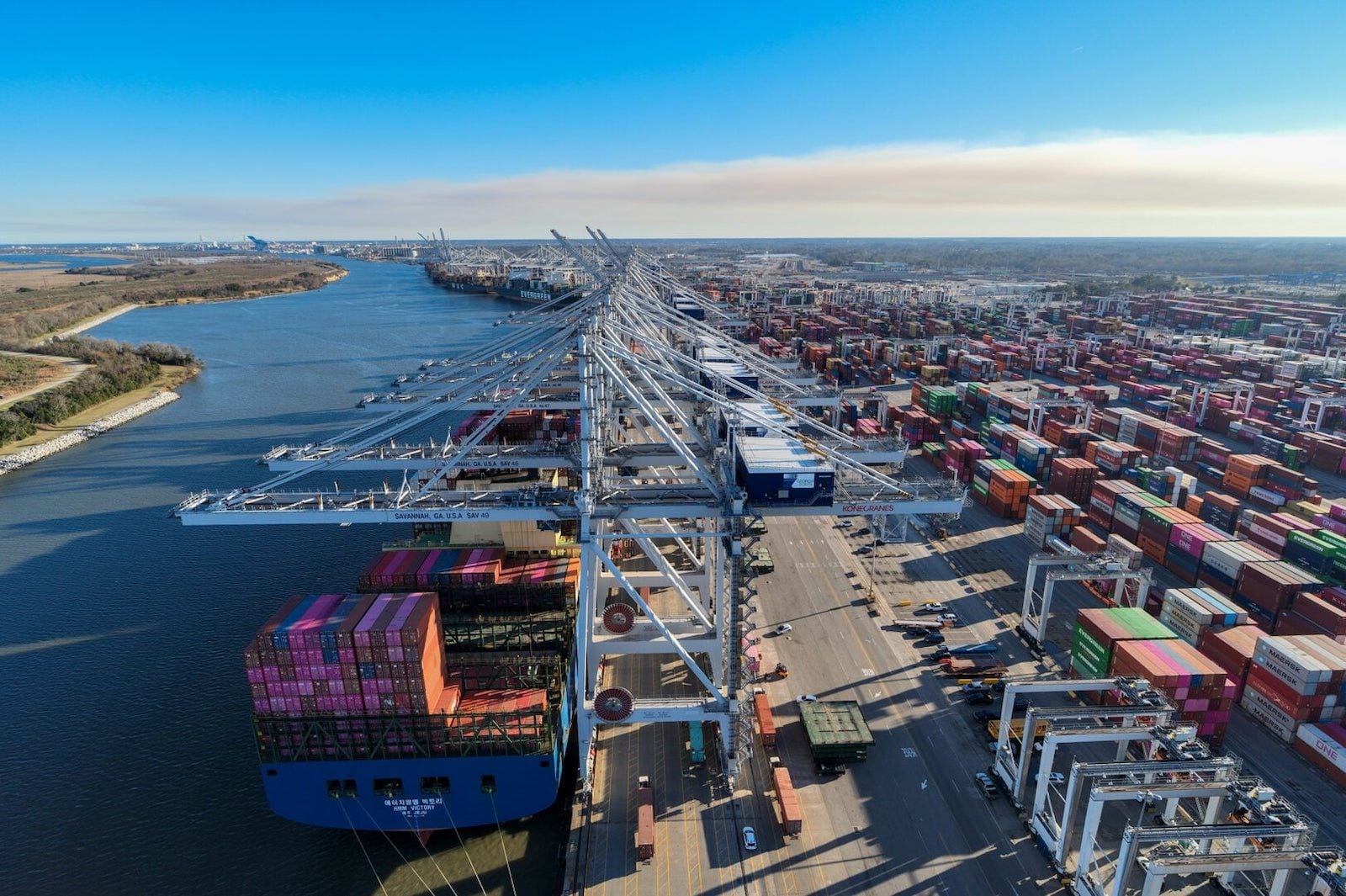
The Port of Los Angeles handled a record 1,042,652 twenty-foot equivalent units (TEUs) in September, marking the busiest month in its 118-year history as strong consumer demand and shifting global trade routes continued to drive cargo volumes through the nation’s busiest container port.
September’s total surpassed the previous monthly record, set in July 2025, by more than 20,000 TEUs. It also capped the port’s busiest quarter on record, with nearly 3 million TEUs handled between July and September.
The port moved nearly 4 million TEUs over the four months beginning in June, another all-time high.
“September was a month for the record books, and it was part of an extraordinary run for the Port of Los Angeles,” said Executive Director Gene Seroka. “Consumer demand remains resilient, importers are replenishing inventories and more cargo is being allocated to Los Angeles as shippers navigate continued challenges along other global trade routes.”
Loaded imports reached 545,696 TEUs in September, up 19% from a year earlier, while loaded exports climbed 10% to 125,751 TEUs. Empty container movements totaled approximately 371,206 TEUs, also a monthly record.
Seroka attributed the strong performance in part to greater certainty around tariffs, which have fallen from levels seen earlier this year, allowing importers to replenish inventories. Continued consumer spending and disruptions affecting the Suez and Panama Canal routes have also contributed to the surge.
The results extend an unusually strong shipping season that has repeatedly defied expectations. In September, the National Retail Federation revised its import forecast upward, predicting September would become the busiest month of the year for container imports at major U.S. ports.
Earlier in the year, retailers accelerated shipments to get ahead of tariff changes and supply chain uncertainty, raising expectations that the traditional late-summer peak would arrive early. Instead, cargo volumes have remained elevated.
Los Angeles has been among the biggest beneficiaries. The port surpassed 1 million TEUs in June before recording another strong month in July and continuing its momentum through August and September.
Speaking during the port’s monthly media briefing, Harvard Business School professor Willy Shih said ongoing trade uncertainty is changing how companies manage their supply chains.
“Companies are moving from purely optimizing for cost to optimizing for options,” Shih said. “With so much uncertainty in global trade, businesses are looking for greater flexibility in where they source, manufacture and move their goods.”
For the first nine months of 2026, the Port of Los Angeles handled nearly 8.1 million TEUs, more than 3% ahead of the same period last year.
The record comes despite continued pressure on global shipping from tariffs, high fuel costs and geopolitical disruptions. Those challenges have complicated cargo forecasting and encouraged shippers to adjust traditional routing and inventory strategies.
Whether the momentum continues through the remainder of the year remains uncertain. The National Retail Federation’s September forecast called for U.S. import volumes to ease in October and November following the late-season surge.
For now, Los Angeles continues to handle cargo at a historic pace.
“Our waterfront workforce and supply chain partners have done a tremendous job handling these record volumes while keeping cargo moving,” Seroka said. “After the best month, quarter and four-month stretch in Port history, our focus is simple: finish the year strong and keep delivering for our customers.”

 Join The Club