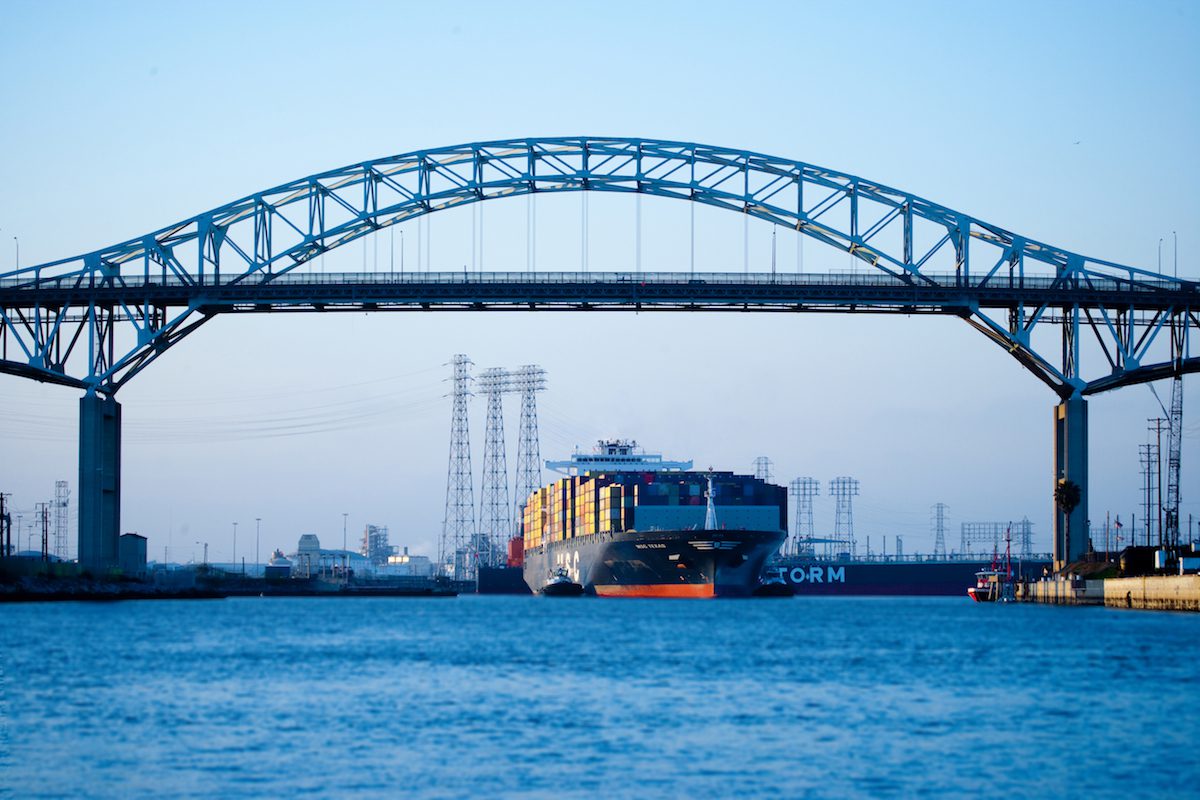
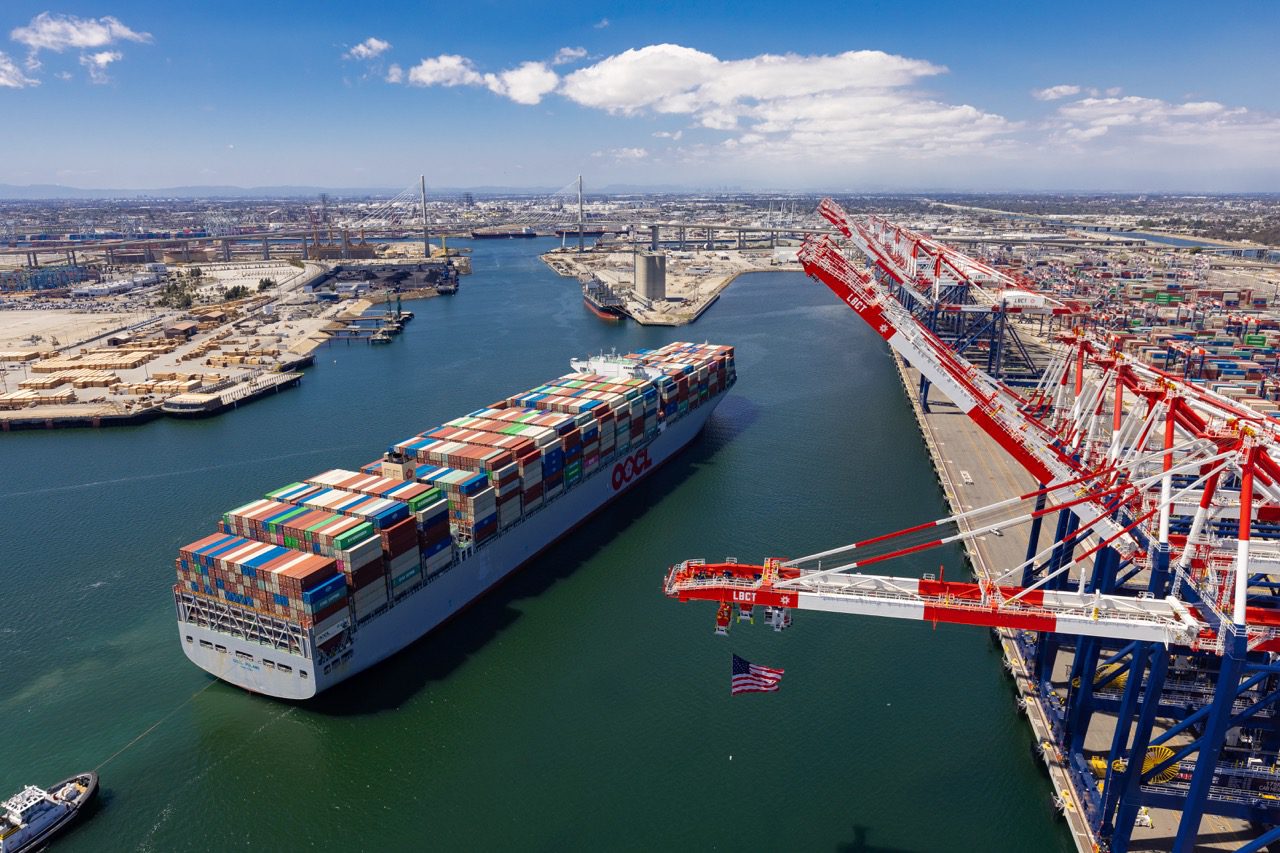
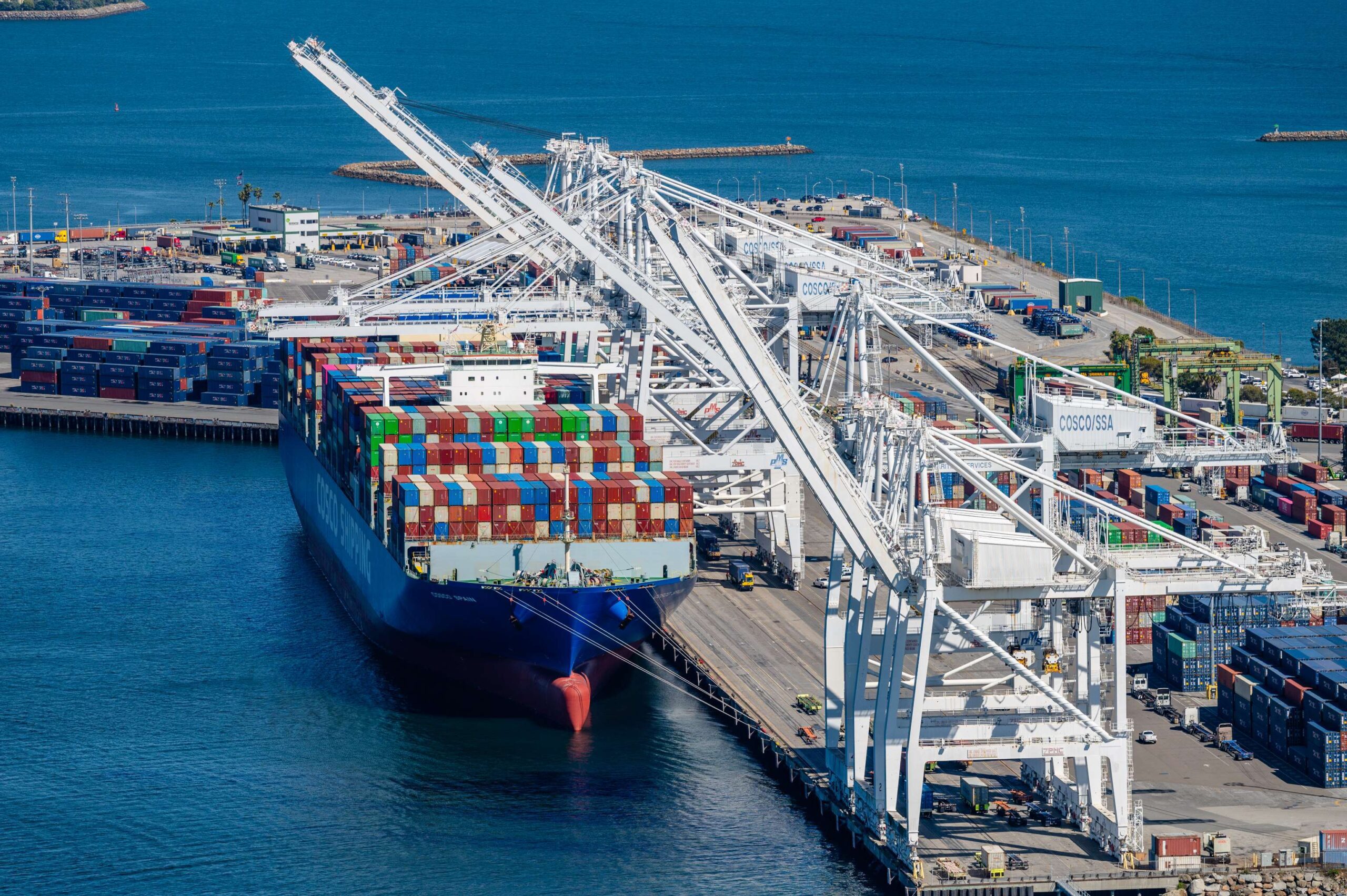
Photo: Port of Long Beach
Container volumes at the Port of Long Beach fell 1.9 percent in August compared to 2017 figures amid the backdrop of uncertainty surrounding the U.S.-China trade war.
The Port of Long Beach, the second largest container port in the United States behind neighboring Los Angeles, reported last week a total of 679,543 twenty-foot equivalent units (TEUs) were moved through the Port in August. Imports declined 3.6 percent to 343,029 TEUs, while exports increased, inching up 1.9 percent to 119,546 TEUs. Empty containers sent overseas dipped 1.1 percent to 216,968 TEUs.
August 2017 was one of the busiest months in the Port of Long Beach’s 107-year history. At the time, it was the third-busiest month ever, and the mark has been exceeded three times since.
Long Beach’s volumes through the first eight months of the year stand at 5,320,930 TEUs. The figure is 9.4 percent above the pace of 2017, the Port’s best year ever.
“Our Port’s decline in cargo over the last two months is in large part due to a realignment of ocean carrier alliance services and port calls,” said Port of Long Beach Executive Director Mario Cordero. “Another factor is higher tariffs by the United States and China. Thus far, that appears to have helped increase traffic, as shippers act to beat duties imposed on goods this summer.”
“The higher container volumes earlier this year showed the ability of international trade to bring prosperity and jobs to the U.S. and world economies,” said Board of Harbor Commission President Tracy Egoscue.
The Port of Long Beach is one of the world’s premier seaports, a gateway for trans-¬Pacific trade and a trailblazer in goods movement and environmental stewardship. With 175 shipping lines connecting Long Beach to 217 seaports, the Port handles $194 billion in trade annually, supporting hundreds of thousands of Southern California jobs.
Updated: November 18, 2020 (Originally published September 10, 2018)
Editorial Standards · Corrections · About gCaptain

 Join The Club