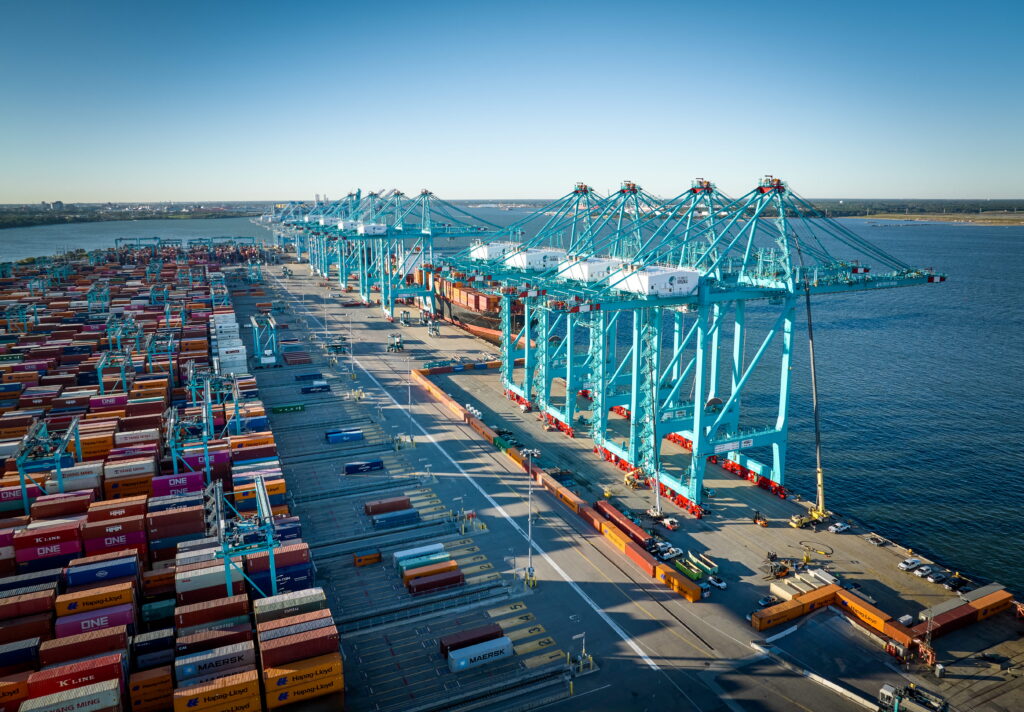
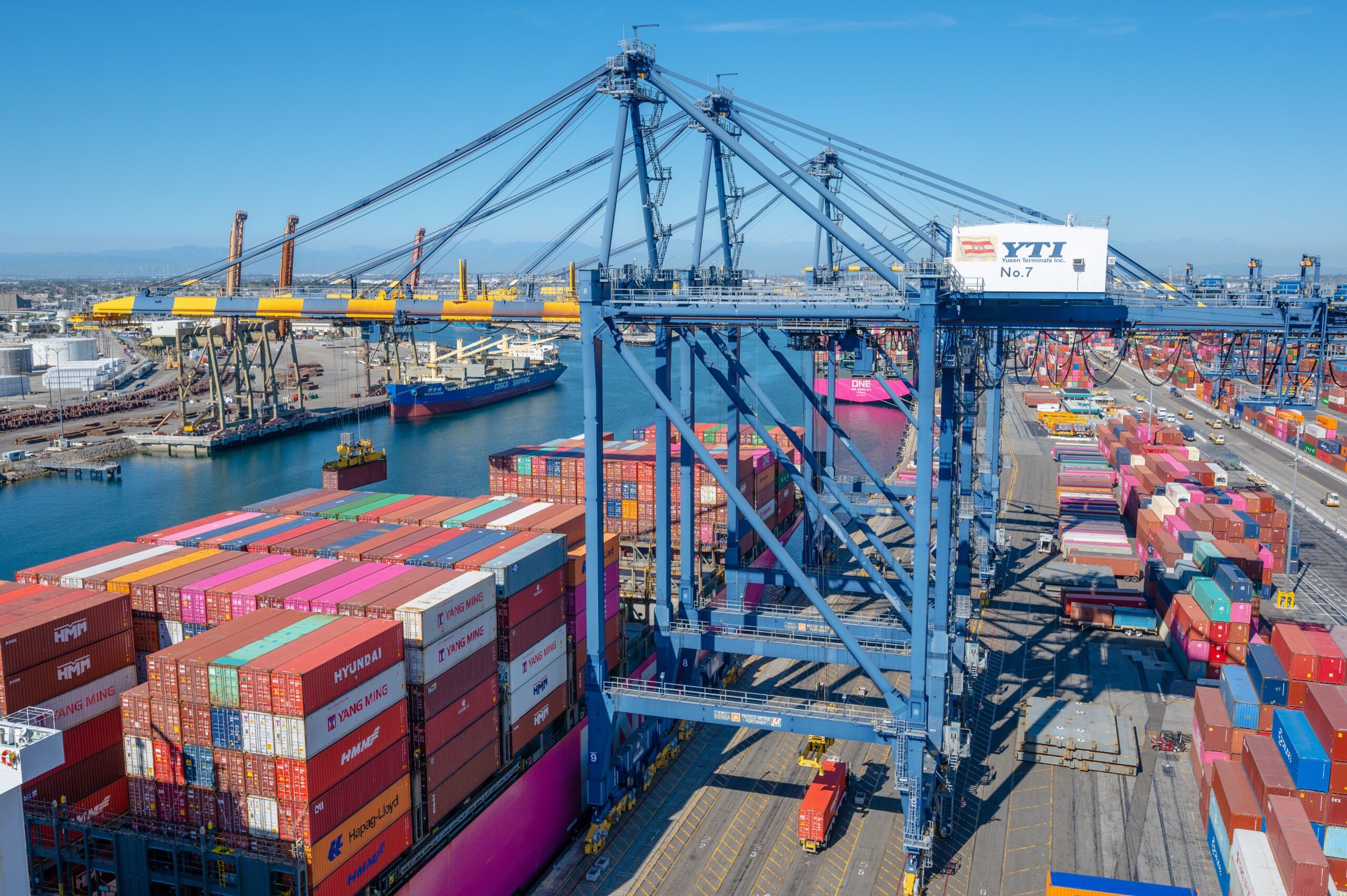
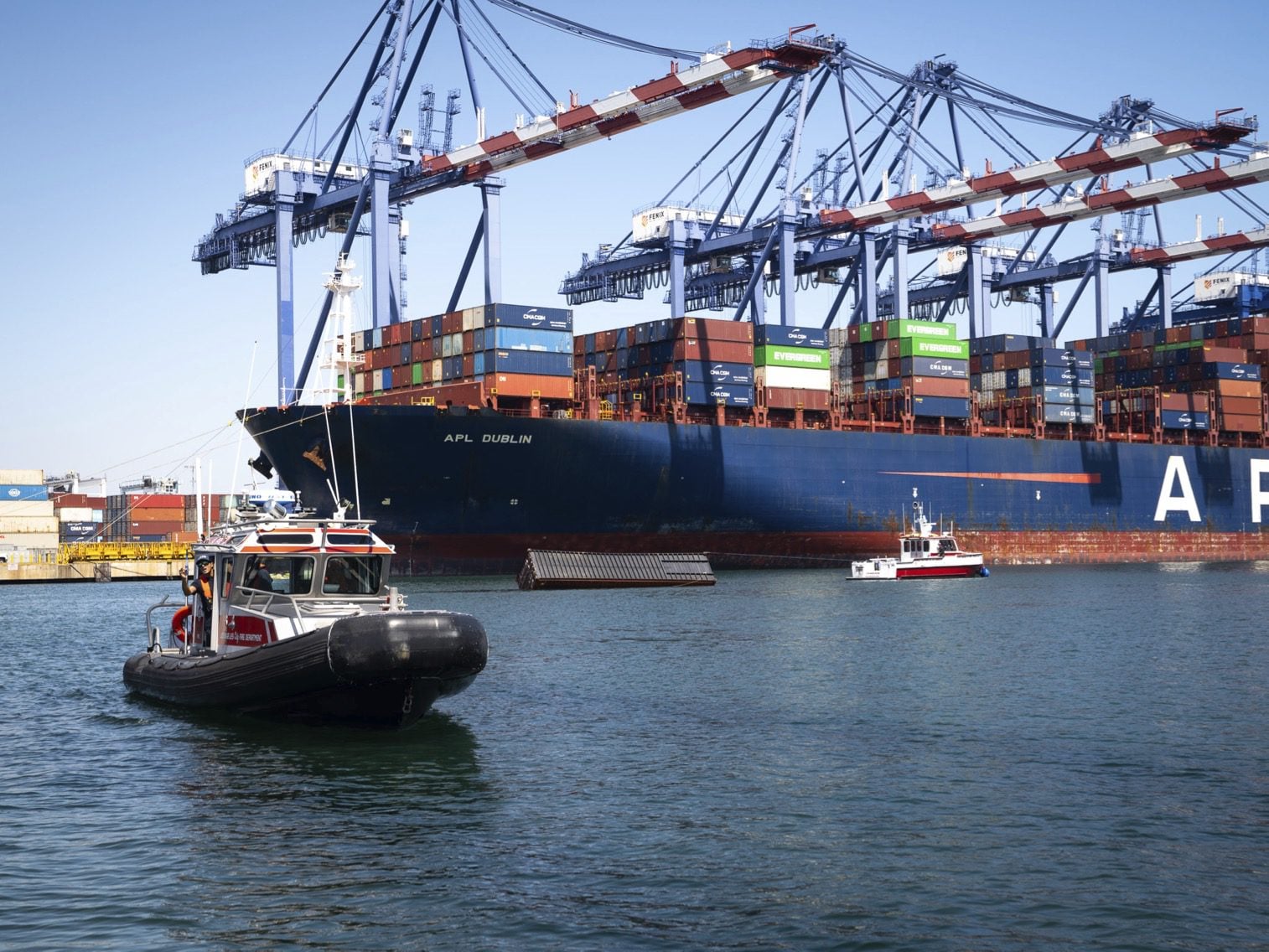
Cargo containers sit idle at the Port of Los Angeles as a back-log of over 30 container ships sit anchored outside the Port in Los Angeles, California, February 18, 2015. REUTERS/Bob Riha, Jr.
Executives at the ports of Long Beach and Los Angeles met this week to begin talks about working together to improve the flow of cargo through the largest port complex in the nation.
In their first meeting under a formal discussion agreement, the two sides agreed that the primary goal of any collaboration is to get cargo moving more efficiently, setting the stage to discuss a framework for how the ports will cooperate, work with supply chain stakeholders and communicate the results.
At the end of February, the Federal Maritime Commission agreed to allow the two ports to cooperate on finding new ways to prevent congestion and cargo delays after several months of unprecedented congestion at the ports. Back in January, the FMC marked congestion at the nation’s ports as its top priority in 2015. The two ports will also seek to improve the intermodal transportation network and enhance air quality.
“Through this working group, we will engage with our stakeholders to discuss issues and develop solutions for optimizing cargo flow through our ports,” said Port of Los Angeles Executive Director Gene Seroka. “Our ports, customers, labor force and supply chain partners are committed to taking this gateway to a new and higher level of performance, and we’ll accomplish this by working together.”
“Our shared goal is to optimize the performance of the trans-Pacific supply chain,” said Port of Long Beach Chief Executive Officer Jon Slangerup. “The San Pedro Bay has always been the fastest route between Asia and the U.S. and I’m confident we will find ways to significantly increase the velocity of goods movement and overall efficiency of our end-to-end system, thereby reinforcing our gateway as the No. 1 choice for shipments to and from Asia.”
Future discussions between the two ports will likely focus on innovative approaches to improving the efficiency of marine terminal, trucking, rail and vessel operations. The ports also plan to discuss legislative advocacy, security enhancements, infrastructure, technology and environmental improvements related to supply chain optimization.
The Port of Los Angeles and Port of Long Beach are the two largest ports in the nation, first and second respectively, and combined are the ninth-largest port complex in the world. The two ports handle approximately 40 percent of the nation’s total containerized import traffic and 25 percent of its total exports. Trade that flows through the San Pedro Bay ports complex generates more than 3 million jobs nationwide.

 Join The Club