Updated: May 10, 2018 (Originally published April 12, 2018)
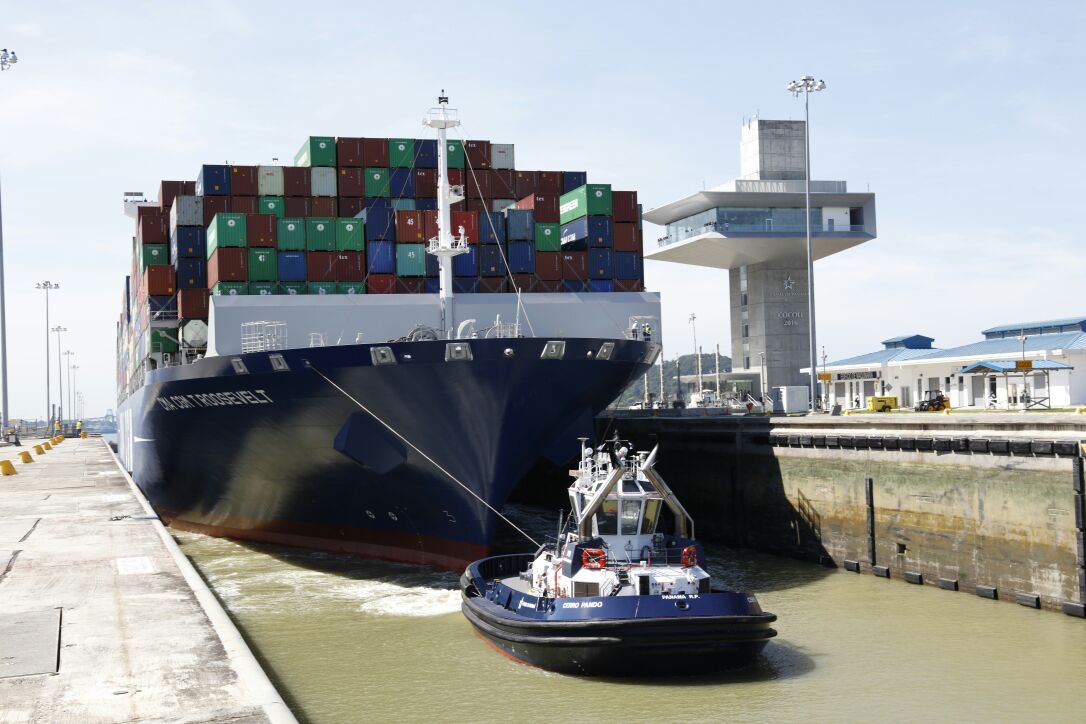
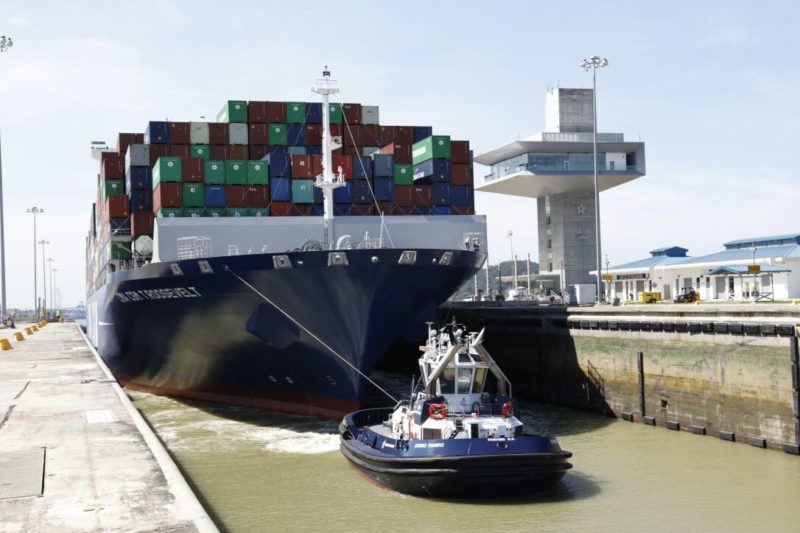
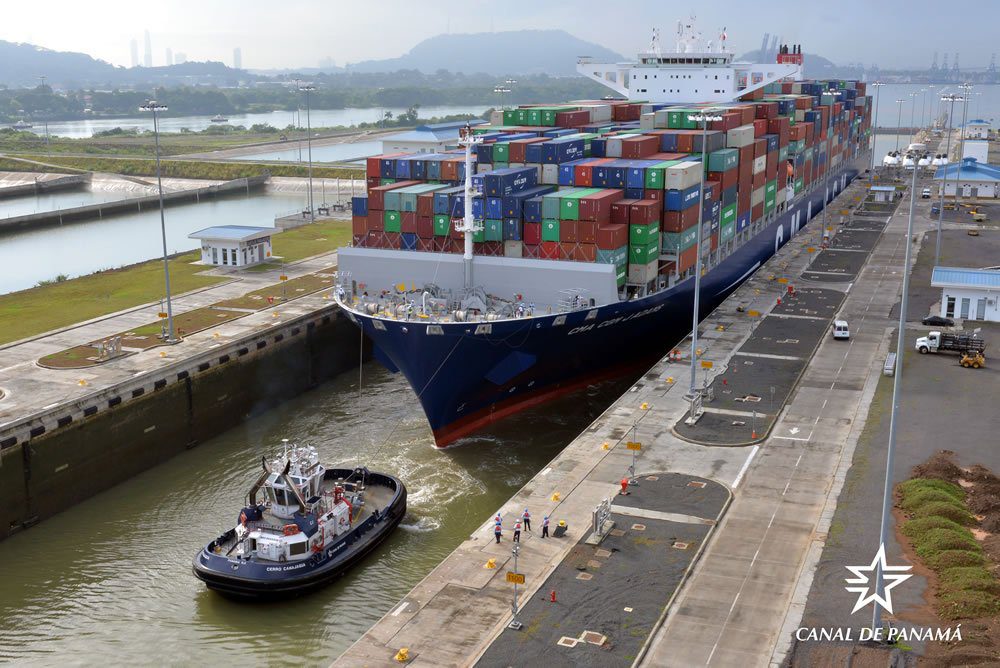
A pilot tugboat maneuvers a container ship through the Neopanamax locks of the Expanded Panama Canal. Photo: Panama Canal Authority
The Panama Canal Authority (ACP) has announced that it will apply sanctions against certain tugboat captains who recently refused to transit vessels through the canal’s new neopanamax locks, impacting the operations of the Expanded Panama Canal.
The union representing the captains, however, says the captains refused because of safety issues.
“The decision is based on the fact that these captains of tugboats refused to fulfill their duty to assist the transit of vessels through the neopanamax locks, which affected the regular operation and caused a negative economic impact for the country as it affected the confidence of our clients and the image of the Panama Canal,” the ACP said in a statement announcing the sanctions.
Details of the sanctions, the number of captains impacted, and when the refusals took place were not immediately clear.
The ACP is the agency of the Panamanian government that is responsible for the operation and management of the Panama Canal.
Unlike the original locks, which use “mules” to guide ships through the locks, the new neopanamax locks require the use of pilot tugboats to maneuver ships through.
The union representing the tugboat captains, the Unión de Capitanes y Oficiales de Cubierta del Panama Canal, or UCOC, wrote on Twitter that the captains were sanctioned after refusing to work due to safety concerns, adding that the sanctions are part of the ACP’s plan to privatize tug operations.
Last month, the UCOC along with two other unions for maritime workers in the Panama Canal released a joint strategy seeking to improve the operations of the waterway and enhance the safety of workers. The strategy cited the scarcity of resources, including both personnel and equipment, for making some operations of the Expanded Panama Canal unsafe. The strategy explicitly listed worker fatigue as being an issue.
In its statement, the ACP said it is aware of its responsibility to guarantee the safety of workers and the reliability of Canal operations, but it decided to take the action “to safeguard the greater interests of Panama and the Canal”.
The Expanded Panama Canal opened larger vessels in June 2016. Since then, more than 3,000 vessels have made the transit through the new locks, far exceeding the initial traffic estimates for the waterway.
China is threatening to block the sale of more than 40 ports, owned by Hong Kong-based CK Hutchison, to BlackRock and Mediterranean Shipping Company (MSC) if Chinese shipping company Cosco does not get a stake, the Wall Street Journal reported on Thursday, citing unnamed sources.
Updated: April 19, 2021 (Originally published October 30, 2020) By Anna Shiryaevskaya, Tsuyoshi Inajima and Saket Sundria (Bloomberg) –Ships carrying cargoes around the world are waiting for days to pass...
Cargo volumes through the Panama Canal grew by a less than expected 1% this year as the COVID-19 pandemic took its toll on global trade, the Panama Canal said Monday....
October 5, 2020
Total Views: 219
Get The Industry’s Go-To News
Subscribe to gCaptain Daily and stay informed with the latest global maritime and offshore news
— just like 107,252 professionals
Secure Your Spot
on the gCaptain Crew
Stay informed with the latest maritime and offshore news, delivered daily straight to your inbox
— trusted by our 107,252 members
Your Gateway to the Maritime World!
Essential news coupled with the finest maritime content sourced from across the globe.

 Join The Club